Invest in 3 safe-haven assets as geopolitical tensions rise, the Singdollar is one: UOB
The bank identifies gold, the Japanese yen, and the Singapore unit as good defensive bets

[SINGAPORE] Rising geopolitical risks are amplifying the need to hedge against risks, a UOB report said on Friday (Jan 9).
The bank noted that the odds of global geopolitical risk events have “gotten even more real”, with 2026 shaping up to be a year “dominated by the need for safe havens”.
This comes on the back of the recent turmoil surrounding Venezuela, during which the US captured the country’s leader in a military operation.
Against this backdrop, UOB highlights three assets that investors can pile into as safe havens.
“There is an urgent and imperative need for investors to seek safe haven hedges to diversify risks in investment portfolios,” UOB analysts said.
The bank identified gold as the “de facto global safe haven”, the Japanese yen as the G7 safe haven, and the Singapore dollar as the Asean safe haven.
Yen likely to reclaim safe-haven status
While the yen has “stayed frustratingly weak”, UOB thinks the currency “is likely to revert to its traditional role as a G7 safe-haven currency”.
The bank noted that current yen weakness is “increasingly at odds” with the Bank of Japan’s plans to tighten monetary policy further.
However, given the sharp rise in Japanese government bond yields in recent months – which has led to further narrowing of yield differentials in the yen’s favour – UOB believes that the currency will reclaim its safe-haven status “in due course”.


“Overall, we reiterate our positive yen view, with USD/yen forecasts at 154 for Q1 2026, 151 for Q2 2026, 149 for Q3 2026 and 147 for Q4 2026,” the bank added.
Singdollar appreciation path intact
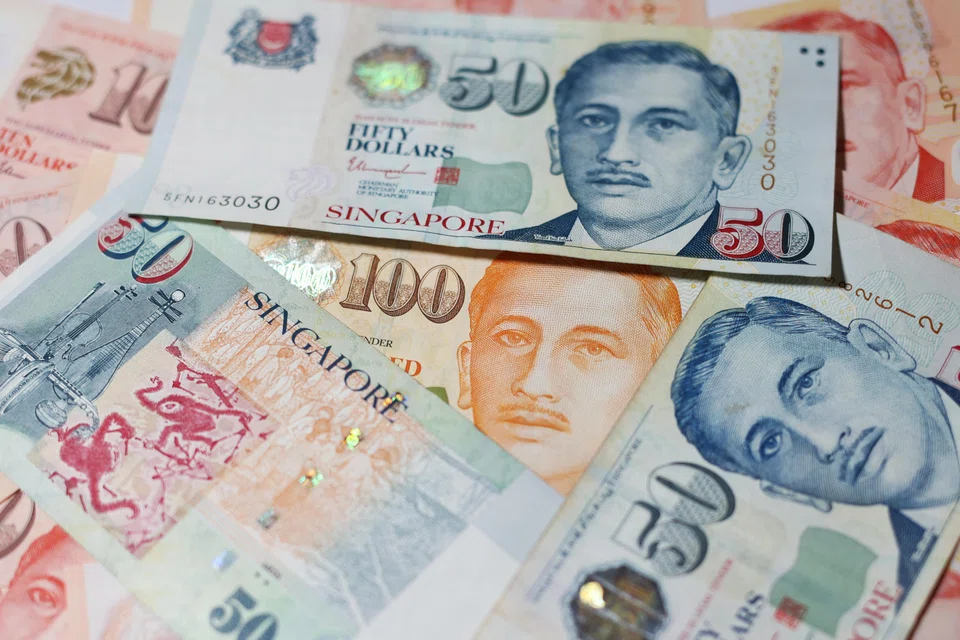
The Singapore dollar is set to remain as Asean’s safe-haven currency as its long-term appreciation path remains intact and well-supported, noted UOB.
This comes as Singapore’s gross domestic product for 2025 expanded by a “very robust” 4.8 per cent year on year, on the back of strong economic growth in Q4 2025, due to the realignment of supply chains into Asean and a boom in semiconductor and electronics-related exports.
The currency is poised to strengthen further in 2026 against the greenback and other key Asean currencies on a trade-weighted basis, said UOB. “We forecast USD/SGD drifting lower across 2026, to 1.28 in Q1 2026, 1.27 in Q2 2026, 1.26 in Q3 2026 and 1.25 in Q4 2026,” it noted.
Moreover, the reliability of the Singapore dollar in preserving purchasing power is a “key plus” amid a global backdrop of increasing geopolitical uncertainties, the bank added.
Gold rally structurally supported, not just cyclical
Gold, as a known safe haven, rallied after the US operation in Venezuela. However, beyond that, UOB analysts believe that gold’s “strong and explosive rally” is structurally supported and not just cyclical.
They pointed to the metal’s “strong positive fundamental drivers” that make it a “de facto global safe haven”.
The bank explained: “Beyond its shiny allure, the uniqueness of gold lies in the fact that it is the only real-world asset that central banks own for reserves.”
In view of the jump in the metal’s price following events in Venezuela and signs of “increasing volatility in gold at a higher price level”, UOB analysts have raised their forecasts for the commodity.
“We raise our gold forecast further to US$4,400 per ounce in Q1 2026, US$ 4,600 per ounce in Q2 2026, US$ 4,800 per ounce in Q3 2026 and US$ 5,000 per ounce in Q4 2026,” they said.
Decoding Asia newsletter: your guide to navigating Asia in a new global order. Sign up here to get Decoding Asia newsletter. Delivered to your inbox. Free.
Copyright SPH Media. All rights reserved.