MAS’ third EQDP shot of S$1.45 billion a catalyst for small and mid-caps to catch up: JPMorgan
The liquidity, however, will take some time to trickle down

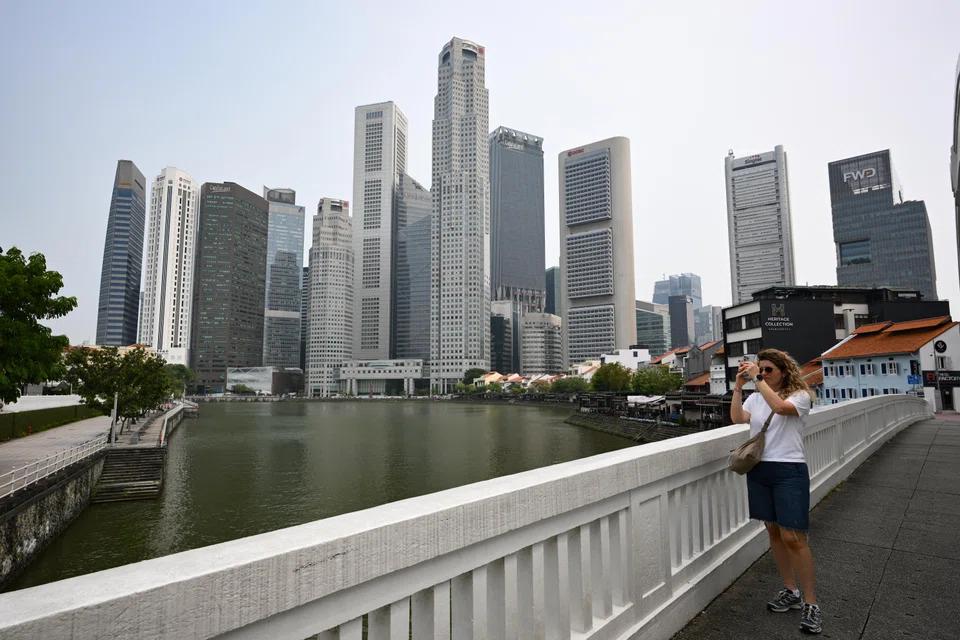
[SINGAPORE] Small and mid-cap stocks (SMIDs) stand to gain from a third tranche of Singapore’s Equity Market Development Programme (EQDP), with a S$1.45 billion injection that could be a “catalyst” for SMIDs to catch up, JPMorgan Chase said in a recent report.
While the first two allocations of S$4.5 billion in seed funds have brought on a burst of liquidity since the programme was first rolled out in July 2025, mid-cap stocks have trailed the benchmark index.
“We expect the (third) allocation of funds to favour SMID stocks, in line with the market development strategy,” said JPMorgan equity macro research analysts Khoi Vu and Rajiv Batra in a note dated Sep 30.
“Assuming a 30 per cent allocation to SMIDs, we estimate a possible inflow of about S$435 million, equivalent to two times of the average daily turnover volume of the iEdge Singapore Next 50 Index,” they added.
The benchmark Straits Times Index (STI) has risen by over 30 per cent since the first tranche of the EQDP kicked off, hitting an all-time high of 5,801.96 on Sep 4.
Turnover has swelled, with the bourse’s securities daily average value (SDAV) rising to a new highwater mark of S$2.4 billion in May, up 79 per cent year on year to an almost-20-year high.
Daily volume eased to S$2.2 billion as at August, still up 35 per cent year on year.
However, the analysts noted that the iEdge Singapore Next 50 Index – which tracks the next 50 mid-cap mainboard-listed companies after the top 30 largest firms by market capitalisation – has underperformed the STI by 25 per cent in the year to date.
The index now trades at “about 16 times of the 12-month forward P/E (price-to-earnings), similar to the STI’s”.



On Sep 29, The Monetary Authority of Singapore said it will place S$1.45 billion with the third batch of EQDP asset managers – bringing the total allocation under the programme to S$5.4 billion.
A fourth tranche is in the works, and is expected to be finalised by 2027.
Five fund managers – M&G Investments, Amundi, HSBC Asset Management, Franklin Templeton and Natixis Investment Managers – were appointed this round.
The JPMorgan analysts said that SMID stocks with resilient earnings, healthy balance sheets and low exposure to interest rates would attract flows from investors looking to deploy into this space.
MAS has also committed S$20 million to support market-making activities, focusing on an initial group of about 80 eligible SMIDs to “boost liquidity and improve visibility”.
The liquidity shot will take some time to trickle down. The analysts noted that fund managers take four to six months to launch after the announcement of a tranche on average, and appointed managers need to raise additional funds on top of the EQDP seed money.
MAS is still reviewing proposals from a fourth batch of asset managers, with an announcement expected in 2027.
Singapore as top market to own in Asean
The JPMorgan analysts noted that the EQDP’s continuity enhances the case for investors to remain invested in Singapore, which they rated as the top market to own in South-east Asia.
“Strong policy buffers remain the key differentiator for Singapore equities during a period of elevated cost of capital and heightened risk to growth,” they said.
The third EQDP tranche affirms government commitment to improving equities market activity and boosting investors’ confidence, they added.
“We maintain our 12 month-out target for the STI at 6,500, and reiterate our overweight call on Singapore within Asean.”
Among the analysts’ top picks are Singtel , Yangzijiang Shipbuilding , Keppel , Singapore Exchange , Venture Corp and Sea. DBS was given a “neutral” rating.
JPMorgan raised its base case for the STI to 6,000 in January. By August, the index had risen 16 per cent.
Its STI bull market target was initially bumped up to 5,000 in July 2025, and by August this year, the house was looking at 7,000 in a bull case scenario over the next 12 months.
JP Morgan Asset Management is among the first tranche of fund managers for the EQDP. Its JP Morgan Singapore and Asia Equity Income Fund, launched under the EQDP, crossed S$1 billion in assets under management to stand at S$1.26 billion as at Aug 31.
Timeline of Singapore’s equities market reform
- August 2024: Equities Market Review Group established
- February 2025: EQDP programme announced in 2025 budget with a S$5 billion total amount
- July 2025: Allocation of first batch (S$1.1 billion across three fund managers)
- November 2025: Value-Unlock Initiatives announced
- November 2025: Allocation of second batch (S$2.85 billion across six fund managers)
- February 2026: S$1.5 billion additional top-up to EQDP, bringing total amount to S$6.5 billion
- September 2026: Allocation of third batch of EQDP managers (S$1.45 billion across five fund managers)
- 2027: MAS expect to finalise fourth batch of EQDP proposals
- 2028: CPF reforms
Source: JPMorgan
Decoding Asia newsletter: your guide to navigating Asia in a new global order. Sign up here to get Decoding Asia newsletter. Delivered to your inbox. Free.
Copyright SPH Media. All rights reserved.