



Ringgit hits three-year high against Singdollar, four-year high versus greenback
It is Asia’s best-performing currency this year as Malaysia’s robust macro fundamentals drive optimism for unit

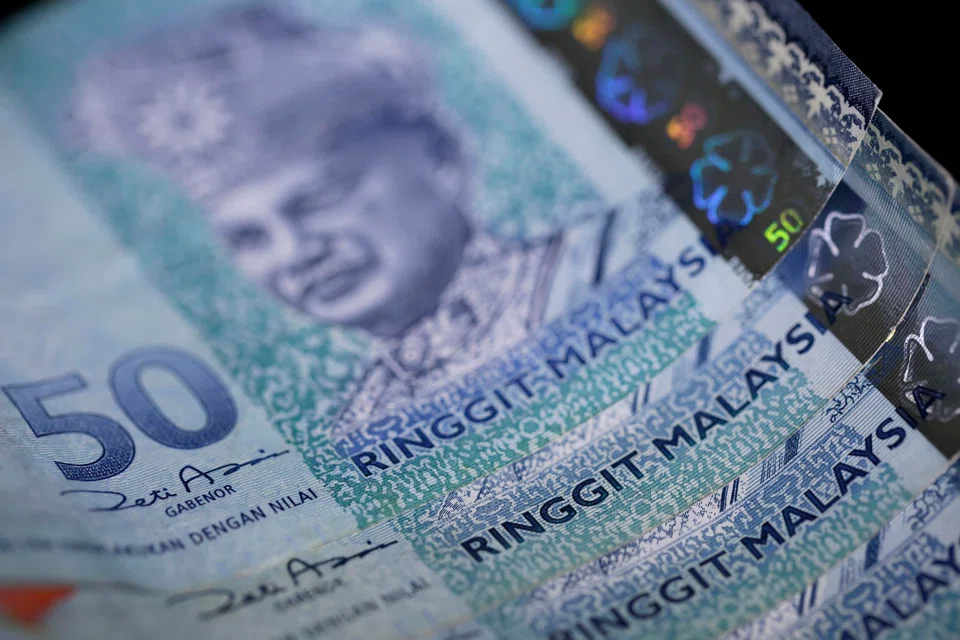
[SINGAPORE] The ringgit hit a three-year high against the Singapore dollar and a four-year high against the US dollar this week, as optimism around the Malaysian economy grew and trade tensions eased.
The currency was at 3.1702 against the Singdollar on Friday (Dec 12), having last been at that mark in July 2022. Meanwhile, it broached 4.0928 against the greenback – a four-year high.
The ringgit has been Asia’s best-performing currency this year, having appreciated 8.2 per cent against the US dollar in the year to date. It is 3.3 per cent up against the Singdollar.
Saktiandi Supaat, head of FX research and strategy at Maybank, attributed part of the ringgit’s outperformance to a robust factory output growth.
“The strength reflects optimism over Malaysia’s economy and links to the global tech cycle,” he said. “The October industrial product rose by 6 per cent, the fastest growth since September 2022.”
He added that he was “bullish” on the currency and expects the US-dollar-to-ringgit rate to fall to about four by mid-2026.
In November, analysts told The Business Times that the ringgit rally had been propelled by a powerful combination of strengthening domestic fundamentals and a favourable external environment, particularly a weaker US dollar.
DBS analyst Philip Wee said that compared with its regional peers, the ringgit’s recent strength is driven more by domestic factors. The currency was initially driven by improved sentiment after Malaysia hosted a successful Asean Summit. The ringgit’s strength was later reinforced by broad US dollar weakness after the US Federal Reserve delivered this week’s rate cut.
Global funds purchased RM6.1 billion (S$1.9 billion) worth of Malaysian bonds in November, said Maybank analyst Winson Phoon on Dec 5. It was the largest inflow in six months.


He noted that foreign interest in ringgit bonds “remained firm” amid expectations of further ringgit strength and continued Fed easing at the Federal Open Market Committee this week.
Supaat pointed out that the Fed was “dovish”, which also weighed on the US dollar and added to its decline against both the ringgit and the Singdollar. “We expect both the ringgit and Singapore dollar to continue doing well against the US dollar, although the former could continue to outperform,” he added.
Bank Negara Malaysia (BNM), the country’s central bank, is unlikely to change interest rates in 2026, said Bloomberg following a consensus survey, and this could boost the ringgit further.
The share of Malaysia’s exports to the US subject to reciprocal tariffs has also fallen sharply to 4.6 per cent, said CGS International Securities analysts on Wednesday.
As the ringgit has climbed, Malaysians’ demand for premium travel destinations has increased; they have widened their travel horizons beyond Asia to European destinations such as Paris and London, said Expedia. Malaysians are also spending more on international trips, budgeting as much as RM12,000 for long-distance trips.
“We continue to see positive drivers on the ringgit, given the artificial intelligence investment upcycle and solid fundamentals, and BNM is likely to stand pat,” said Supaat.
Decoding Asia newsletter: your guide to navigating Asia in a new global order. Sign up here to get Decoding Asia newsletter. Delivered to your inbox. Free.
Copyright SPH Media. All rights reserved.






