Japan, South Korean stocks soar as US-Iran deal to reopen Hormuz drive optimism
The prospect of cheaper oil will be a boon to Japan which is a net importer of energy
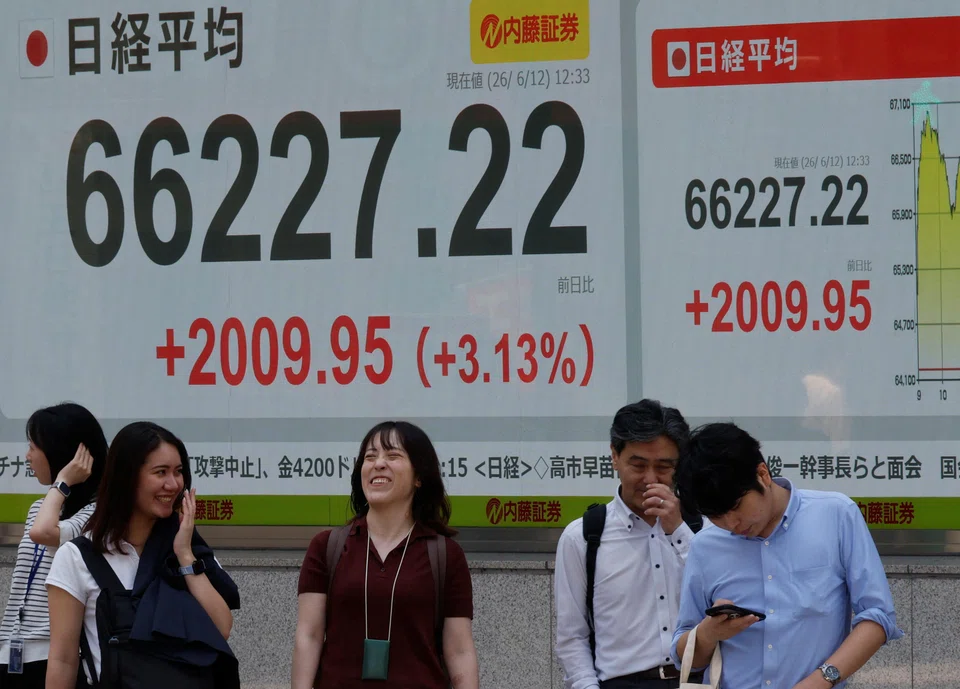
JAPANESE stocks gained to record highs and South Korean shares rallied after the US and Iran said they will sign a deal to reopen the Strait of Hormuz, which would significantly relieve pressure on Asian supply chains.
Japan’s Nikkei 225 climbed as much as 5.4 per cent to 69,558.12, breaching the 69,000 level for the first time, while the broader Topix gained 3.9 per cent to 4,032.39, also a record. South Korea’s Kospi rose as much as 5.9 per cent to 8,603.48, the highest since Jun 4.
AI-related shares like chip parts makers led gains, with exporters like automakers also strong. The advance came as oil prices sank.
“Investors are taking this to mean that there’s no need to worry about US-Iran tensions flaring up again,” driving risk-on buying, said Kazuhiro Sasaki, head of research at Phillip Securities Japan. “With oil prices also falling, it seems like the market is already pricing in the reopening of the Strait of Hormuz.”
Trump said in a social media post that the key waterway would open once the deal is signed on Jun 19. Iranian state media also said an agreement would be signed, following an announcement from Pakistani Prime Minister Shehbaz Sharif.
The unblocking of the Strait of Hormuz would be a major step toward resolving a supply chain crisis that has weighed on Asian manufacturers since the conflict broke out.
Before the war, Japan relied on the Middle East for more than 90 per cent of its oil imports, and the blockade resulted in production cuts and price hikes across the petrochemical industry.
In South Korea, Monday’s (Jun 15) rise extends the Kospi’s outsized 2026 rally, which has been fuelled by gains in Samsung Electronics and SK Hynix due to skyrocketing profits from a voracious need for memory chips amid the AI boom. The index is up more than 100 per cent so far in 2026.
AI-linked shares such as SoftBank Group, Kioxia Holdings and Murata Manufacturing also led the advance in Japan. The rally follows a rise in tech stocks in the US on Jun 12, where Elon Musk’s SpaceX rose 19 per cent in its Nasdaq debut.

“The SpaceX IPO is a plus for markets today – many investors had sold assets to take part in the offering, and now that money is flowing back in,” said Phillip’s Sasaki.
Elsewhere in the market, shares of Japanese construction firms like Taisei and Chiyoda, which have been involved in projects in the Middle East, rose more than 11 per cent. Air transport names like Japan Airlines and Korean Air Lines also outperformed on signs that the Iran conflict may be reaching an end.
However, with the signing of the US-Iran deal not expected until Jun 19, there’s a possibility that things do not go as planned, said Ryota Tsuda, a strategist at Daiwa Securities. Any setbacks would pose a risk to equities, he said. BLOOMBERG
Decoding Asia newsletter: your guide to navigating Asia in a new global order. Sign up here to get Decoding Asia newsletter. Delivered to your inbox. Free.
Share with us your feedback on BT's products and services