

Oil slips over 4% after US and Iran reach deal to end war, reopen Strait of Hormuz
The draft deal called for reopening Hormuz within 30 days under Iranian arrangements, says Mehr news agency
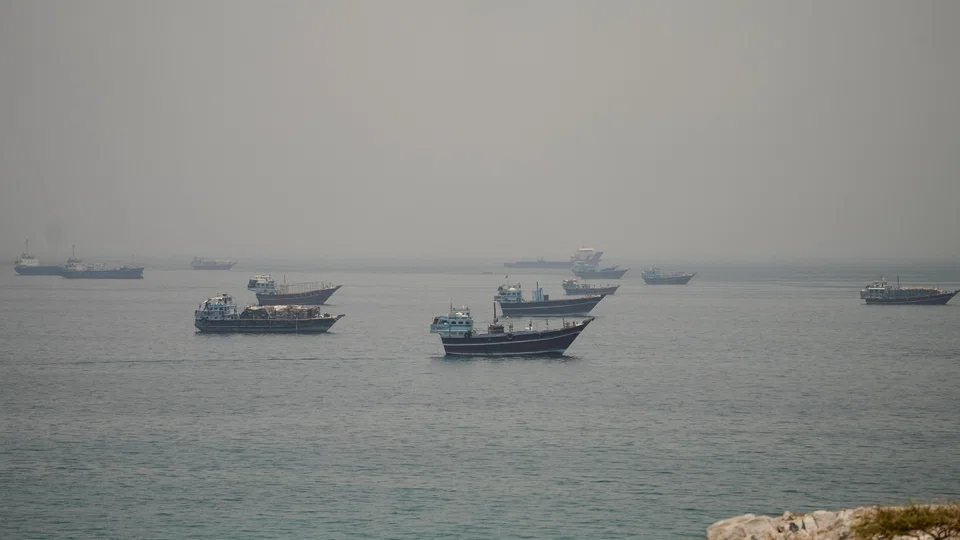
[SINGAPORE] Oil prices slipped to their lowest since March on Monday (Jun 15) after US President Donald Trump and Iran’s deputy foreign minister said they had reached an initial deal to end the war and to resume traffic through the Strait of Hormuz.
Brent crude futures fell US$4.08, or 4.7 per cent, to US$83.25 a barrel by 0415 GMT and US West Texas Intermediate was at US$80.53, down US$4.35, or 5.1 per cent. Both contracts fell to their lowest levels since March 10 on Monday after tumbling more than 3 per cent on Jun 12.
The US and Iran will sign a memorandum of understanding in Switzerland on Jun 19, said the prime minister of Pakistan, whose country has served as a mediator. Trump said on Jun 14 that the Strait of Hormuz would be open “toll free” and that a US naval blockade of Iranian ports would also end.
Iran’s semi-official Mehr news agency said the draft deal called for reopening the Strait of Hormuz within 30 days under Iranian arrangements.
“The geopolitical risk premium that had been built into crude is now being unwound quite aggressively as traders price in the prospect of restored oil flows,” said Tim Waterer, chief market analyst at KCM Trade.
The world has lost millions of barrels of oil and gas supply since the war closed the Strait of Hormuz, a chokepoint for a fifth of the world’s oil and liquefied natural gas supplies, for more than three months.
Investors are also watching cautiously how quickly Middle Eastern producers can resume oil production and exports following damage from the war and whether more ships will enter the region.
“While these uncertainties suggest upside risks to our forecast for Brent oil futures to reach US$80/bbl by the end of the year, it’s worth noting that oil flows through the Strait of Hormuz just needs to reach 60-70 per cent of prewar levels to return oil markets to prewar oversupply expectations,” Vivek Dhar, a commodities strategist at Commonwealth Bank of Australia, said in a note.
Iran’s deputy foreign minister, Kazem Gharibabadi, said a more expansive agreement would be negotiated during a 60-day ceasefire period.
SEE ALSO

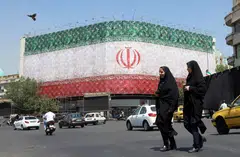
E4 nations, which include the UK, France, Germany and Italy, said on Jun 14 the countries were prepared to lift sanctions on Iran in response to steps on its nuclear programme.
“Beyond the immediate price reaction, attention will now shift toward the pace of actual supply normalisation and compliance with the agreement,” said Priyanka Sachdeva, senior market analyst at Phillip Nova.
“While the conflict may have come to an end and oil flows through the Strait of Hormuz may gradually return to normal, the damage already done cannot be reversed overnight. This includes not only any physical damage to oil infrastructure but also the economic strain endured by oil importing economies that have faced elevated energy costs for months.” REUTERS
Decoding Asia newsletter: your guide to navigating Asia in a new global order. Sign up here to get Decoding Asia newsletter. Delivered to your inbox. Free.
Share with us your feedback on BT's products and services
TRENDING NOW

Once staunchly pro-China, Malaysian Chinese businesses are now distancing themselves from Beijing

Looking beyond looming CEO succession, should UOB potentially pursue a transformative merger?

Could stablecoins be the future of money?

Grab CEO’s wife Chloe Tong on life with Anthony Tan and finding her purpose

