

Singapore shares end higher on Tuesday; STI up 1%
Across the broader market, gainers beat losers 327 to 281, as 1.6 billion securities worth S$3.6 billion change hands
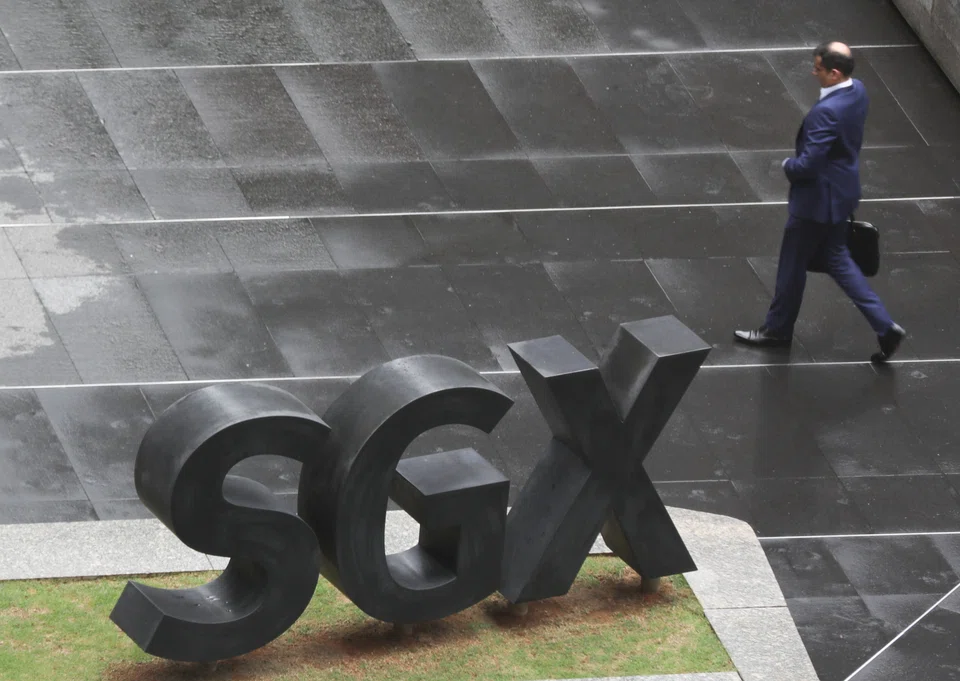
[SINGAPORE] Singapore stocks ended higher on Tuesday (Aug 11) amid a mixed performance from wider Asia markets.
The benchmark Straits Times Index (STI) gained 1 per cent or 55.74 points to finish at 5,754.17.
Yangzijiang Shipbuilding led the gainers on Singapore’s blue-chip index, rising 11 per cent or S$0.46 to S$4.66.
This is an extension of its earnings rally on Aug 7, when it gained 6.6 per cent after the shipbuilder posted a 28.4 per cent rise in net profit to 5.4 billion yuan (US$800 million) for its first half.
The worst performer among STI constituents was Singapore Airlines, which fell 5.9 per cent or S$0.45 to S$7.15.
The three local banks ended mixed. DBS rose 0.9 per cent or S$0.66 to S$76.99 and OCBC was up 3.5 per cent or S$1.06 at S$31.36, while UOB finished 2.6 per cent or S$1.14 lower at S$42.16.
Across the broader market, gainers outnumbered losers 327 to 281, after 1.6 billion securities worth nearly S$3.6 billion changed hands.
Within the iEdge Singapore Next 50 Index, Yangzijiang Financial was the top gainer, rising 9.5 per cent or S$0.02 to S$0.23, while Lendlease Global Commercial Real Estate Investment Trust was the biggest loser, falling 3.4 per cent or S$0.02 to S$0.565.
Key regional indices were mixed. Hong Kong’s Hang Seng Index lost 1.1 per cent and the FTSE Bursa Malaysia KLCI was down 0.2 per cent, while South Korea’s Kospi rose 0.7 per cent.

Analysts from Julius Baer continue to favour semiconductors and large software companies embedded in corporate information technology ecosystems at this juncture, where demand remains robust.
“Though concerns about artificial intelligence disrupting software providers are growing, we believe infrastructure must first reach critical scale, giving incumbents time to adapt,” they said.
This article has been written with the assistance of AI and reviewed by a reporter
Decoding Asia newsletter: your guide to navigating Asia in a new global order. Sign up here to get Decoding Asia newsletter. Delivered to your inbox. Free.
Share with us your feedback on BT's products and services
TRENDING NOW

Singapore identifies 7 firms responsible for haze fires, notices issued urging action: Grace Fu

Philippine power giant First Gen rebuffs foreign offers, plans up to US$2.6 billion in expansion
DBS remains analysts’ pick ahead of Q3 earnings after Singapore banks’ share slump
Indonesia imposes US$116 million in fines over manipulation of Sinar Mas, Prajogo-linked stocks

