

Singdollar weakens more than 1% against the US dollar as Iran conflict sparks safe-haven flight
Broad USD strength is observed because of its safe-haven nature


[SINGAPORE] The Singapore dollar has weakened by more than 1 per cent against the US dollar since the flare-up in Middle East tensions, which triggered an aggressive rotation into safe-haven assets and fanned fears of an energy-led inflation shock.
The SGD/USD pair was trading at 0.7824 on Wednesday (Mar 4), a 1.1 per cent decline over the past five days, following reports of US and Israeli strikes on Iran over the weekend. Meanwhile, the USD/SGD pair was trading at 1.278.
Broad USD strength was observed not only because of its safe-haven nature, but also because potential inflation risks emanating from higher oil prices might reduce the possibility of Federal Reserve cuts this year.
The US dollar index approached the psychological 100 level, hovering around 99.7 on Tuesday and paring slightly to 99.16 on Wednesday.
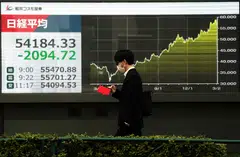
“Singapore’s financial markets saw risk-off but contained movements this week, with the benchmark equity index down by 1.6 per cent, and the SGD weakening by 1 per cent against the USD, amidst the fluid geopolitical situation in the Middle East,” said DBS Group Research senior economists Chua Han Teng and Radhika Rao on Wednesday.
Still, the economy is confronting this uncertainty from a “relatively strong position, amid solid growth momentum buoyed by global artificial intelligence-related tailwinds and still-low inflation at the start of 2026”, they said.
The aggressive flight to safety into the USD is also beginning to look overstretched, Philip Wee, senior FX strategist at DBS Group Research, noted.
“After testing a high of 99.7 yesterday, the greenback encountered stiff technical resistance near the psychological 100 level, prompting investors to dial back their long positions as the initial shock of the Iran strikes began to digest,” he added.
“Deeply overbought conditions, combined with early signs of slowing momentum, suggest that instead of continuing to rise, USD is more likely to consolidate today, probably between 1.273 and 1.281,” UOB analysts said of the USD/SGD pair in a note on Wednesday.

In UOB’s forecast for the next one to three weeks, they said the USD could consolidate for a couple of days first before heading higher towards 1.285.
Market sentiment had some respite on Tuesday after Washington announced it would provide war risk insurance through the US International Development Finance Corporation for ships transiting through the Strait of Hormuz.
This move, along with China’s decision to set a stronger-than-expected daily fixing for the yuan, has helped to anchor regional stability for now. On Tuesday, the People’s Bank of China lowered the daily fixing by 148 pips to 6.9088 – its largest adjustment in over six months.
Energy impact
Brent crude prices surged 15 per cent in a week to around US$81 per barrel, after briefly pushing towards US$85. The volatility stems largely from the effectively closed status of the Strait of Hormuz, a vital artery for 20 per cent of global oil flows.
For Singapore, the risk is a dual-threat of imported inflation and rising business costs.
“As a price taker that is highly dependent on energy imports, Singapore’s consumers and export-oriented firms will have to brace for higher electricity, transport-fuel and shipping costs,” said DBS’ Chua.
DBS estimates that roughly 7 per cent of Singapore’s consumer price index basket would be directly affected by a sustained energy spike.
Regionally, typical net energy importers such as the baht and Philippine peso are seeing bigger impacts as compared to the ringgit, Singdollar and yuan, Maybank analysts said in a Tuesday note.
“Much of the region will likely monitor developments in the Middle East with trepidation. The baht, ringgit and SGD are down more than 1 per cent this week, and regional currencies might underperform if US dollar stays bid,” DBS analysts said.
However, the Singdollar being a safe haven could continue to see some relative resilience as compared to its peers, Maybank said.
If Brent crude oil prices spike further, it “might complicate the Monetary Authority of Singapore’s policy bias towards earlier tightening”, DBS said.
“Regional central banks are unlikely to act pre-emptively on policy, preferring to remain on hold while maintaining a keen watch on the domestic currency and bond yield movements,” it added.
Decoding Asia newsletter: your guide to navigating Asia in a new global order. Sign up here to get Decoding Asia newsletter. Delivered to your inbox. Free.
Copyright SPH Media. All rights reserved.






