South Korea bourse CEO sees Kospi at 6,000, vows to cut ‘zombie’ firms
The index’s surge over the past 12 months is the best among more than 90 global equity indexes tracked by Bloomberg
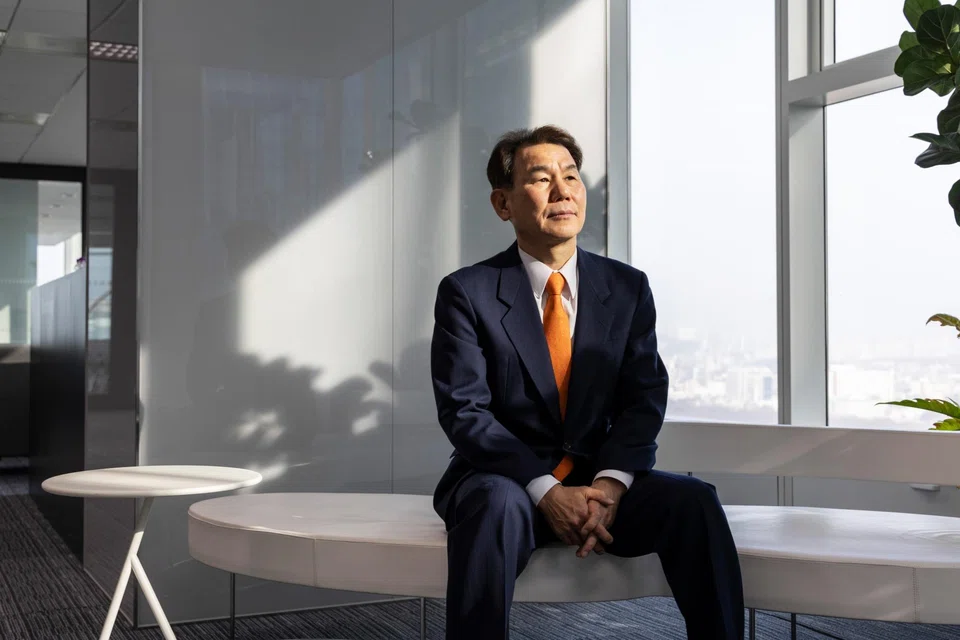
[SEOUL] The world-beating rally in South Korean stocks is poised to extend as the nation presses ahead with efforts to improve shareholder returns and lure global capital, according to Jeong Eun Bo, chief executive officer at the Korea Exchange.
Jeong’s optimistic view comes as the benchmark Kospi is just about 2 per cent away from the once-distant 5,000 level, a key target enshrined in a campaign pledge by South Korean President Lee Jae Myung, thanks to a more than 94 per cent surge over the past 12 months.
The market owes much of that advance to relentless gains in stocks linked to artificial intelligence (AI) and defence, two of the hottest sectors globally, which came alongside pivotal changes by local lawmakers to lift corporate governance standards.
“It’s nearing 5,000 but I think beyond that, even 6,000 is possible,” Jeong said of the Kospi on Friday (Jan 16), without giving a timeframe. “South Korea’s main industries such as semiconductor, defence and shipbuilding have increased their competitive edge, which appears to lead a new value-up for the stock market.”
A 6,000 level would mean a gain of another 22 per cent for the Kospi. While the index has extended its extraordinary rally into the new year, it climbed for a 12th straight session to another all-time high on Monday, some market watchers, such as strategists at HSBC Holdings, are advising caution. Poor market breadth, a plunging local currency and fears of an AI bubble are among potential risks.
Investors in South Korea’s US$3 trillion stock market have developed a renewed obsession with such milestones since President Lee, who came to power last year, pledged to drive the Kospi towards the 5,000 level in April. That appeared to be a daunting endeavour at the time, given that the nation was still reeling from a shock declaration of martial law in December 2024, which only worsened the so-called “Korea discount”, the perennial markdown of valuations tied to weak governance.
The Kospi’s surge over the past 12 months is the best among more than 90 global equity indexes tracked by Bloomberg. But local investors have largely sat out the bull run, remaining net sellers of Kospi equities and even wagering it will reverse. An inverse exchange-traded product that seeks two-times amplified gains on a Kospi drop has been a bestseller this year, according to Koscom.
The exchange is working to lure back those retail investors, whose absence has been a key reason for the poor market breadth, with moves to relax a prohibition on riskier leveraged ETFs and expand trading hours to around the clock.
It is also moving to ramp up de-listings of the so-called “zombie firms” or companies that do not earn enough to pay their interest costs for an extended period. Such companies “must be forced out as soon as possible to restore market trust,” he said. South Korea has “too many” listed companies, about 2,800, relative to the size of the economy and the capital market, he added.

Jeong cited the government’s continued focus on corporate reforms for his positive view. Kospi heavyweight Samsung Electronics, is expected to give details of the measures it will take to boost shareholder returns before July, according to the CEO.
He also pointed to the nation’s efforts to win an upgrade to developed-market status. While the reclassification by MSCI could “take a few years”, it is set to bring major benefits, he said.
“The inflow of capital will be substantially greater than the outflow,” given there will be mandatory asset allocation by global funds following such an upgrade, he added. BLOOMBERG
Decoding Asia newsletter: your guide to navigating Asia in a new global order. Sign up here to get Decoding Asia newsletter. Delivered to your inbox. Free.
Share with us your feedback on BT's products and services