

South Korea, Japan stocks slide as Asian equities fall amid oil gains, Fed rate hike bets
Traders now put odds of a September rate hike at over 50% for five major central banks
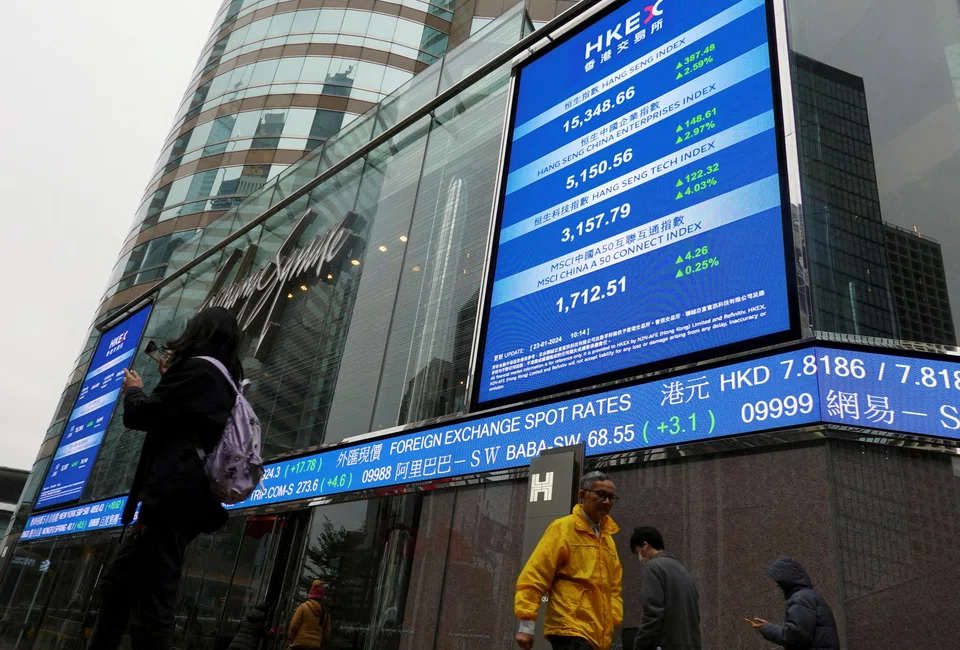
ASIAN stocks fell with bonds and gold as rising oil prices stoked inflation concerns and expectations for tighter monetary policy, fuelling a risk-off tone across markets.
MSCI’s Asia Pacific equities gauge dropped 1.7 per cent, with decliners outnumbering gainers four to one. All 11 subgroups of the regional benchmark retreated. Benchmark indices in Japan and South Korea both slid at least 2.8 per cent.
Among the main market moves, S&P 500 futures were little changed as at 10.43 am Tokyo time.
Nikkei 225 futures (OSE) fell 2.6 per cent, Japan’s Topix fell 2.2 per cent, Australia’s S&P/ASX 200 dropped 1.1 per cent, Hong Kong’s Hang Seng slipped 0.7 per cent and the Shanghai Composite retreated 0.7 per cent.
Brent jumped 2 per cent to about US$96.50 a barrel as escalating US-Iran fighting heightened the risk of disruptions to oil flows through the Strait of Hormuz. The commodity has surged about 60 per cent in 2026 so far.
Rising oil prices pressured bonds, pushing global yields to the highest since 2008, as traders increased bets the US Federal Reserve will raise interest rates. Treasury 10-year yields rose one basis point on Wednesday (Sep 2) to 4.81 per cent, the highest level since late 2023.
Australian bonds extended losses, with yields on the 10-year note climbing as much as seven basis points to 5.25 per cent, the highest level since July 2011.
New Zealand government debt also declined, with traders pricing in a near-certain interest rate hike by the central bank later on Wednesday.
The renewed surge in energy prices is compounding inflation concerns already fuelled by government spending and heavy corporate borrowing to finance the artificial intelligence buildout.



Traders now put the odds of a rate hike in September at more than 50 per cent for five major central banks, as investors assess whether rising oil prices and bond yields will deepen pressure on stocks and other assets.
“This morning session’s weak sentiment is clearly driven by the challenging combination of renewed Hormuz worries and rising global bond yields,” said Homin Lee, a senior macro strategist at Lombard Odier Singapore.
“We still think this is just part and parcel of a volatile boom phase, with higher beta markets exhibiting wilder swings.”
Lee said he is still maintaining a constructive view on Asia-Pacific markets, especially those in North Asia, as “the underlying earnings picture is solid”.
Gold, which becomes less attractive as interest rates rise, dropped 0.5 per cent to around US$4,330 an ounce after falling almost 6 per cent over the previous three days. Bitcoin dropped 0.6 per cent to about US$77,000.
In stocks, Dell Technologies bucked the overall downbeat tone, jumping 8 per cent in extended trading after raising its annual sales forecast.
Tech remained in focus with Nvidia said to be in advanced talks to acquire AI startup Hugging Face in a US$14 billion deal.
Meanwhile, the US military said it completed the strikes, even as Iran said it launched a missile attack on a US air base in Jordan. US President Donald Trump earlier said that the US strikes were in retaliation for Iran’s attempt to mine the strait and an earlier attack on a military base in Jordan.
The exchange followed weeks of relative calm, during which the Trump administration had shifted from military action toward economic pressure on Teheran. Neither side has shown much appetite to resume talks since an interim peace deal collapsed.
The renewed tensions are adding to Wall Street’s challenges as a global bond rout deepens. US Federal Reserve chair Kevin Warsh’s Jackson Hole speech last week also fuelled expectations for tighter monetary policy, with markets now assigning about a 70 per cent probability to a September rate increase.
Swaps have almost fully priced in a European Central Bank hike on Sep 10 and assign a 58 per cent probability to a Reserve Bank of Australia increase on Sep 29. Markets are fully pricing in a Bank of Japan move on Sep 18.
“Bond yields were already rising and the renewed US-Iran attacks and their impact on oil prices have made investors more concerned about bonds,” said Rajeev De Mello, global macro portfolio manager at Gama Asset Management.
“At these levels, higher yields are clearly a headwind to Asian equities, especially longer duration tech stocks.” BLOOMBERG
Decoding Asia newsletter: your guide to navigating Asia in a new global order. Sign up here to get Decoding Asia newsletter. Delivered to your inbox. Free.
Share with us your feedback on BT's products and services






