

South Korean leveraged ETF trading plummets under new curbs
This follows authorities’ roll out of cooling measures after such tools drove a retail trading frenzy in the South Korean stock market
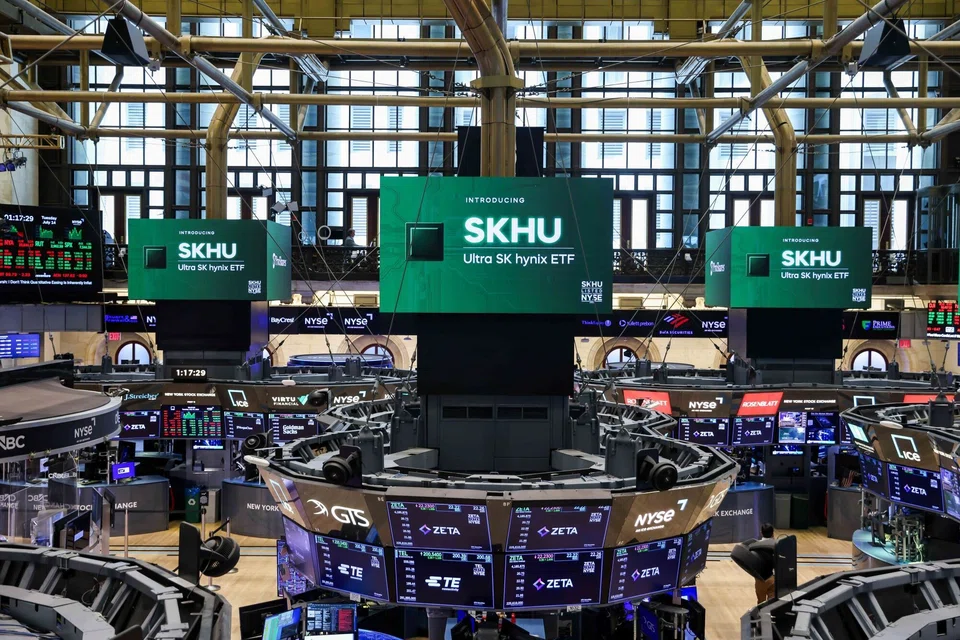
[SEOUL] Trading in leveraged exchange-traded funds (ETFs) tied to South Korea’s two chip giants has shrunk sharply, after authorities took steps to slow demand for the products that fuelled recent market volatility.
The Kodex single-stock ETF tracking SK Hynix, the biggest of its kind in the country, saw its trading volume drop to 59 million shares on Monday (Aug 3), the lowest since Jun 4.
Its smaller peer linked to Samsung Electronics also had the least number of shares changing hands since its launch in late May.
The plunge in trading activity came after regulators in July adopted cooling measures, including a higher minimum cash deposit requirement for investors and a temporary ban on new listings of such ETFs.
The funds, which use derivatives to amplify returns, had fuelled a retail trading frenzy that has transformed Korea’s US$3.7 trillion stock market into one of the world’s most turbulent.
“Speculative leverage froth in major tech names is neutralised from both the upside and downside,” said Peter Park, a Korea equity sales associate at NH Investment & Securities.
“Because investors can sell existing holdings without restrictions but face high cash barriers for new buys, speculative retail leverage churn has effectively ended.”
Effective Jul 31, authorities raised the minimum deposit requirement – or minimum account balance in cash required – for leveraged ETF trading to 30 million won (US$21,065) from 10 million won.
Earlier in July, regulators also said new listings of single-stock leveraged ETFs would be temporarily suspended until market conditions stabilise.
SEE ALSO

Meanwhile, the outstanding balance of margin loans used to finance stock purchases fell further to 28.9 trillion won as of Jul 31, the lowest level since January, according to data from Korea Financial Investment Association.
The benchmark Kospi Index, a bellwether of the global AI trade, remains up about 48 per cent in 2026 so far. The surge has come at a cost of extreme volatility, with trading halting an unprecedented four times in July.
The volatility gauge for Kospi is still above 80, implying high intraday gyrations in the near term. The index hit its peak of 97 in late June. BLOOMBERG
Decoding Asia newsletter: your guide to navigating Asia in a new global order. Sign up here to get Decoding Asia newsletter. Delivered to your inbox. Free.
Share with us your feedback on BT's products and services
TRENDING NOW

DBS, OCBC, UOB rout lops billions off STI as inflation, rate concerns spook investors

Grab CEO’s wife Chloe Tong on life with Anthony Tan and finding her purpose

OCBC sheds S$8 billion in value as shares close nearly 6% down; analysts cautious on banks

Deal between tycoon friends sparks scrutiny of Philippine power sector

