

SK Hynix, Samsung climb as Asian stocks, bonds gain; oil extends decline
MSCI’s regional equities gauge is up 0.5% but gains are narrowly based as more shares fall than rise
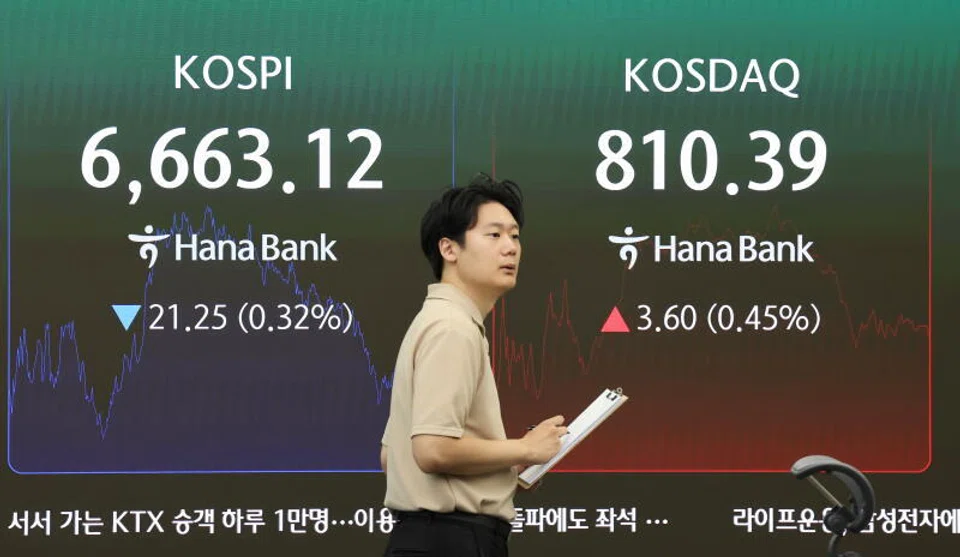
ASIAN stocks and bonds edged up as a pullback in oil prices eased inflation concerns. The yen was mostly steady ahead of the Bank of Japan’s (BOJ) interest rate decision, with traders expecting a hike.
MSCI’s regional equities gauge advanced 0.5 per cent, though gains were narrowly based, with more shares falling than rising.
Among the main moves in markets, S&P 500 futures were little changed as at 10 am Tokyo time. Hang Seng futures rose 0.4 per cent, Japan’s Topix fell 0.4 per cent and Australia’s S&P/ASX 200 rose 0.1 per cent.
Chipmakers Samsung Electronics and SK Hynix climbed after a key US semiconductor gauge rallied.
Earlier, Wall Street indices posted their best day since August, rebounding from losses triggered by the US Federal Reserve’s first rate hike since 2023.
Adding to the positive tone, Brent crude declined for a third day, falling 0.8 per cent to about US$104.00 a barrel as supply concerns eased and traders turned their attention to the next round of diplomacy over the US-Iran war.
Treasuries held their gains from the New York session, when oil’s retreat pushed the 10-year yield lower by nine basis points to 4.93 per cent. The yield had touched 5.02 per cent on Wednesday (Sep 16) following the Fed move.
Government bonds of similar tenor in Australia, Japan and New Zealand opened higher.
Lower energy prices could reduce pressure on consumer prices and give central banks more room to assess the impact of tighter monetary policy, offering support to both stocks and bonds.


But the durability of that reprieve may depend on whether oil continues to retreat, with the US-Iran war and prospects for further diplomacy keeping the outlook for energy supplies uncertain.
“With central bank policy still driving markets and geopolitical risks remaining elevated, there should be plenty of opportunity for volatility before the week is done,” wrote Nick Twidale, chief market analyst at AT Global Markets in Sydney.
Oil fell with Saudi Arabia seeking to restore about half the capacity of its key East-West pipeline within days after it was shut last week following drone strikes, easing some concerns over further supply losses stemming from the Iran conflict.
Meanwhile, Reuters reported that China asked Iran to help rein in Yemen’s Teheran-backed Houthi militants, a move that could potentially ease disruptions around the Bab el-Mandeb, another strait vital to global shipping and energy markets.
Markets on Friday also face an additional test in the form of the so-called “triple witching” – in which derivatives contracts tied to stocks, index options and futures mature.
More than US$2 trillion in notional value of options expires on Friday, and historical data suggests the S&P 500 has a higher-than-average probability of closing lower on triple witching days, wrote Dilin Wu, a strategist at Pepperstone Group.
“That said, the expiry itself may have been part of what drove Thursday’s buying – bulls appear to have pushed for key technical levels ahead of today’s event to lock in a favourable positioning setup,” she wrote.
“Whether the rally can extend beyond the expiry is the most important thing to watch today.”
Elsewhere, gold extended its gains after jumping almost 2 per cent on Thursday, while a Bloomberg gauge of the US dollar steadied.
UK government bonds also rallied after the Bank of England (BOE) scrapped plans to sell long-dated gilts as part of its quantitative-tightening programme.
The decision offered relief to a battered market, where 10- and 30-year yields had climbed to their highest levels since 2007 and 1998, respectively.
The BOE left its benchmark rate unchanged on Thursday.
Meanwhile, Japan’s inflation slowed for the first time in four months, largely reflecting the effect of government subsidies.
All respondents in a Bloomberg survey expect the BOJ to raise its policy rate to 1.25 per cent from 1 per cent on Friday, with governor Kazuo Ueda scheduled to hold a press conference after.
The yen was little changed, trading around 156.20 per US dollar.
“If anything, the hike has been very well signalled and has already been priced in to a great extent,” Naomi Fink, chief global strategist at Amova Asset Management, said on Bloomberg TV.
“Conversely, if it doesn’t happen that will be the shock. I think forward guidance is going to be something very much focused upon.” BLOOMBERG
Decoding Asia newsletter: your guide to navigating Asia in a new global order. Sign up here to get Decoding Asia newsletter. Delivered to your inbox. Free.
Share with us your feedback on BT's products and services
TRENDING NOW

Once staunchly pro-China, Malaysian Chinese businesses are now distancing themselves from Beijing
Stocks to watch: HPL, Aims Apac Reit, Zico, Advanced Systems Automation, ComfortDelGro

‘How many will survive?’: Bubble fears arise as China’s humanoid robotics face reality check
Smaller board lots can’t fix a market run by three banks

