

Tech rout sweeps Asia as AI rally jitters spark sell-off
The Kospi sinks 8.3%, led by steep losses in chipmakers

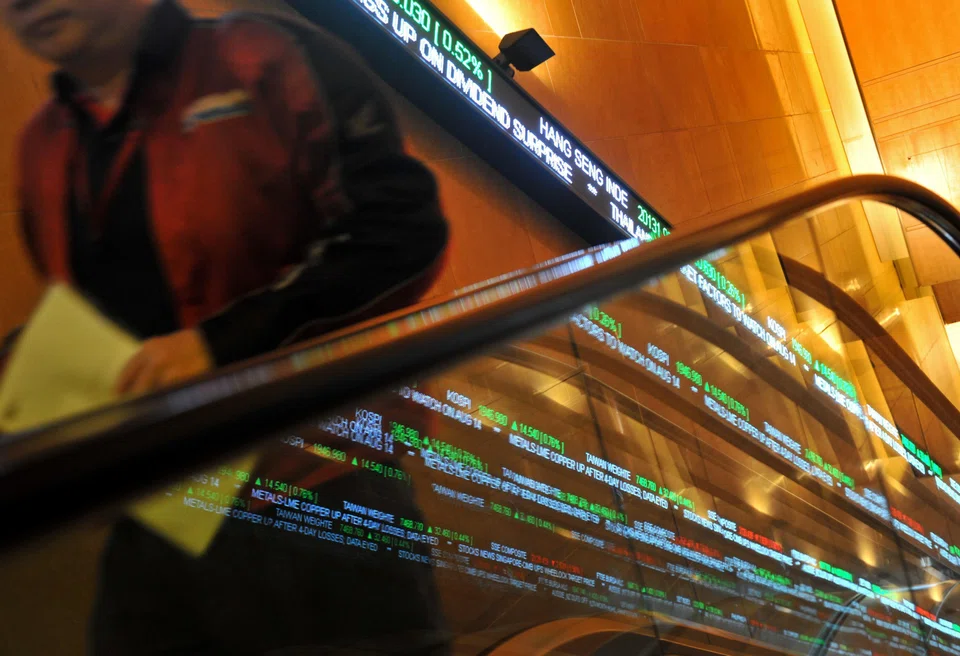
[SINGAPORE] A rotation out of technology stocks swept through Asian markets on Monday (Jun 8), as investors grew concerned that the artificial intelligence-driven rally may have run ahead of fundamentals.
The sell-off was particularly severe in South Korea, where technology and semiconductor shares have been among the region’s strongest performers this year.
The benchmark Kospi plunged as much as 8.8 per cent in morning trade, triggering a 20-minute circuit breaker that temporarily halted trading. It later closed 8.3 per cent lower at 7,484.41, marking its steepest daily decline since Mar 4.
Shares of memory chip manufacturers Samsung Electronics tumbled 10.2 per cent, while SK Hynix dropped 7.7 per cent.
Concerns over the stability of a ceasefire between the US and Iran also weighed on investors, as Israel and Iran exchanged strikes on Jun 8 for the first time since a ceasefire in the Middle East war took effect two months ago.
Across the region, Japan’s tech-heavy Nikkei 225 closed 3.9 per cent lower while the broader Topix fell 2.5 per cent. Shanghai’s CSI 300 declined 1.8 per cent and Hong Kong’s Hang Seng Index ended 1.2 per cent lower.
In Singapore, the blue-chip Straits Times Index (STI) closed 1.7 per cent lower at 4,963.67 points on Monday, with chip stocks among the worst performers. CSE Global was down 3.6 per cent, AEM lost 3.1 per cent and UMS Integration fell 1.2 per cent.
UMS supplies semiconductor toolmaker Applied Materials, while CSE is an Amazon data centre partner, and AEM supplies US chip giant Intel.
Bank stocks were not spared, either. DBS lost 1.6 per cent or S$1.02 to finish at S$62.76, OCBC fell 2.3 per cent or S$0.54 to S$23.40, and UOB was down 2 per cent or S$0.76 at S$37.79.
SEE ALSO
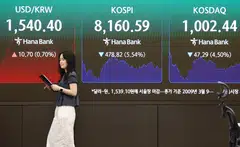





Concerns grow over AI spending outlook
Investors were likely spooked by fears of the AI rally overheating, with tech stocks taking a hit globally, said analysts.
Swissquote analyst Ipek Ozkardeskaya said the steep drop in memory chipmakers is being driven by fundamental headwinds, including reports that Nvidia’s next-generation Vera Rubin platform will use significantly less dynamic random access memory than expected.
Broader AI infrastructure spending may also be losing momentum, she noted.
Anthropic recently called for safeguards that could halt frontier AI development. Combined with a cautious AI chip revenue outlook from Broadcom, these factors have “taken a fair amount of air out of (the sector’s) balloon”, the analyst added.
Concerns were further amplified by surprise capital-raising announcements from several AI-related companies.
However, some institutional observers view the sharp pullback as a localised phenomenon rather than a structural shift. Mathieu Racheter, head of equity strategy research at Julius Baer, noted that Friday’s global sell-off was heavily concentrated in crowded momentum stocks.
Because the broader market remained largely resilient, Racheter characterised the drop as a “healthy technical correction” and a temporary breather within an ongoing bull market that has been driven by strong corporate earnings.
Market watchers are also attributing the sweeping tech sell-off to a massive liquidity rotation, especially out of South Korea.
Ozkardeskaya said investors who rode the semiconductor wave could be taking profits and freeing up cash to jump into the highly anticipated SpaceX initial public offering, which is expected to price on Jun 11 and serve as a test of investor appetite.
Global macro pressures
The weakness in Asia followed a rough session on Wall Street, where US-listed tech firms were also affected on Friday by concerns of a possible Federal Reserve interest-rate hike.
The catalyst was a stronger-than-expected US labour report showing non-farm payrolls jumped by 172,000 in May – almost double consensus expectations.
Dario Messi, head of fixed income analysis at Julius Baer, noted that the blockbuster data fuelled immediate fears of further central bank tightening, pushing the US 10-year Treasury yield back above 4.5 per cent while the two-year yield surged to 4.2 per cent.
The macroeconomic picture is being further pressured by rising crude oil prices amid a fragile Middle East ceasefire, fanning inflation expectations.
Markets are bracing for Wednesday’s US inflation report, which Swissquote’s Ozkardeskaya expects to show headline inflation climbing to 4.2 per cent – a figure that would significantly strengthen the case for an interest rate hike this autumn.
This economic resilience presents an early policy headache for the newly appointed Federal Reserve chair Kevin Warsh.
David Kohl, chief economist at Julius Baer, pointed out that while solid job creation and elevated inflation challenge the view that current price pressures are purely transitory, the details of the labour report offer some comfort.
Much of May's hiring was concentrated in lower-paying leisure and hospitality roles ahead of the Fifa World Cup, he noted, keeping overall wage growth moderate and reducing the immediate risk of a wage-driven inflation spiral.
Decoding Asia newsletter: your guide to navigating Asia in a new global order. Sign up here to get Decoding Asia newsletter. Delivered to your inbox. Free.
Copyright SPH Media. All rights reserved.
TRENDING NOW

DBS, OCBC, UOB rout lops billions off STI as inflation, rate concerns spook investors

Grab CEO’s wife Chloe Tong on life with Anthony Tan and finding her purpose

OCBC sheds S$8 billion in value as shares close nearly 6% down; analysts cautious on banks

Deal between tycoon friends sparks scrutiny of Philippine power sector

