

Wall Street ends lower on semiconductor sell-off as AI spending concerns mount
With highly priced tech shares coming under pressure recently, investors have shifted focus to other areas of the market
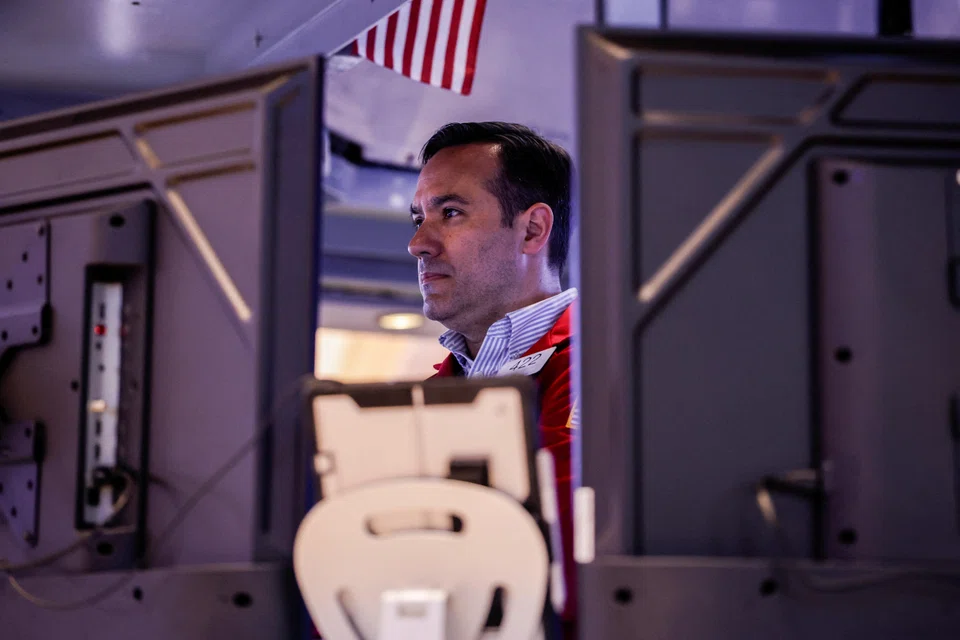
[NEW YORK] The Nasdaq and the S&P 500 closed at more than one-week lows on Tuesday (Jun 23), dragged down by sharp losses in semiconductor stocks as investors scrutinised growing debt-funded artificial intelligence spending and braced for a more hawkish US Federal Reserve.
The Dow ended slightly lower.
The Philadelphia SE Semiconductor index tumbled 7.9 per cent and the S&P 500 information technology sector index slipped 3.7 per cent.
Nvidia dropped 4.1 per cent and Alphabet fell 1 per cent while chipmakers Intel, Marvell Technology and Advanced Micro Devices lost between 5.8 per cent and 9.4 per cent.
“Some of the news lately about AI raises questions about all the spending that’s being done and the capex and ramping of the capacity for semiconductors,” said Thomas Martin, senior portfolio manager at Globalt.
Concerns over hyperscalers’ debt-funded AI spending have contributed to the sell-off. Elon Musk’s SpaceX, which debuted this month, has joined a list of megacaps tapping the bond market to raise capital.
Shares of SpaceX rose 1 per cent, following losses in the last three sessions.
Memory chipmakers Micron Technology and SanDisk, among the best performers on the S&P 500 this year, both fell around 13 per cent.
Micron’s earnings on Wednesday could offer clues on the outlook for the memory and AI chip sector after a searing rally this year.
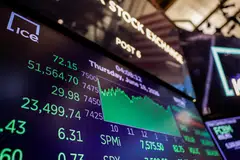
The Dow Jones Industrial Average fell 45.87 points, or 0.09 per cent, to 51,666.84, the S&P 500 lost 107.33 points, or 1.44 per cent, to 7,365.46 and the Nasdaq Composite lost 579.56 points, or 2.21 per cent, to 25,587.04.
The CBOE Volatility Index, Wall Street’s fear gauge, hit an over-one-week high, climbing 2.23 points to 19.52.
Six of the 11 major S&P 500 sectors moved higher, with consumer staples rising the most at 1.8 per cent. With highly priced tech shares coming under pressure recently, investors have shifted focus to other areas of the market.
Traders are increasingly betting on a second interest rate hike by the Fed by December, according to LSEG data, compared to expectations of just one 25-basis-point hike two weeks ago, as investors price in hawkish monetary policy under new chair Kevin Warsh.
Personal Consumption Expenditures Price Index data, the Fed’s preferred inflation gauge, is expected on Thursday. Investors are also watching developments in the Middle East.
The US Senate backed legislation on Tuesday to halt US military action against Iran, but it was unclear how it would affect the war as President Donald Trump’s administration negotiates a peace agreement with Iran.
Declining issues outnumbered advancers by a 1.31-to-1 ratio on the NYSE. There were 120 new highs and 187 new lows on the NYSE.
On the Nasdaq, 2,181 stocks rose and 2,636 fell as declining issues outnumbered advancers by a 1.21-to-1 ratio.
The S&P 500 posted 12 new 52-week highs and five new lows while the Nasdaq Composite recorded 132 new highs and 182 new lows.
Volume on US exchanges was 24.1 billion shares, compared with the 22.53 billion average for the full session over the last 20 trading days. REUTERS
Decoding Asia newsletter: your guide to navigating Asia in a new global order. Sign up here to get Decoding Asia newsletter. Delivered to your inbox. Free.
Share with us your feedback on BT's products and services






