

Why the AI boom may pose more peril to US markets than meets the eye
It’s not impossible to spot the characteristics of a brewing financial crisis. We can look to 2008 for clues
It seems like only yesterday. So can yesterday’s crisis help us understand today’s threats?
Perhaps.
Nearly 20 years have passed since the global financial crisis of 2007-09, which was fuelled by reckless subprime mortgage lending in the United States. Now there are rumblings that the artificial intelligence boom could similarly end in tears. How worried should we be?
A financial crisis is worse than an ordinary recession. It is when the plumbing of finance fails, and credit stops flowing even to borrowers who did nothing wrong. The Great Depression of the 1930s was an extreme financial crisis, in which 9,000 banks closed and the money supply dropped by a third.
Policymakers sometimes comfort themselves with the notion that financial crises, like earthquakes, are impossible to foresee. It “was very difficult,” Alan Greenspan said when he was chair of the US Federal Reserve in 2002, “to definitively identify a bubble until after the fact – that is, when its bursting confirmed its existence.”
In fact, though, financial crises are at least partly predictable, scholars from the US and Denmark wrote in the Journal of Finance in 2022. They studied 42 countries from 1950 to 2016 and found that the danger signal is rapid growth in borrowing plus rapid growth in asset prices in the same sector over three years. When both conditions hold, the chance of a crisis in the next three years is about 40 per cent, compared with roughly 7 per cent in normal times.
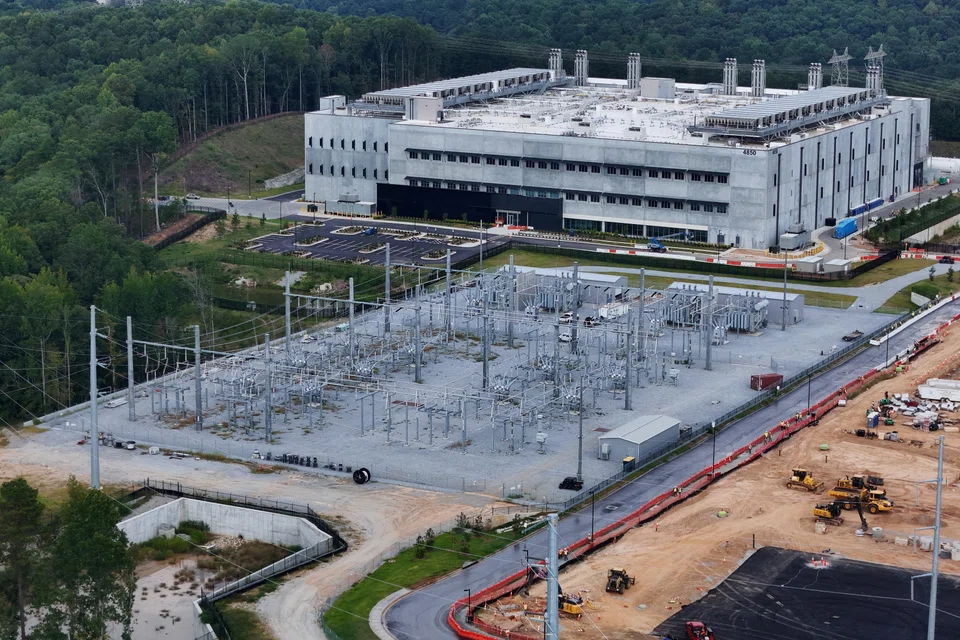
The housing bubble that preceded the global financial crisis checked both boxes: rapid growth in both borrowing and asset prices. Housing is not the risk it was 20 years ago, and banks are safer. But some of the behaviours are reappearing today in the artificial intelligence investing boom.
“The lights are flashing orange,” Samuel Hanson, an author of the Journal of Finance article who is an economist at Harvard Business School, said in an interview. The level of warning should give no one comfort, he said, likening the economy to a tinder-dry forest. “People will ask, ‘Well, is it imminent?’ Of course not. That’s an absurd question, and that’s not how we should think about managing risk.”
A warning that borrowing could be reaching a dangerous point came on Oct 13 when the International Monetary Fund issued a report on financial stability.



So far, soaring AI investment has been “an important source of support for the global economy and financial markets,” it said. That is exactly why an AI stall would be dangerous. The report went on to warn of “rising leverage in the AI ecosystem,” concluding that “the consequences of an AI correction could be global.”
Some AI-related stocks and bonds sold off sharply the very week the IMF issued its warning. Shares of CoreWeave, a US operator of AI data centres, fell 25 per cent that week and an additional 9 per cent through Thursday (Oct 22), leaving them down more than half from their 52-week high.
Stijn Van Nieuwerburgh of Columbia Business School estimates that US investment in data centres, chips, networking and power will total US$10.3 trillion from 2025 to 2032. This would come to an average of 3.6 per cent of gross domestic product a year, which would be more as a share of the economy, according to his calculations, than past investment surges in canals (0.7 per cent of GDP from 1836 to 1841), railroads (2.2 per cent from 1870 to 1890), electrification (0.5 per cent from 1905 to 1925), highways (1.1 per cent from 1956 to 1973), or telecommunications (1.1 per cent from 1996 to 2003).
This kind of spending makes sense if the world really does want lots of AI. Everything changes if demand falls short of expectations, which remains a real possibility. Gartner, a research firm, estimated on Oct 14 that if current investment plans stay on track, the owners of AI data centres will need to take in US$8.5 trillion in revenue through 2030 to cover their spending, financing costs and a 12 per cent return. The firm forecasts that total AI revenue attributable to data centres over that period will come to no more than US$3.6 trillion, and that less than half of that will go to companies that own the infrastructure.
“The burden is on the AI businesses to continue to deliver high, high growth rates,” Torsten Slok, chief economist and partner at Apollo Global Management, an alternative asset manager, said in an interview. “If not, we could have that dreaded ‘aha’ moment.”
The financing of the AI build-out has also gotten more opaque over time, calling to mind the famously convoluted structures at the core of the 2008 crisis. At first, the tech giants paid for AI investment out of their own abundant cash flows. But as expenses have risen, the burden has been increasingly shouldered by outside investors and lenders. This has sped expansion, but it has also piled up debt in places that do not show up on the giants’ balance sheets. Van Nieuwerburgh calls it “a more layered and potentially opaque allocation of risk.”
Richard Bookstaber, a risk manager, wrote a book titled A Demon of Our Own Design that was published in April 2007 and warned, presciently, that complex financial products and heavy borrowing had made the financial system brittle. Months later, the financial crisis began to unfold with the collapse of a pair of Bear Stearns hedge funds that were loaded with subprime mortgage securities.
Bookstaber, who is now the chief risk officer for UC Investments, a unit of the University of California with US$236 billion under management, says he is more worried today than he was on the eve of the last crisis. “It’s a period of major risk, and people just don’t seem to get it,” he said.
Paul Kedrosky, an investor, writer, and researcher, agrees. “We’re so far out over our skis, we’re out over someone else’s skis,” he said.
Right now, the AI build-out itself is inflationary. Constructing data centres is soaking up electricity, copper and workers, while the demand for loans is helping drive up interest rates, including mortgage rates, and crowding out other types of business investment.
Bank lending to private equity and credit rose 26 per cent in 2026, according to the IMF report. “History teaches us to worry when any form of credit, especially a new one, grows this fast,” said Hanson. Lending by private credit firms is not inherently risky, he said, but, “You’re just worried more about unknown unknowns.”
Higher interest rates are hurting, too. AI stock prices are based on profits expected years from now, and the higher the rate, the less those distant profits are worth today. AI does not have to fail for high rates to do damage. It just has to succeed more slowly than its lenders and shareholders are counting on – making it one more reason that there might be more peril in US markets than meets the eye. NYTIMES
Decoding Asia newsletter: your guide to navigating Asia in a new global order. Sign up here to get Decoding Asia newsletter. Delivered to your inbox. Free.
Share with us your feedback on BT's products and services






