

Yen climbs for a third straight session after Japan-US intervention
Barclays sees longer-term downward pressure on the currency persisting
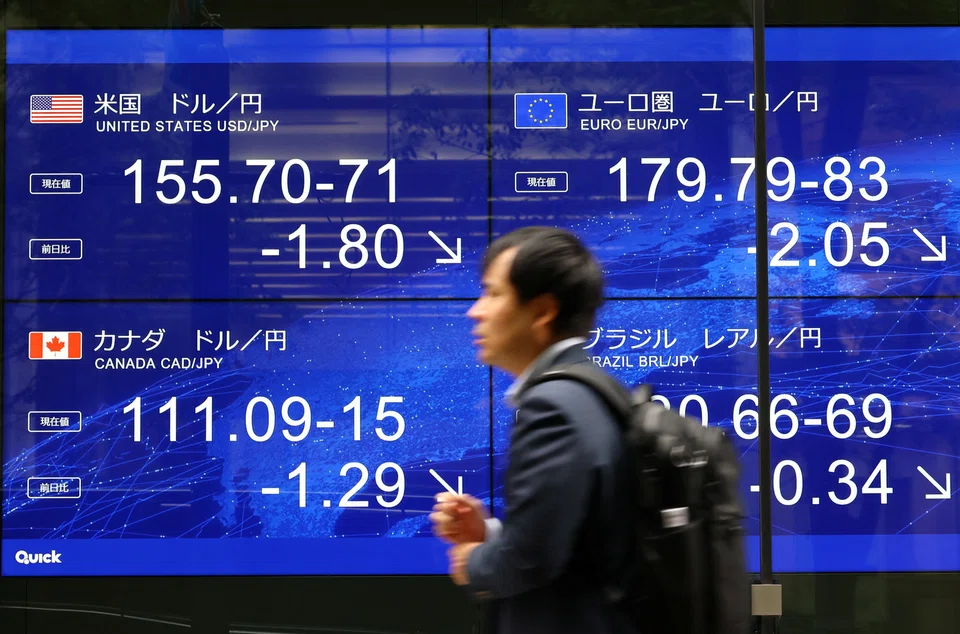
[SINGAPORE] The yen rose for a third straight session against the euro and US dollar on Monday (Aug 3), keeping traders on alert for further intervention after Tokyo and Washington stepped into the foreign-exchange market last week to support Japan’s currency.
Japan and the US conducted coordinated yen-buying intervention and will not hesitate to take further action, Japan’s finance ministry said on Monday.
Meanwhile, oil prices sank after US President Donald Trump held back from a fresh attack on Iran, but the greenback held steady before key American jobs data. Iran said it is not currently holding talks with the US.
Traders on alert for intervention
The yen also advanced against other currencies such as the euro and sterling, stirring speculation Japanese authorities could be in the market again.
The Japanese currency rose 1 per cent in the Asian morning to a high of 155.20 against the greenback to its strongest level in about three months, before paring some gains. It was last up 0.39 per cent at 156.76.
The 200-day moving average close to 158 is likely to act as resistance, said Rabobank senior forex strategist Jane Foley. The yen rose 0.4 per cent to 180.70 versus the euro, after hitting 179.435, the highest since mid-November 2025.
Bank of Japan data showed that Tokyo may have bought as much as US$58.97 billion worth of yen on Jul 30. The yen has been under pressure for years, undermined by the central bank’s gradual approach to monetary policy tightening, which has kept yield differentials wide between Japan and the rest of the world.
Barclays analysts argued that even if the yen were to strengthen further in the near term, longer-term downward pressures remain in place. A Goldman Sachs strategist said that outside of a change in either the policy mix or global growth outlook, encouraging repatriation would be the most powerful policy for influencing the currency over a long period of time.
Market participants are worried that Japan’s expansionary fiscal policy could weigh on the currency.




The dollar index was little changed at 99.82, having slid more than 1.5 per cent last week. The euro was up 0.01 per cent at US$1.1523, after hitting a fresh 1.5-month high at US$1.1559 in Asian trade.
An easing of geopolitical tensions typically weighs on the greenback while supporting the euro and yen, as safe-haven demand fades and concerns over energy-exposed economies recede.
“The fact that the dollar is not broadly weaker probably owes to the unresolved issue of whether the Federal Reserve will hike in September,” said Chris Turner, global head of forex at ING.
“It seems the only way the Fed can avoid hiking in September is if the US data is poor enough,” he added, recalling that a major input to that decision comes this week in the form of jobs data.
Analysts also said the US Treasury’s reported decision to intervene through the euro was to avoid signalling a desire for broad-based dollar weakness. The Federal Reserve Bank of New York sold euros for yen on behalf of the Treasury through two banks, the Financial Times reported.
“The European Central Bank has been quiet so far on the matter, but if it were to intervene as well, this would look like an implicit currency accord to strengthen the yen,” said Paul Mackel, global head of forex research at HSBC. REUTERS
Decoding Asia newsletter: your guide to navigating Asia in a new global order. Sign up here to get Decoding Asia newsletter. Delivered to your inbox. Free.
Share with us your feedback on BT's products and services






