

Yen extends declines after Bank of Japan hikes rates with two dissents
The Japanese currency falls as much as 0.9% to 157.33 per US dollar
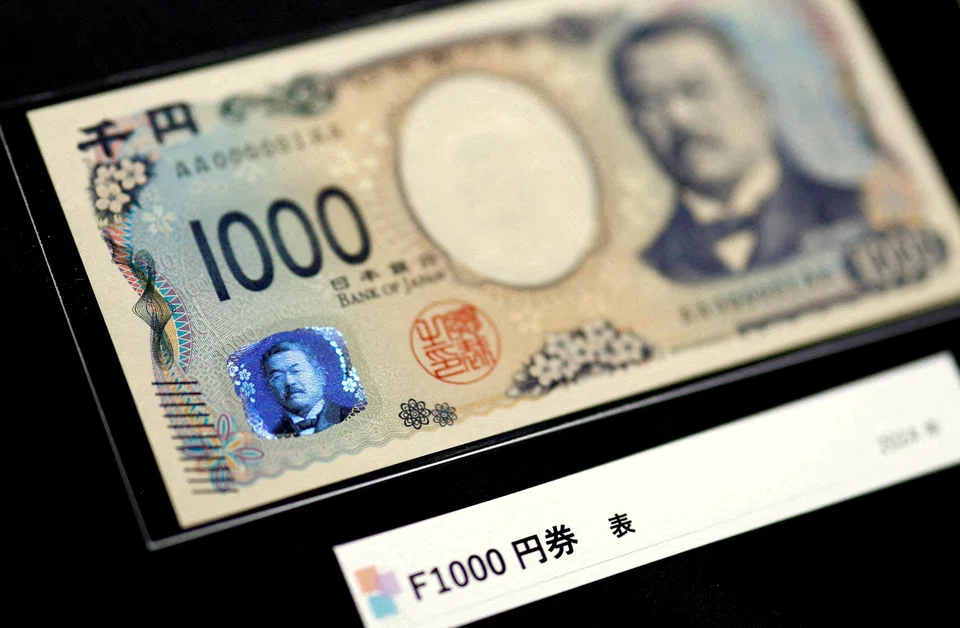
[TOKYO] The yen extended its drop against the US dollar after the Bank of Japan (BOJ) lifted interest rates as expected, with two dissents casting doubts on the outlook for further policy tightening.
Japan’s currency fell as much as 0.9 per cent to 157.33 per greenback and shorter-term Japanese government bond yields declined.
While the move was predicted by all economists surveyed by Bloomberg, the vote was 7-2 as board members Toichiro Asada and Ayano Sato dissented.
The yen pared some losses to trade 0.5 per cent lower at 156.75 per US dollar after BOJ governor Kazuo Ueda said in the post-decision briefing that the stage for policy setting has shifted.
He stressed the need to be careful about upside price risks, and said decisions would be made after firm debate at each meeting.
The outcome was “not hawkish enough for markets and should push USD/JPY higher and front-end JPY yields lower”, said Chidu Narayanan, chief Asia-Pacific strategist at Wells Fargo.
“Two dissents at this meeting, albeit from the two most dovish members of the board, does not support market expectations of a slew of rapid rates hikes from the BOJ.”
Japan’s Nikkei 225 gained 1.4 per cent in afternoon trading as the yen weakened.
The Topix index was little changed as financial shares weighed on the broader gauge. Japanese government bonds were mixed. Spillover in other currency and bond markets was also limited.


The BOJ’s rate increase came after the US Federal Reserve’s hawkish hike earlier this week pushed the yen weaker, partly reversing a sharp rally earlier in September, fuelled by expectations of faster BOJ tightening, an unwind of yen-funded carry trades and speculation that Japanese pension funds could shift more money to domestic assets.
Strategists say US dollar-yen could climb towards 160 if investors conclude the BOJ’s tightening path will struggle to keep pace with the Fed’s.
The risk is particularly acute if subsequent communication from the BOJ is interpreted as dovish, given that a quarter-point increase had already been largely priced into markets.
The latest slide also puts intervention risks back in focus after Japan and the US carried out their first coordinated yen-buying operation this summer since 1998.
Officials have emphasised the speed and disorderliness of currency moves rather than any specific level, but another push towards 160 could test their tolerance.
“We should expect further Japan-US intervention in forex markets if the yen is pressured again past 160 per US dollar,” said Neil Newman, head of strategy at Astris Advisory Japan.
Japan spent a record 15.4 trillion yen (US$98.3 billion) on intervention in the month through Aug 26, according to Finance Ministry data.
US Treasury Secretary Scott Bessent has since continued to signal support for a stronger yen, potentially adding to traders’ reluctance to rebuild bearish positions. BLOOMBERG
Decoding Asia newsletter: your guide to navigating Asia in a new global order. Sign up here to get Decoding Asia newsletter. Delivered to your inbox. Free.
Share with us your feedback on BT's products and services
TRENDING NOW

DBS, OCBC, UOB rout lops billions off STI as inflation, rate concerns spook investors

Grab CEO’s wife Chloe Tong on life with Anthony Tan and finding her purpose

OCBC sheds S$8 billion in value as shares close nearly 6% down; analysts cautious on banks

Deal between tycoon friends sparks scrutiny of Philippine power sector

