

CDLHT eyes rebound after renovation drag as Singapore tourism outlook brightens
Despite stronger magnets elsewhere, Singapore can still play to its strengths in offering safety and global connectivity, says the CEO of the stapled group’s managers

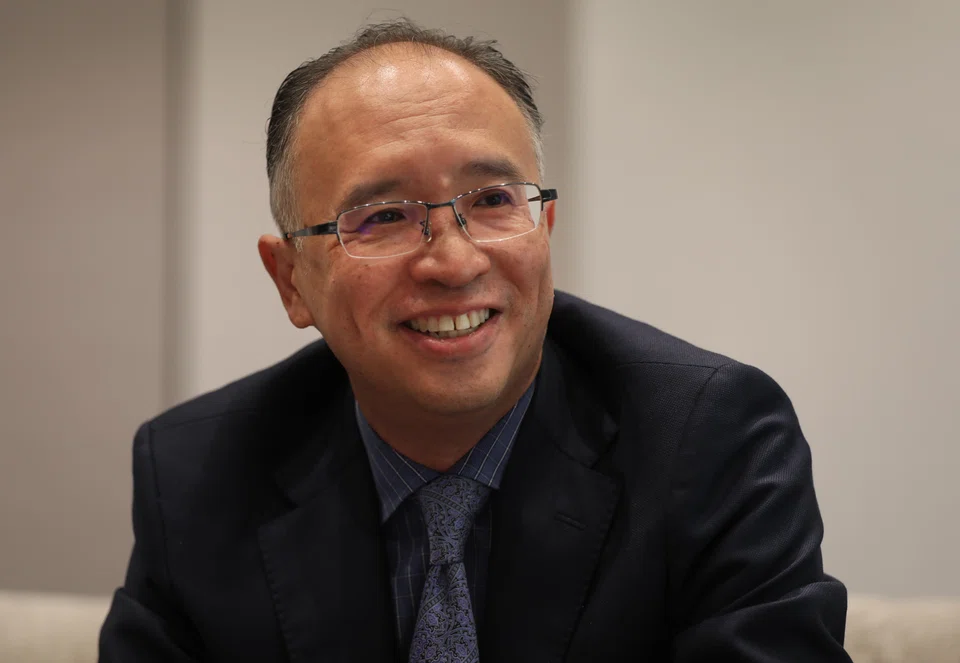
[SINGAPORE] After persevering through five consecutive quarters of year-on-year declines in net property income (NPI) – brought on partly by extensive renovations of three hotels and high interest rates – CDL Hospitality Trusts (CDLHT) is looking at brighter skies.
Following the completion last year of refurbishments for W Hotel in Sentosa Cove, Grand Millennium Auckland and Ibis Perth, the stapled group is now in a position to capture demand catalysts.
“We expect 2026 to be a better year for the Singapore hospitality market, with a generally stronger events calendar,” noted Vincent Yeo, the chief executive officer of the managers of CDLHT .
Singapore’s latest tourist attraction, the Disney Adventure – Disney Cruise Line’s first Asia-based cruise ship, with a passenger capacity of about 6,700 and home-ported in Singapore – will translate to pre and post-boarding demand for hotel rooms in the city-state. Its maiden voyage begins on Tuesday (Mar 10).
Yeo also pointed out that “while global uncertainties have made Mice (meetings, incentives, conventions and exhibitions) organisers more selective in choosing destinations, this often benefits stable gateway cities like Singapore”.
The Singapore Tourism Board expects international visitor arrivals in 2026 to reach 17 million to 18 million, surpassing the 16.9 million recorded in 2025. Tourism receipts are projected to come in between S$31 billion and S$32.5 billion this year, potentially setting a new high.
“I think the Singapore authorities have done very well and are very focused in terms of developing the tourism infrastructure – including the two integrated resorts and their respective expansion phases,” Yeo added.
Remarkable competition
“It’s just that the likes of Dubai have gone at warp speed, and they have taken the strategy of ‘build the attractions and the tourists will come’,” he told The Business Times in an interview before the outbreak of the US and Israel’s war with Iran.
“And people really do come, and what Dubai has done is nothing short of remarkable in terms of the speed that the city and the tourism infrastructure have grown.”
Saudi Arabia is also pouring enormous sums into developing its nascent tourism infrastructure, he added.
For Singapore, the key is to play to its strength in terms of global flight connectivity. “In today’s more contentious environment, travellers and expats increasingly appreciate the safety that Singapore offers.”
The Republic accounted for 62 per cent of CDLHT’s S$3.4 billion portfolio value as at the end of last year, and 59.4 per cent of the group’s NPI for the 2025 financial year.
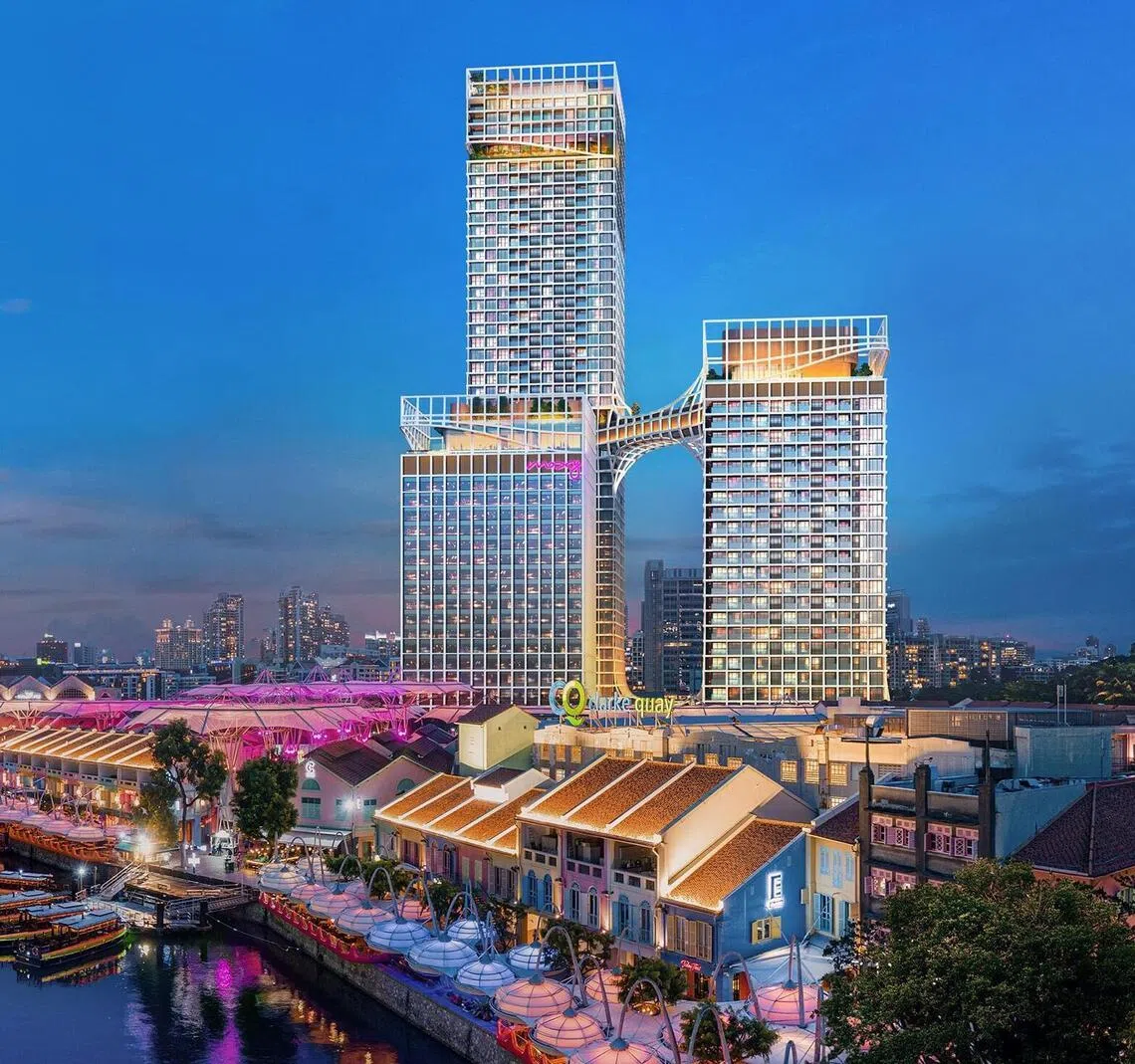
Yeo is excited about boosting the group’s Singapore portfolio with the upcoming acquisition of the Moxy Singapore Clarke Quay for S$475 million, under a forward purchase agreement with City Developments Ltd (CDL) announced in 2019.
CDL fully owns CDLHT’s sponsor, Millennium & Copthorne Hotels.
Moxy hotel a smart buy
The 475-room hotel is slated for completion in the fourth quarter of 2026. CDLHT will pay 90 per cent of the purchase price when the hotel takes its first paying customer, which is expected to be during the first half of 2027.
Yeo noted that the pricing of S$1 million per key is “considered very inexpensive in today’s market”. Last year, 21 Carpenter, a 48-room hotel project on a site with a freshly topped up 99-year lease from January 2022, changed hands at S$2.08 million per room.
Moxy Singapore Clarke Quay will have the same orientation – facing the Singapore River and with views of Marina Bay Sands – as CDLHT’s Novotel Singapore Clarke Quay, which previously stood on the spot.
The Moxy hotel is being built as part of an integrated development on the former Liang Court complex site in River Valley Road. The project is being developed by a joint venture (JV) led by CDL and CapitaLand Development.
CDLHT sold Novotel Clarke Quay for S$375.9 million to the JV in 2020; it had paid S$201 million for the hotel in 2007.
Yeo said: “The redevelopment of the Liang Court site presented CDLHT with a timely opportunity to divest a mature asset facing substantial capital commitments and with a remaining 57-year leasehold, and instead forward-purchase a brand-new, custom-built hotel with refreshed specifications and a new 99-year land tenure.
“This will enhance our portfolio’s long-term income sustainability and asset-quality profile.”
Ahead of the Moxy hotel acquisition, the group has been strengthening its balance sheet. It issued two series of perpetual securities: S$150 million in November 2025 and S$100 million in February 2026.
The group’s gearing eased from 42.4 per cent as at Sep 30, 2025, to about 34.7 per cent (on a pro forma basis) as at Dec 31, assuming both perpetual securities series had been issued during the year.
The group is looking at interest-cost savings in 2026, following the repayment of higher-cost borrowings using proceeds from the two perpetual securities issues, and the generally lower Singapore dollar interest-rate environment.
CDLHT’s weighted average cost of debt stood at 3 per cent as at Dec 31 – down from a high of 4.4 per cent as at Sep 30, 2024.
The stapled group comprises a real estate investment trust (Reit) and a business trust that was floated on the Singapore Exchange in July 2006.
It owns 17 hotels and two resorts, the Claymore Connect mall adjoining Orchard Hotel in Singapore, a residential build-to rent property in Manchester, and a purpose-built student accommodation in Liverpool.
Besides Singapore, Perth and Auckland, CDLHT has hotels in Tokyo, Manchester, Cambridge, Exeter, Munich and Florence. Both the groups’ resorts are in the Maldives.
In its biggest market, Singapore, the group has six hotels: Orchard, Grand Copthorne Waterfront, M, Copthorne King’s, Studio M and W Singapore – Sentosa Cove.
In terms of future hotel acquisitions, Singapore is the market CDLHT likes the most.
“Long-term, we have a lot of confidence in tourism development in Singapore, and there will always be the real estate value underpinning... Singapore hotels, as demonstrated by what we did with Novotel Clarke Quay,” said Yeo.
“So in some ways, you can say that any asset acquisition in Singapore is also a land-banking exercise with a building and a business – a hotel business – attached to it.”
Steep share price discount to NAV
One bugbear for CDLHT stapled securityholders is the steep discount to net asset value (NAV) at which the counter trades. Its S$0.825 closing price on Mar 6 is 41.1 per cent below its S$1.40 NAV per stapled security as at Dec 31.
Putting things in perspective, Yeo said that for most of the pre-Covid period, CDLHT’s share price traded above NAV.
The counter is often viewed as a proxy for Singapore hospitality exposure. “In periods of positive tourism sentiment, investors priced CDLHT on forward growth expectations,” he noted.
“Lower borrowing cost helps facilitate better distributions and is more supportive of yield-accretive acquisitions, driving inorganic growth,” he added.
In the past few years, however, the counter has been trading significantly below NAV. The elevated interest-rate environment prior to 2025 was a damper on CDLHT’s income.
Its NPI in H2 2024 and H1 2025 slipped year on year. This was partly due to renovations at W Hotel – Sentosa Cove and the Grand Millennium Auckland.
Demand normalisation
Yeo pointed to another factor in play. “In H2 2024, we began to see normalisation of hotel room demand across most markets after the period of extraordinary post-pandemic growth”.
The performance of CDLHT’s Singapore assets has also been affected by the increased hotel room supply in recent years.
Also curbing the stapled group’s income is China’s post-Covid economic recovery, which has been subdued amid a property downturn.
“As a result, outbound travel from China to some markets including Singapore is still less than pre-Covid levels,” said Yeo. All these factors dragged CDLHT’s income.
On the other hand, Singapore hotel assets in general are very sought-after and tend to transact at high per-room prices. Because investors want the yield to be higher, Reits and stapled groups such as CDLHT trade at a lower price.
“Due to the fact that there’s a discrepancy between the focus on yield and the NAV, the important step for us is to work towards improving the distribution yield – that seems to be the most important benchmark for investors at the moment,” said Yeo.
To this end, CDLHT’s managers will work towards improving the operating performance of the group’s assets. He added: “We have been very focused on our asset enhancement and will continue to invest in our assets to ensure they can compete well in the various markets that they are in.”






