China AI firm PsiBot becomes latest startup to hit US$1 billion in value
It is one of the few unicorns in the field of embodied AI and world models, which help robots navigate physical surroundings
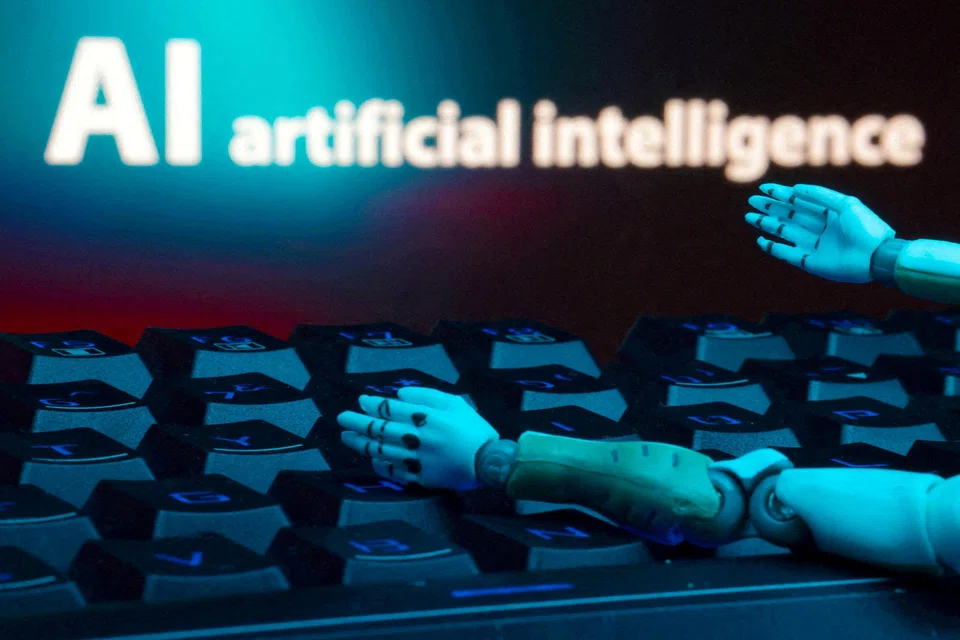
[BENGALURU] PsiBot is raising close to US$100 million of funding at a US$1.48 billion valuation, joining a growing roster of Chinese AI startups capitalising on interest in the burgeoning field.
The company, known also as Lingchu Intelligence, is close to finalising financing led by Chinese carmaker Chery Automobile and investors such as Lens Technology, a sensor maker for the likes of Apple and Tesla.
The Chinese startup has now raised about US$300 million since its inception in 2024.
PsiBot becomes one of the few unicorns operating in the field of embodied AI and world models, which help robots and self-driving cars see and respond to their physical surroundings.
They are fast emerging as the next frontier in artificial intelligence and a key battleground in the US-China AI race, with the potential to also drive scientific discovery.
The startup was established in Shanghai by Viktor Wang, a PhD from George Washington University; Chai Xiaojie, a robotics veteran of Alibaba Group and Tencent; Yang Yaodong, an assistant dean at Peking University; and Chen Yuanpei, a visiting scholar at Stanford University whose adviser is renowned AI scientist Li Fei Fei.
Chinese companies are among the world’s most aggressive builders of world models, banking on state support, abundant industrial data and a thriving open-source ecosystem.
The promise is that world models could define the next wave of machines that do not merely answer verbal queries but interact with physical objects.
“World models aim to achieve something more consequential than the large language models and chatbots,” said Wang, who also did stints at BlackBerry and JD.com.
SEE ALSO
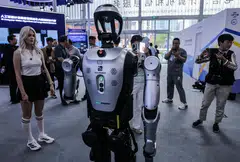



PsiBot’s models learn from real-world data collected with bespoke hardware, such as gloves and humanoid robots. It is running and testing its platforms at a large Chinese logistics vendor as well as one of the world’s largest fibre optic cable makers.
Wang said data is China’s clear advantage, but it’s also the primary bottleneck. Without diverse data, it is challenging to build good physical AI.
The hurdles are high collection costs, data scarcity, lack of standardisation and poor quality.
“Even the frontier AI labs in Silicon Valley such as OpenAI and Meta don’t have good data,” he said. “We will collect one million hours of data (in 2026) and work towards building a generalised world action model.”
Wang foresees significant advancement in physical world foundation models over the next 24 months.
He recalled how OpenAI’s GPT-2 in 2019 became the first to show human-like text generation after getting trained on internet content alone. That was a stepping stone to GPT-3.5 which powered ChatGPT.
“We should see the GPT-2 moment in embodied AI in two years,” he said. BLOOMBERG
Decoding Asia newsletter: your guide to navigating Asia in a new global order. Sign up here to get Decoding Asia newsletter. Delivered to your inbox. Free.
Share with us your feedback on BT's products and services