

China’s biggest tech bond issuer this year is a dairy maker
The Asian nation has taken a more top-down approach to ensuring there’s ample funding to power its tech ambitions
CHINA’S efforts to fuel tech sector growth through an onshore bond programme targeting innovation have produced an unexpected beneficiary: Asia’s largest dairy producer.
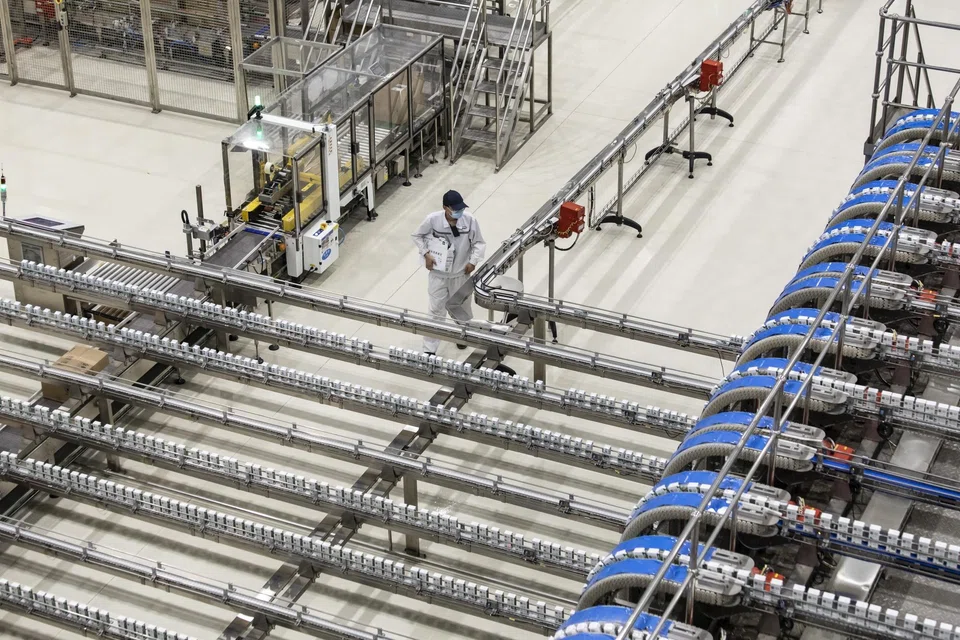
Inner Mongolia Yili Industrial Group, a northern Chinese maker of milk and dairy products, has issued a total of 45 billion yuan (S$8.3 billion) of technology and innovation bonds this year, eclipsing such debt sales from actual tech firms, and making it the largest issuer for the period under the programme, data compiled by Bloomberg show.
One advantage of issuing bonds through the tech and innovation programme is that companies have fewer regulatory hoops to jump through to get approval for debt sales. That’s made it attractive to a wide range of firms, with the majority being state-owned entities, or from traditional sectors such as coal and steel or utilities.
“This is not what the policies encourage, but it is permitted under the current rules,” said Lei Wang, head of research at S&P Global (China) Ratings.
Despite the incentives and relatively cheap financing, Chinese tech companies have not pursued the kind of major debt financings that US peers Oracle and Meta Platforms have to boost their artificial intelligence (AI) aims.
Firms such as Tencent Holdings, Alibaba Group Holding and Kuaishou Technology have largely been selling dim sum and US dollar bonds as well as convertible notes to raise smaller amounts of funds, while AI startups Zhipu and MiniMax Group are tapping the stock market instead.
That has left an opening for Chinese commercial banks, private equity funds and industrial issuers to pile into the tech bond programme. They have sold a total of about three trillion yuan of such notes since its launch in May 2025, according to local credit data provider qyyjt.cn.
More than half of the tech bonds sold this year in China have maturities of one year or less, indicating that many firms are using the programme for quick and easy fundraising, often replenishing working capital or refinancing debt, rather than making large investments in technology development.
All of Yili’s bonds, for example, are set to mature within 90 days, and the company has offered few details about how the funds would support technology-related initiatives, according to the bond prospectuses. Still, the milk powder producer is eligible to issue such notes because it has been labelled a model enterprise for tech innovation by Chinese authorities and it’s spending hundreds of millions of yuan on research each year.


Yili and China’s central bank, which initiated the bond programme, did not immediately respond to requests for comment.
Some tech-focused firms that have taken advantage of the programme have been selling debt with longer maturities. Contemporary Amperex Technology Co Limited, one of the world’s largest battery makers, recently priced eight billion yuan of five-year tech bonds, while biopharmaceutical firm Shanghai Junshi Biosciences debuted one billion yuan of mid-term notes in January.
That’s still a contrast to some of the ultra-long bonds that some US tech giants are issuing to finance their AI ambitions. Google parent Alphabet raised US$20 billion in its biggest US dollar bond sale in February, followed by a rare 100-year sterling note.
China has taken a more top-down approach to ensuring there’s ample funding to power its tech ambitions. Bonds issued under the tech bond programme sometimes come with credit guarantees from a state financial institution or instruments similar to credit default swaps to protect from risk, to make them more appealing to investors.
Even so, as issuance under the programme ramps up, there are risks that some of the tech initiatives being funded won’t pan out, analysts, including Hao Yunlong with China Chengxin International Credit Rating, wrote in a recent research note. Stronger oversight of how bond proceeds are used is needed to prevent fund misuse or projects being “dressed up” as tech-driven, they added. BLOOMBERG
Decoding Asia newsletter: your guide to navigating Asia in a new global order. Sign up here to get Decoding Asia newsletter. Delivered to your inbox. Free.
Share with us your feedback on BT's products and services
TRENDING NOW

Once staunchly pro-China, Malaysian Chinese businesses are now distancing themselves from Beijing

Britain’s mansion tax shows the difficulty of targeting wealth

Three hats, one goal: How Ng Kian Swan runs sustainability at NUHS

COE review: The gap between luxury and mass-market cars isn’t the only one worth bridging

