

Chinese exchanges ease margin trading requirements to aid stock markets
The Shanghai and Shenzhen bourses will also reduce fees to lower trading costs
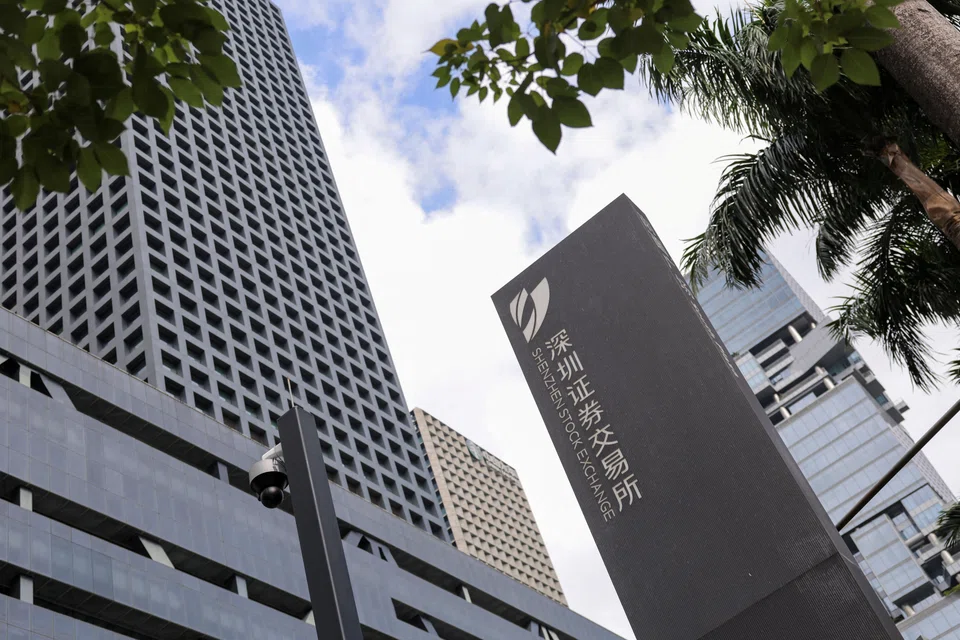
[SHANGHAI] China’s three main stock exchanges announced plans to aid struggling share prices with a batch of measures such as easing requirements for margin financing.
In addition, the Shanghai and Shenzhen bourses unveiled plans for fee reductions to lower trading costs, while the Shenzhen exchange also proposed to introduce a market-making mechanism in its startup board ChiNext.
The moves came after Beijing unveiled measures in early November to encourage share purchases as equities struggle amid sluggish growth at home, a global sell-off in artificial intelligence stocks and rising geopolitical tensions.
The benchmark Shanghai Composite Index dropped nearly 3 per cent during the week starting Nov 9 to hit a 16-month low. Shanghai’s tech-heavy Star Market and Shenzhen’s ChiNext have both tumbled more than 40 per cent from their June peaks.
Regulatory changes
The Chinese measures come as other Asian markets including South Korea and Taiwan respond to stock market jitters with regulatory changes designed to steady volatility.
Under the new rules announced by the Shanghai, Shenzhen and Beijing exchanges, investors can borrow more money to buy stocks against the same collateral.

Starting Nov 30, the minimum margin ratio would be cut to 80 per cent from 100 per cent previously, in a reversal of a policy announced in January.
“Margin financing activity has weakened significantly recently, while overall leverage is low,” the three exchanges said.
The cut in margin requirements “would improve market liquidity and support the market’s long-term stability and healthy development”.

Measures aim to boost market confidence
The level of China’s outstanding margin loans has dropped more than 20 per cent to roughly 2.2 trillion yuan (US$329.5 billion), from a peak of three trillion yuan in late June.
Separately, the Shanghai and Shenzhen exchanges announced fee cuts aiming to lower trading costs, boost market confidence and invigorate the market.
The Shenzhen bourse also published draft rules to introduce market-making mechanisms in a bid to “curb share price swings, improve pricing efficiency and strengthen market resilience”. REUTERS
Decoding Asia newsletter: your guide to navigating Asia in a new global order. Sign up here to get Decoding Asia newsletter. Delivered to your inbox. Free.
Share with us your feedback on BT's products and services
TRENDING NOW
Share buybacks surge as 35 companies repurchase shares
Could Jensen Huang work for Elon Musk? It would be ‘a titanic ego death match’, says biographer

What shattered Crystal Jade? How the culinary empire shrank from 120 to just 9 outlets

Chinese electric car brand JMEV shuts down S’pore showroom a year after opening

