Japan’s Asics to spin off popular Onitsuka Tiger sneaker business; shares rise
The move is aimed at speeding up decision-making and boosting the brand’s global competitiveness
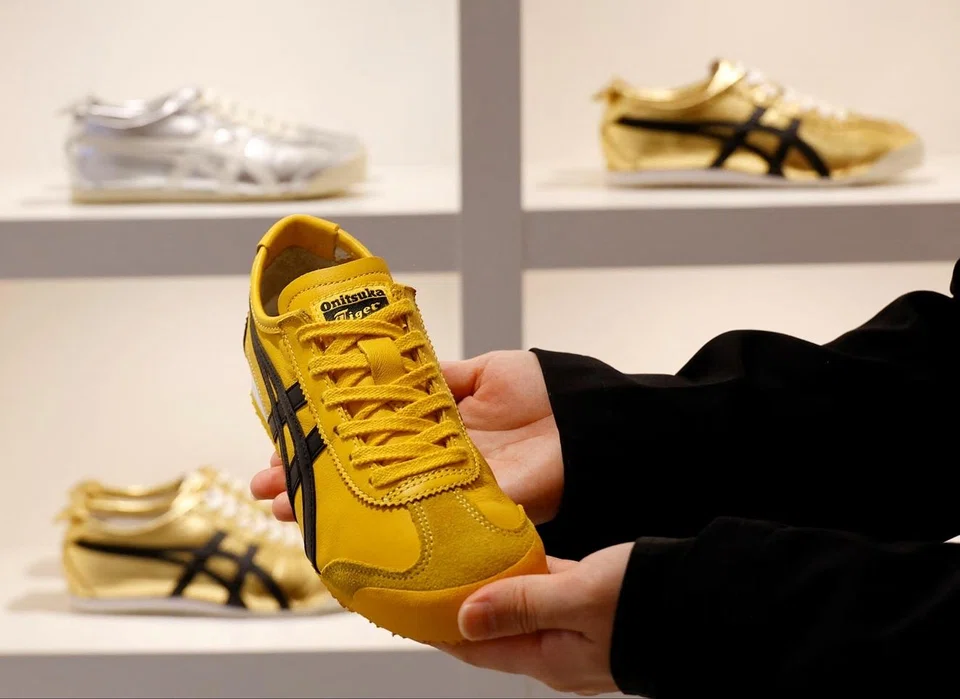
[TOKYO] Japan’s Asics on Wednesday (Jun 10) said that it will spin off its high-end Onitsuka Tiger business, a key driver behind four straight years of record profit thanks to a tourism boom and a surge in demand for its retro-inspired sports shoes.
Under the plan, the nearly 80-year-old Onitsuka Tiger business will be transferred to OT Group, a wholly owned subsidiary, via a company split that will be effective on Jan 1, 2027, Asics said.
The move is aimed at speeding up decision-making and boosting the brand’s global competitiveness, it added.
There are no plans to take the OT Group public, Asics CEO Yasuhito Hirota said at a press conference.
Shares of Asics, which competes with the likes of Nike, Adidas and Puma, rose nearly 2 per cent in Tokyo, compared with a 0.7 per cent fall for the broader Topix index. The stock has jumped roughly seven times over the past five years, giving it a market value of about US$20 billion.
“As organisations grow too large, decision-making often slows as approvals become more layered and time-consuming,” said Tatsunori Kawai, chief strategist at Mitsubishi UFJ ESmart Securities.
A spinoff is “an ideal move for such fast-growing companies”, he added.
“Onitsuka Tiger has already established a solid and independent brand position and there’s not much domestic competition. The spinoff is unlikely to erode Asics’ core business.”
Ryoji Shoda, who was named CEO of the newly created OT Group, said the brand will open what would be its biggest flagship store in Tokyo’s busy Shinjuku district on Jul 10, followed by another one in Nagoya, central Japan, in August.

Milan, Seoul and Los Angeles will also get flagship stores over the next year.
“We are seeing ongoing constraints with customers unable to enter congested stores, so we aim to expand with big flagship stores globally,” Shoda said.
Onitsuka Tiger sneakers enjoyed something of a revival after they appeared in Quentin Tarantino’s 2003 movie Kill Bill, with actress Uma Thurman sporting a mustard yellow pair in the film.
Onitsuka Tiger has been a key growth driver for Asics in recent years. Sales of the brand jumped 43 per cent from a year earlier to 136.5 billion yen (S$1.1 billion) in the year that ended in December, buoyed by strong demand in Europe, inbound tourism to Japan and a weaker yen.
The Onitsuka Tiger business posted a profit margin of nearly 38 per cent, the highest among Asics’ five core categories.
In February, the Japanese maker of athletic and lifestyle footwear and apparel forecast another year of record profit this year.
Brazilian Ana Lebl, 18, was among scores of duty-free shoppers who bought a pair of the brand’s Mexico 66 SD trainers, last week at an Onitsuka Tiger store in Tokyo.
“I have always seen them online and they are so fun,” she said, adding that shopping at Onitsuka Tiger was high on her bucket list for her Japan visit. “Even before my trip, some of my friends asked me if I was going to the store and told me about the shoes they got.”
Known for its minimalistic designs, Onitsuka Tiger traces its roots to Asics’ predecessor, founded in 1949 by Kihachiro Onitsuka, who sought to make sports shoes out of a belief that nurturing healthy young people was essential to rebuilding Japan after World War II.
Onitsuka developed his first pair of basketball shoes and named the brand “Tiger”, inspired by the strength and agility of what he saw as Asia’s most powerful animal. REUTERS
Decoding Asia newsletter: your guide to navigating Asia in a new global order. Sign up here to get Decoding Asia newsletter. Delivered to your inbox. Free.
Share with us your feedback on BT's products and services