DBS bets on AI, value stocks with STI set for choppy recovery
Forecast hinges on a base-case scenario where US-Iran talks yield a deal in Q2 and Strait of Hormuz opens by June

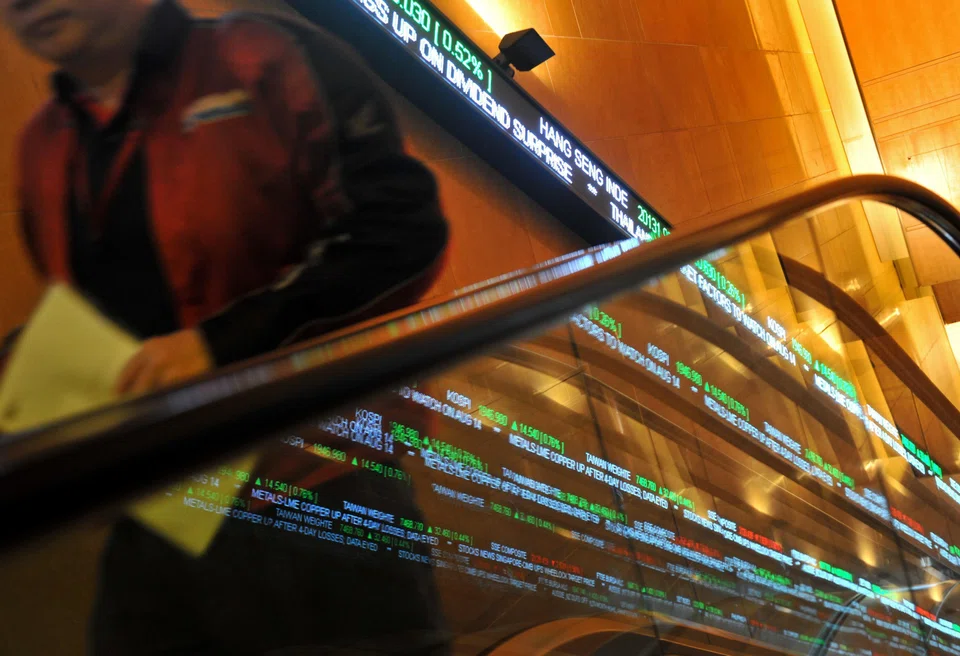
[SINGAPORE] The Republic’s benchmark stock index is poised for a volatile recovery, but DBS Group Research on Friday (May 8) remained steadfast on its year-end target of 5,250 points for the Straits Times Index (STI).
The forecast hinges on a “base-case” scenario where currently stalled US-Iran talks yield a deal in the second quarter, allowing the Strait of Hormuz to gradually reopen by May or June.
In this baseline outcome, assigned a 50 per cent probability, analysts Yeo Kee Yan and Foo Fang Boon expect Brent crude spikes to be capped at US$125 a barrel before sliding to US$80 by the end of 2026.
Amid the fluid geopolitical backdrop, DBS is advising clients to adopt a “resilience barbell” strategy. One side of this approach balances exposure towards technology and artificial intelligence themes, favouring semiconductor players such as UMS Integration and AEM .
These stocks are riding dual tailwinds from the ongoing AI and semiconductor up-cycle, alongside Equity Market Development Programme-driven inflows.
The other side of the barbell points investors towards companies shielded from macroeconomic uncertainty by massive order backlogs that provide revenue and earnings visibility. Key sector picks here include ST Engineering , Yangzijiang Shipbuilding and Yangzijiang Maritime .
A renewed regulatory push by the Singapore Exchange is also forcing a spotlight on dividends and corporate restructuring. Greater clarity on dividend policies and capital allocation disclosures is expected to bolster the appeal of high-yielding names such as Genting Singapore , China Aviation Oil and Venture Corporation .
Meanwhile, companies with dormant value-unlocking potential, such as UOL Group and City Developments Ltd , remain top picks as the overarching value unlock theme gains momentum.
The bank warned that the traditional “sell in May” narrative – which historically has only a 27 per cent chance of yielding positive returns for the STI – is effectively a coin toss this year. If negotiations completely collapse and the Iran crisis morphs into a regional conflict, the outlook drastically darkens.
SEE ALSO

Under this worst-case scenario, which carries a 20 per cent probability, fears of Brent surging towards US$150 to US$200 a barrel could resurface. Consequently, the STI would plunge below its 200-day exponential moving average, bottoming out between 4,450 and 4,300 points.
Ultimately, three major global events will dictate the market’s tone this month. The smooth transition to a more hawkish US Federal Reserve on May 15 will favour index heavyweight banks. Meanwhile, a stabilisation summit between US President Donald Trump and Chinese President Xi Jinping on May 14 and 15 could benefit trade-exposed names such as Hutchison Port Holdings Trust .
Finally, Nvidia’s pivotal earnings release on May 20 will test the durability of the ongoing AI trade, holding massive implications for Singapore tech stocks such as Asti and Avi-Tech that outperformed in April.
Decoding Asia newsletter: your guide to navigating Asia in a new global order. Sign up here to get Decoding Asia newsletter. Delivered to your inbox. Free.
Copyright SPH Media. All rights reserved.