Defensive consumer stocks deliver robust performance amid strong institutional inflows
Top 10 consumer staple stocks have averaged a 26.7% total return for the year to date
[SINGAPORE] While artificial intelligence continues to dominate global headlines, Singapore’s non-cyclical consumer sector has quietly delivered robust performance. Amid macroeconomic uncertainty, the top 10 consumer staple stocks have averaged a 26.7 per cent total return for the year to date, fuelled by firm crude palm oil (CPO) prices and strong defensive retail demand.
The 10 most actively traded non-cyclical consumer stocks in Singapore have also received combined net institutional inflows of S$327.4 million for the year to Aug 26, compared to net institutional outflows for the broader Singapore market. The outperformers include iEdge Singapore Next50 constituents such as First Resources , Sheng Siong Group , Food Empire Holdings , Olam Group and Golden Agri-Resources , which rank among the top 15 performers in the index for the year to date (YTD).
Palm oil producers First Resources and Bumitama Agri ranked as top performers among the most traded consumer staples stocks, amid a biodiesel push in Indonesia which would raise the palm-based biodiesel content in diesel from 40 per cent to 50 per cent.
First Resources more than doubled its share price, with a YTD total return of 116.7 per cent as at Aug 26. Net profit for the group rose 57.4 per cent year on year for H1 2026, supported by higher production volumes and improved processing margins.
DBS Group Research maintained its “buy” recommendation, noting scope for further re-rating, supported by CPO prices and First Resources’ track record of improving Austindo Nusantara Jaya’s performance following the acquisition.
Bumitama Agri similarly delivered a robust YTD total return of 59.5 per cent. For H1 2026, its revenue and net profit rose 24 per cent and 44.3 per cent year on year respectively, driven by higher sales volumes and average selling prices for palm products.
The group expects palm oil prices in the second half of 2026 to be supported by Indonesia’s B50 biodiesel mandate and global energy dynamics amid ongoing geopolitical tensions in the Middle East. Against this backdrop, Bumitama announced in April 2026 that it would increase its targeted dividend payout range to 60-75 per cent of distributable income.
Other players with palm oil exposure, such as Wilmar International and Golden Agri-Resources, have also reported stronger profits in their first-half results.
Wilmar International has had strong net institutional buying year to date, with S$276.7 million in net inflows, ranking it third across the broader Singapore market for the YTD.

The group reported a 12.8 per cent increase in pre-tax profit for H1 2026, driven by stronger contributions from its feed and industrial products (tropical oils, oilseeds and grains, and sugar) and food products businesses. The group also cited higher selling prices for most products during the period.
In August, DBS Group Research maintained its “hold” recommendation for Wilmar, with a target price of S$3.60, noting that the company performed relatively well in the first half despite heightened global uncertainty. However, it noted that the group would need to deliver a stronger second-half performance to support share price performance.
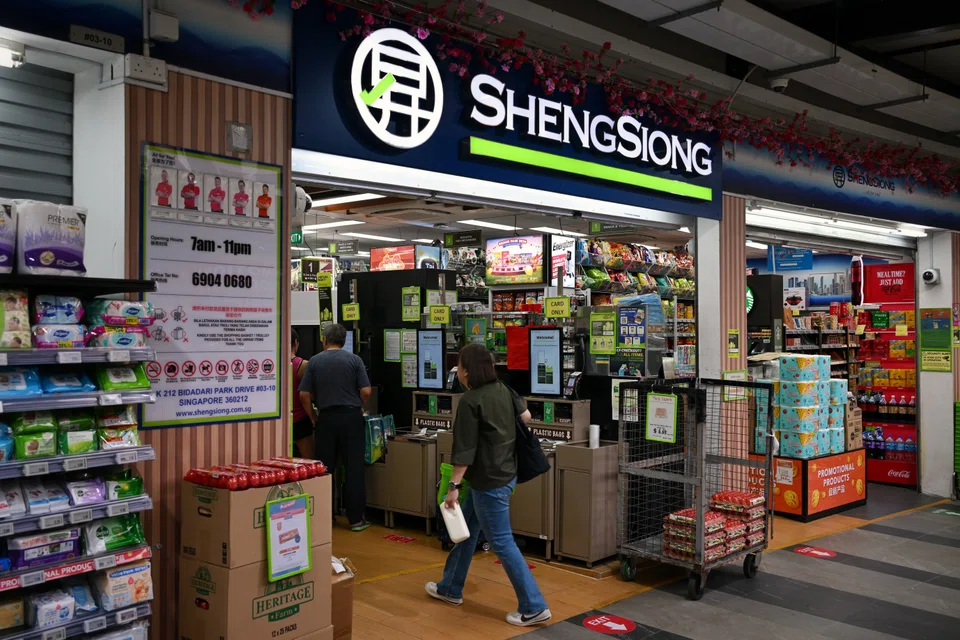
Beyond agriculture-related stocks, Sheng Siong also delivered a robust performance, with a total return of 24 per cent YTD, supported by an expanded store network and better sales mix. Revenue and net profit grew 11.9 per cent year on year in the first half, while gross profit margin improved to 31.8 per cent from 30.8 per cent previously.
Sheng Siong noted that the upcoming Johor Bahru-Singapore Rapid Transit System Link may intensify price competition, but added it stands ready to adapt its pricing, promotions and product mix to remain competitive. In the long term, it expects greater optimisation of operating systems and costs from its Sungei Kadut distribution centre due to be completed by 2029.
Food Empire Holdings has posted record results in the first half of 2026, with revenue and net profit reaching all-time highs, following revenue growth across all segments. Revenue rose 15 per cent, led by growth in its Russia and Central Asia segments, while net profit rose 12.2 per cent.
Food Empire declared an interim dividend of S$0.04 per share for H1 2026, up by a third from a year earlier.
It noted that it is on track to deliver its sixth consecutive record full-year performance, barring unforeseen circumstances.
CGS International reiterated its “add” call on Food Empire, citing its FY27-28 capacity expansion plans as drivers of earnings growth. These projects include a new coffee-mix manufacturing facility in Khorgos, Kazakhstan, the expansion of its spray-dried soluble coffee facility in India, and a new freeze-dried soluble coffee facility in Vietnam.
Chan Rui Qi is director and Raphael Lim is associate director of capital market development at SGX. For more research and information on Singapore’s Reit sector, visit sgx.com/research-education/sectors for the S-Reits & Property Trusts Chartbook.
Decoding Asia newsletter: your guide to navigating Asia in a new global order. Sign up here to get Decoding Asia newsletter. Delivered to your inbox. Free.
Share with us your feedback on BT's products and services