

‘To do something hard but meaningful:’ Endowus’ Samuel Rhee on the drive for better financial outcomes for customers
With its platform that provides many with institutional-level services, the wealth manager is doing things differently
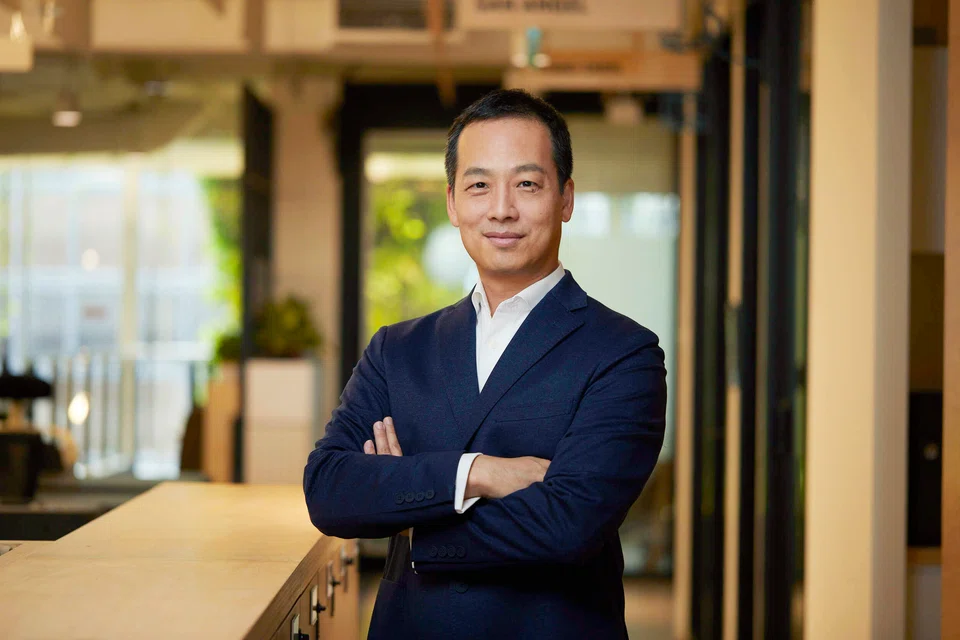
[SINGAPORE] The best solutions are often those that start with a founder’s personal pain point. For Endowus chairman Samuel Rhee, it was his own experience with a private bank that drove him to start a digital wealth platform.
He told The Business Times said that from his stint working with an institutional investor, he knew there was a better way to do things, and that his own experience with private banks was “pretty horrible”.
This was especially so when he compared it with his professional experience as well. As chief executive officer of Morgan Stanley Investment Management in Asia, he had high expectations, he said.
“A lot of finance companies (say they) are there to serve the clients, but they are not – the clients are serving them,” he added.
“It’s a bit of an upside-down world, where the clients are serving the bank, and the bank employees are serving the CEO and the shareholders. So it’s the people with capital who get the best returns.”
Rhee left Morgan Stanley in 2017 and started Endowus with Gregory Van the same year. The company officially launched its public digital wealth advisory platform in Singapore in 2019.
Van is now CEO of Endowus, driving its growth and strategic execution. Rhee heads the Endowus Group Investment Office and is responsible for asset allocation and investment selection.
A key pain point they wanted to address was that of trailer fees, the portion of funds’ annual management fees paid to distributors, which are the platforms or banks that distribute the investment products. Such fees can range from 20 to 70 per cent of the annual management fee.
The Endowus platform is the first digital wealth manager to operate on the basis of a 100 per cent trailer fee rebate to investors.
“(The investment office) is absolutely essential. It is the most important value-add, and a lot of curation goes into what kind of funds we offer because we don’t want to be a supermarket.”
Samuel Rhee, chairman, Endowus
Aside from cutting this fee, he set his sights on another challenge: Singapore’s Central Provident Fund Investment Scheme (CPFIS), for which Endowus is listed as a digital adviser.
Rhee saw a lack of options for those who looking to invest their retirement savings. There were no passive index funds available, and people had to fill out paper forms and go back and forth with the bank just to get started.
Investing in a unit trust through CPFIS was more expensive than investing using cash or the Supplementary Retirement Scheme – a concept he found “ludicrous”.
So Endowus stepped up to provide, among its offerings, low-cost index funds which can be invested through CPFIS. It turned out to be the right move, because it established Endowus as the first CPF digital adviser and the only digital wealth platform to offer CPFIS products.
“I wanted to do something that was going to be hard, something that nobody else did, but which was meaningful, and that was (with) CPF,” he said.
Being a pioneer with CPFIS products helped build trust with customers more quickly, Rhee said. “If you have the right purpose and meaning, and you’re doing it for the right reasons, luck also follows.”
Institutional-grade for all
The son of a pastor, Rhee has often said that his faith guides the purpose of his work.
It is what led him to reach out to non-profits with treasury and advisory solutions, and this is now a key pillar of Endowus’ corporate social responsibility programme.
“We wanted to stand in the gap where things were falling through, (and a) big sector was the non-profit sector,” he said. “So that’s who we went after first, and has been our focus ever since.”
Non-profits are quasi-institutional, but lack the sophistication of large sovereign funds or endowments, he added.
Building a wealth platform that could serve a swath of the population with institutional-level services has led Endowus to do things differently.
Rhee noted that it has crossed S$17 billion in client assets under management, scaling to a point where it has more “clout” with its partners and fund managers. This has enabled the platform to bring in more varied products for its clients.
For starters, it has an investment office with 15 people dedicated to selecting fund managers, portfolio creation, optimisation and negotiating better fees with fund managers.
This team is larger than those found in most other private or retail banks, said Rhee.
“(The investment office) is absolutely essential. It is the most important value-add, and a lot of curation goes into the kind of funds we offer, because we don’t want to be a supermarket.”
This approach has also opened up access to customers that Rhee did not imagine Endowus could have tapped in the past, such as single-family offices and ultra-high-net-worth individuals.
Eyeing more opportunities
In October 2022, Endowus announced that it was expanding into Hong Kong with the acquisition of multi-family office and wealth manager Carret Private Investments. It launched its full services there in April 2024.
On a percentage basis, Hong Kong is growing more quickly than Singapore because it started from a lower base; the platform is enjoying some initial success.
“Since we’ve launched, we’ve never had a monthly net capital outflow. We’ve always had positive flows; even on a weekly basis, we’ve never had an outflow,” said Rhee.
He added that the efforts in Hong Kong have been centred on education and weaning customers off their usual stock-punting habits.

But the opportunity is bigger in Hong Kong, with the wealth market twice the size of Singapore’s and concentrated among white-collar professionals.
Endowus is also eyeing opportunities within Hong Kong’s pension system, the Mandatory Provident Fund and Occupational Retirement Schemes Ordinance.
But Singapore remains important as its headquarters and the contributor of the bulk of the business. Rhee continues to be excited about the growth in the Republic, with the wealth business expanding more quickly than the total base.
“The private wealth segment is growing quite well because we’re introducing new products and solutions that cater to that segment,” he noted.
“We’re also providing financial advice with a dedicated adviser for each client, and they really appreciate it.”
There are also plans to go further into the financial advisory space in Singapore, he said, without elaborating.
Endowus is considering launching in a third market as well, but will stay focused on the key wealth markets in Asia.
The platform has been approached by multiple parties interested in a partnership to launch in certain markets, but it has turned these down, said Rhee.
“We’re different from a trading platform in that we cannot copy and paste the app and launch in any market. We’re an independent financial advisory firm, and each market has different regulatory environments, investment products and cultures.”
Three questions with Samuel Rhee, chairman of Endowus
Q: Was there a pivotal moment in your career or personal life that changed your approach to leadership?
When I was at Morgan Stanley, my colleague and I were up for promotion together, and we thought we were going to step up and be promoted to managing director. At an investment bank like Morgan Stanley, being made partner MD is the holy grail.
But then my boss from New York said: “Hey, I’m sorry, I was going to promote both of you, but I only have one spot.” And he actually said: “Hey, I can’t decide, so you guys decide who’s going to go first and who is going to go next year.”
In order to build a team and have trust in each other, one of us had to give in. Giving up that position was very difficult, probably the most painful thing I did in my life, but it lay the foundation for us to become strong partners.
So I think being able to give things up is important – being able to look not at the short-term gain, but the long term.
Q: What is one piece of “unconventional wisdom” you swear by, but which most business schools would tell you is wrong?
Maximising profit is not the best business model. If we maximise profit, we would not be serving our clients well. Our fiduciary duty is to always do what’s in the best interest of the client.
Our leaders are here to serve our people. This is a people business. It’s a trust business. If we serve our people well and take care of them, they will serve our clients well. And if we serve our clients well, they succeed.
Serving our employees and giving them more ownership, and then empowering them so that they can do their best work, allow them to flourish. Our company is small, but we have people switching roles within the organisation, and we think that’s great.
People find and discover their gifts and goals along the journey, and when they flourish in that role, I think that’s what allows them to grow and do their best work. And that’s what allows the company to succeed and serve its customers better.
So the people piece is such a critical part, and then focusing on building the right culture within that for our people is really important.
Q: When you feel burnout creeping in, what is your non-business-related “panic button” activity or routine that reliably resets your focus?
I love my job. People say I’m a work addict, but I do spend a lot of time on other things.
I have three kids, and my family keeps me busy. I carve out my space for personal development. I’ve also had knee surgery, and I’m recovering, so I want to get back to swimming and cycling ... Sports and exercise are really important for me.
But I enjoy my job and I’m passionate about it, and I think that’s possible because I have this meaning and purpose to it.
TRENDING NOW
Ex-Nvidia CEO Jensen Huang carried a secret for more than a year. It led to his downfall
South-east Asia has lost Nvidia’s best salesman

Demand, tech capabilities position Apac and AI as Skyscanner’s next growth frontiers: CEO Bryan Batista
Jensen Huang discusses comeback as Nvidia CEO with allies: report

