

‘Double-edged sword’: Wilmar, Golden Agri may face margin squeeze from Iran war, but upstream players could gain
With surging crude oil shortage and rising prices, biodiesel demand expected to rise
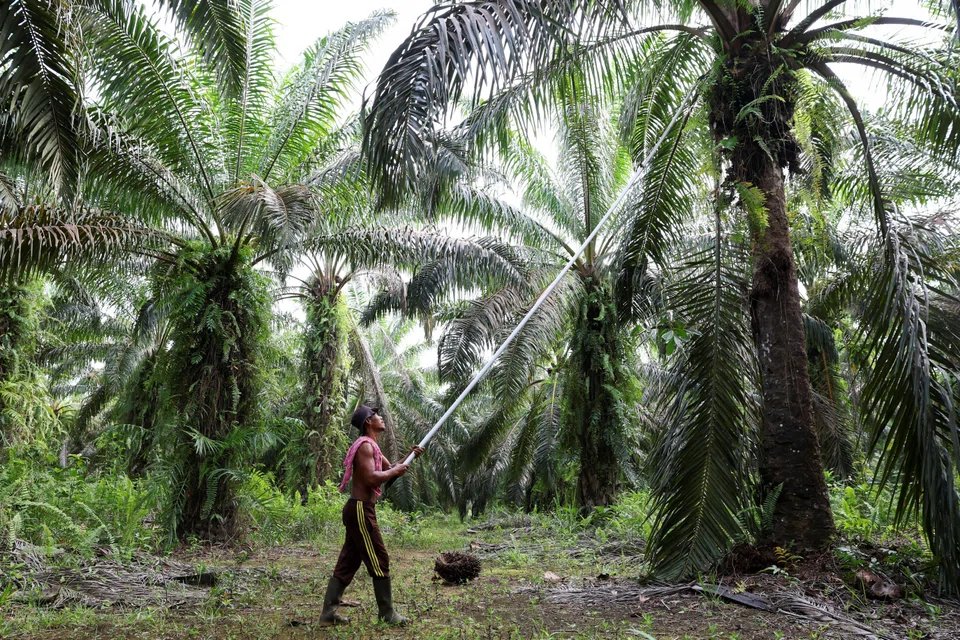
[SINGAPORE] A prolonged Middle East war could push crude palm oil (CPO) prices higher on stronger biodiesel demand – a dynamic that may benefit upstream plantation companies but pressure integrated operators.
Analysts said that Singapore-listed planters with primarily upstream operations such as First Resources and Bumitama Agri could benefit, while groups with more integrated operations such as Wilmar International , Golden Agri-Resources and Indofood Agri Resources may face a margin squeeze from higher raw material costs.
In the medium term, market watchers noted that CPO prices largely hinge on biodiesel’s trajectory, driven by Indonesia’s biodiesel mandate and climbing crude oil prices amid escalating Middle East tensions.
Chan Ker Liang, an analyst at S&P Global Ratings, remarked: “If diesel prices spike and remain elevated due to a shortage of crude oil, demand for biodiesel as a substitute to diesel will rise.”
Other factors shaping CPO prices include replanting efforts in the 2026 financial year and the Indonesian government’s land clawback initiative.
OCBC equity research analysts Ada Lim and Chu Peng noted that robust CPO prices are “generally supportive” of upstream plantation businesses.
“However, they can be a double-edged sword for downstream segments such as consumer products, where higher CPO prices raise raw material costs and may compress margins if cost pass-through to consumers is limited,” the analysts said.
They added that an earlier-than-expected roll-out of Indonesia’s B50 policy – which requires the blending of 50 per cent palm oil-based fuel with diesel – would “tighten exportable supply further and reinforce a firmer price floor”.
OCBC forecasts an average CPO price of RM4,200 (S$1,360) per tonne in 2026, while CGS International projects RM4,500 per tonne, “anchored on modest 2 per cent year-on-year supply growth and expectations of firmer global biodiesel demand”.

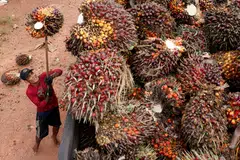
Meanwhile, Chan of S&P Global Ratings remarked: “Given the relatively higher prices of substitutes like sunflower or soybean oil, palm oil prices have remained at favourable levels of about US$1,000 per tonne.”
Oil shock spillovers
The latest wild card for the palm oil sector is potential spillover from climbing crude oil prices amid the US-Israel and Iran conflict.
Akash Gupta, director of Apac corporates at Fitch Ratings, said: “If the Middle East crisis prolongs, CPO prices could receive support from an increase in discretionary biodiesel blending. However, we also see risk to margins from higher fertiliser costs and wage inflation.”
Labour and fertilisers are the two main cost components for plantation companies.
Similarly, Chan of S&P Global Ratings noted that the price of urea – a key ingredient in modern fertilisers – has shot up by 20 to 25 per cent. He attributed this to an anticipated shortage of natural gas following a liquified natural gas blockage at the Strait of Hormuz.
Fertiliser prices are a “key input” for palm oil production, making up close to 75 per cent of the cost of CPO production, he said.
CGS International analysts, however, expect near-term cost pressures to “remain manageable” as plantation players typically secure fertiliser through biannual tenders”.
For investors, OCBC’s Lim and Chu said they “do not expect a material direct impact on plantation companies under their coverage, unless the conflict escalates significantly and disrupts trade route, logistics and global demand”.
They also do not foresee a direct impact on Bumitama Agri, as its revenues are fully derived domestically, but supply chain disruptions “could place upward pressure on input costs and weigh on overall profitability”.
“While higher average selling prices of CPO bode well for the top line, (Bumitama Agri’s) management shared that it expects unit costs to increase by 5 to 10 per cent in FY2026, outstripping production volume growth of zero to 5 per cent,” said the analysts.
“A large part of this (unit cost increase) is driven by fertiliser costs, which have spiked following the Middle East conflict. About a third of global nitrogen fertiliser passes through the Strait of Hormuz,” they added.
They noted that Bumitama Agri had tendered for only around 65 per cent of its fertiliser needs for FY2026 as at its recent results briefing.
Earnings recap
Among CPO players on the local bourse, First Resources recorded the biggest profit jump for the full year at 44 per cent, which the company attributed to higher fresh fruit bunch production and stronger CPO prices.
The planter’s earnings progress was followed by Bumitama Agri and Wilmar, which recorded year-on-year net profit increases of 22.5 per cent and 20.6 per cent, respectively, for FY2025.
Meanwhile, market watchers have shifted their focus to the impact of the Indonesian government’s land seizure campaign, which potentially affects hundreds of companies across palm oil, forestry and mining.
In response to e-mailed queries, Wilmar said it has paid the Indonesian government 894.37 billion rupiah (S$67.5 million) in land administrative charges.
Lim and Chu of OCBC noted: “The provisions have largely mitigated Wilmar’s regulatory overhangs, though policy risks in Indonesia remain an ongoing uncertainty for the sector.”
For Bumitama Agri, OCBC analysts noted that the payments made in relation to Indonesia’s forest crackdown are roughly 66.9 billion rupiah.
“(Bumitama Agri’s) management shared that only a small proportion of land has been returned to the government, but we are pending a confirmation of the precise figure from its audited accounts,” said the analysts.
They added that Golden Agri-Resources remains in discussions with Indonesian authorities regarding land ownership issues related to illegal planting in forest areas, involving roughly 2,000 hectares of land.
“The company expects the matter to be resolved in the next one to two months and the financial impact is likely to be manageable,” said the analysts.
The impacts of the Indonesian government’s land clawback initiative “vary significantly” across palm oil companies, depending on factors such as the degree of overlap between plantation areas and designated forest land, remarked Gupta of Fitch Ratings.
He added that if the government can manage these confiscated plantation estates better, “it could raise long-term palm oil supply and pressure prices”.
“However, there is also risk that government actions could deter investment by private players in Indonesia, which would curtail supply and support prices in the longer term,” he said.
Decoding Asia newsletter: your guide to navigating Asia in a new global order. Sign up here to get Decoding Asia newsletter. Delivered to your inbox. Free.
Copyright SPH Media. All rights reserved.
TRENDING NOW

Once staunchly pro-China, Malaysian Chinese businesses are now distancing themselves from Beijing

Looking beyond looming CEO succession, should UOB potentially pursue a transformative merger?

Could stablecoins be the future of money?

Grab CEO’s wife Chloe Tong on life with Anthony Tan and finding her purpose

