Asian coal bonds beat peers as Iran war triggers energy rethink
A benchmark for coal prices in Asia is hovering near a 17-month high
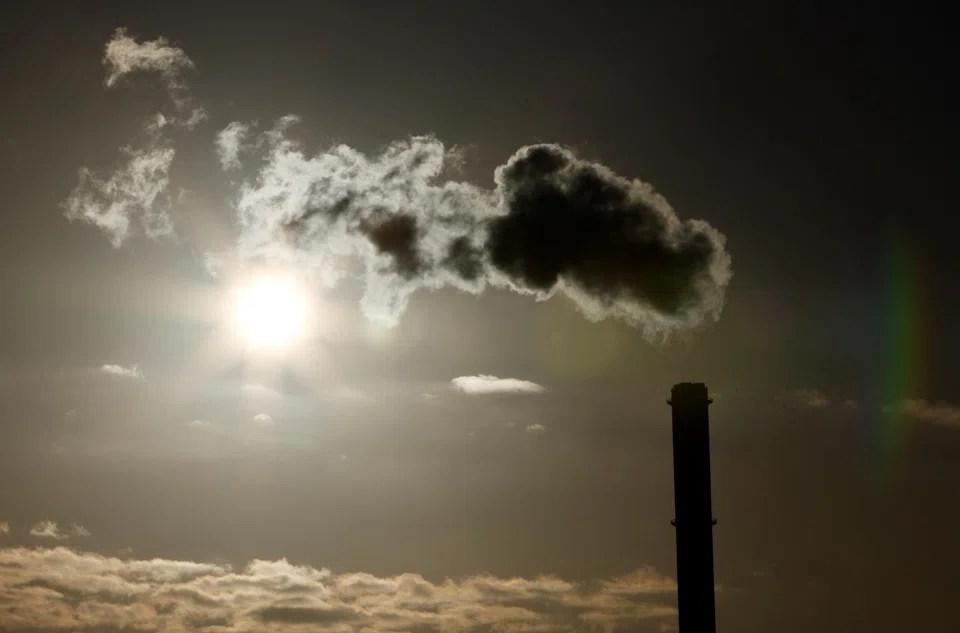
[HONG KONG] An unprecedented global energy crisis is driving Asia back to coal, in a pivot that’s generating a surprise boon for miners of the dirtiest fossil fuel and their bondholders.
Notes of coal miners and related entities in the Asia Pacific, the destination of roughly 80 per cent of the crude oil that transits the Strait of Hormuz, have returned 0.3 per cent since the war started, according to prices compiled by Bloomberg. That compares with a 0.4 per cent loss on debt of peers outside the region and a 2.4 per cent slump in a broader gauge of global corporate bonds, the data show.
Asian policymakers are already rethinking environmental goals around cutting coal-fuelled power production to ensure energy security, as the conflict extends into a sixth week. A benchmark for coal prices in Asia is hovering near a 17-month high after Gulf oil and gas disruptions forced governments in the region into crisis mode and sent risk assets tumbling.
“Coal is being repriced less as a global growth trade and more as a regional energy-security asset,” said Lei Zhu, head of Asian fixed income at Fidelity International. “Disruptions around the Strait of Hormuz pushed up oil and LNG risks, making coal the most reliable baseload fuel in the region.”
Outside Asia, coal exporters in Canada, the US, South Africa, and Colombia have also benefited, according to Zhu, who is “cautiously constructive” on the outlook for high-yield Asian coal miners.
Japan, one of the world’s largest gas importers, said in March that it would expand the use of less-efficient coal power plants for a year, while South Korea is considering moving away from its own curbs on the commodity as part of an emergency response to the war.
China is already the world’s largest coal producer and committed to greater domestic production of the fossil fuel after a series of power shortages in 2021 and 2022.
The outperforming Asian miner bonds include US dollar debt due next year by China’s Zoucheng Urban Assets Holding Group that has returned more than 1 per cent since the start of the war, while a note of distressed Indonesia’s Berau Coal due 2028 has made over 2 per cent, according to data compiled by Bloomberg.
The trend can be seen too in stocks of regional coal miners. Shares of Indonesia’s Golden Eagle Energy have jumped nearly 30 per cent, while those of Adaro Andalan Indonesia and Australia’s Whitehaven Coal have gained 18 per cent and 16 per cent respectively since the conflict started.
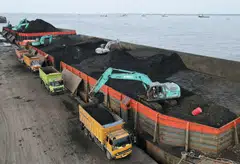



By contrast, global coal stocks on average have lost about 1 per cent, according to prices compiled by Bloomberg. That is still better than a roughly 6 per cent drop in global stocks during the same time period.
Still, a sustained rally in coal-related assets also faces hurdles, particularly if Middle Eastern energy supplies rebound quickly. Many investors have already moved away from coal.
“The investor base remains limited due to ESG considerations,” said Soo Chong Lim, head of Asia credit research at JPMorgan Chase. “This makes the sector more vulnerable to market swings.”
For now, the jump in coal prices is a welcome boost to the financial metrics of the region’s thermal coal miners, many of which are junk rated, and credit assessors are taking note too.
Fitch Ratings recently cited potential upside to earnings at two of the region’s most prominent exporters of the fossil fuel, Indonesia’s Indika Energy and Whitehaven, in the wake of the Middle Eastern conflict. BLOOMBERG
Decoding Asia newsletter: your guide to navigating Asia in a new global order. Sign up here to get Decoding Asia newsletter. Delivered to your inbox. Free.
Share with us your feedback on BT's products and services