

Corn and soya bulls look to new US forecast to sustain sizzle
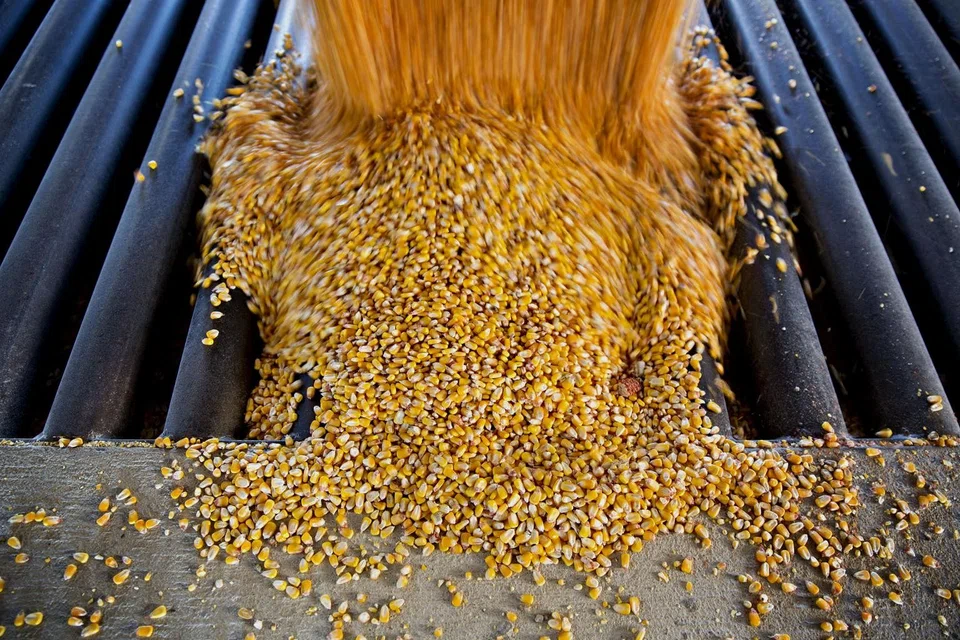
[CHICAGO] China, the world's biggest buyer of commodities, has been purchasing so much American corn and soy that supplies may shrink to fresh multi-year lows in the US's worldwide crop forecasts Tuesday.
US inventories of corn are expected to drop 11 per cent and soybeans 14 per cent in the Agriculture Department's monthly World Agricultural Supply and Demand Estimates, according to analysts surveyed by Bloomberg News.
The cuts would follow last month's surprise forecast that corn inventories will plummet to a seven-year low at the end of the season. Tighter stocks could stoke further concern that China's ravenous appetite for grains, coupled with harvest delays in South America, could empty US silos.
"All eyes will be on US export estimate tweaks and South American production changes," said Matt Campbell, risk-management consultant at StoneX in West Des Moines, Iowa.
China, the world's biggest pork producer, is boosting grain purchases on the world market to feed its expanding hog herds, as well as to supply the starch and sweetener industry. In late January, the Asian nation bought almost 6 million metric tons of US corn in one week, a record for a single country. The buying spree isn't over, Cargill Inc Chief Executive Officer Dave MacLennan told Bloomberg last week.
Corn futures on the Chicago Board of Trade on Monday settled at US$5.6375 a bushel, the highest since June 19, 2013. Stocks will shrink to 1.38 billion bushels from 1.55 billion estimated in January, according to the Bloomberg News survey.
USDA's estimate may be relatively conservative, according to Rich Nelson, chief strategist at Allendale Inc in Illinois. Most analysts are using 1.1 billion to 1.2 billion bushels for US corn ending stocks on their own balance sheets, Nelson said.
"Exports will likely be the primary culprit for shrinking 2020-21 corn stocks," with the surge in shipments due to Chinese demand, Farm Futures analyst Jacqueline Holland said.
Soybean and wheat futures have risen to recent six-year highs. The price surges are raising concerns about global food inflation when hunger is on the rise due to the pandemic.
Soy Reductions
Traders will also be scouring the report for possible cuts to soybean output in Brazil, which is the world's largest grower and exporter of the oilseed, due to weather issues.
While aiding late-planted crops, persistent rains have delayed the harvest in Mato Grosso, the top producing state, resulting in some yield losses, according to Tarso Veloso, an analyst at Chicago-based AgResource.
Excessive precipitation since mid-January has led to crops deteriorating in Parana state, the second biggest grower. Only 77 per cent of crops there rated "good" down from 82 per cent the week before, according to the state's rural economy agency Deral.
"Huge farmers in Mato Grosso haven't been able to reap 60 bags per hectare," Mr Veloso said. "The state's production is likely to be below the current estimates." A bag weighs 60 kilograms.
AgResource sees Brazil's soy crop at 128 million metric tons and will probably cut the estimate again after recent rains, he said.
Analysts and traders surveyed by Bloomberg see USDA's estimate for the Brazilian soy crop at 132.4 million tons on average, slightly below 133 million tons last month. A price reaction is expected only if the cut is steep, according to Daniele Siqueira, an analyst at the Brazilian crop forecaster AgRural.
A decline in Brazil's soybean production estimate may be followed by a cut in the export forecast for the oilseed, Siqueira said. USDA may also adjust its estimate for Brazil's corn production to accommodate the shorter summer-corn crop, which has been harvested.
BLOOMBERG
Decoding Asia newsletter: your guide to navigating Asia in a new global order. Sign up here to get Decoding Asia newsletter. Delivered to your inbox. Free.
Share with us your feedback on BT's products and services
TRENDING NOW

He built the Vingroup empire. Now South-east Asia’s richest man is handing some key roles to his sons

Despite the de-dollarisation debate, demand for dollar liquidity in Asia is growing

Can a first-time homebuyer couple earning S$18,000 a month afford a new EC unit?

Asia needs new energy security architecture

