

Gold falls on stronger US dollar amid renewed US-Iran tensions
The dollar index strengthened, making greenback-priced bullion more expensive for other currency holders
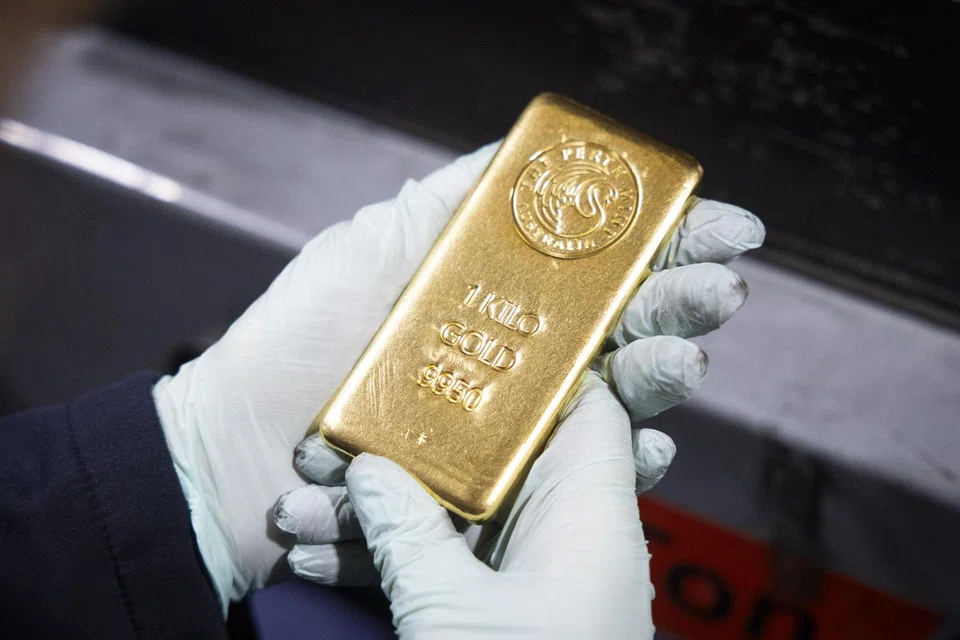
GOLD prices fell on Monday (Apr 20) as the US dollar firmed, while news the Strait of Hormuz is closed again pushed oil prices higher, reviving inflation fears.
Spot gold was down 0.7 per cent at US$4,794.21 per ounce (about 28.349 g), as of 0537 GMT, after hitting its lowest since Apr 13 earlier in the session. US gold futures for June delivery fell 1.3 per cent to US$4,813.70. “Gold prices are lower today after the US-Iran war ceasefire that markets celebrated last week appeared to be breaking down,” said Ilya Spivak, head of global macro at Tastylive. “That has revived the now-familiar ‘war trade’ dynamics we’ve seen since the beginning of the conflict. Crude oil prices gained, which echoed into inflation expectation and drove up both yields and the US dollar.” The dollar index strengthened, making greenback-priced bullion more expensive for other currency holders. Benchmark 10-year US Treasury yields gained 0.6 per cent. Oil prices jumped and stock markets wobbled as rising tension in the Middle East kept shipping in and out of the Gulf to a bare minimum. The US has seized an Iranian cargo ship that tried to run its blockade and Iran said it would retaliate, raising the possibility that the ceasefire between the two countries might not last for even the two days it is set to remain in force. Teheran said it would not participate in a second round of negotiations that the US had hoped to kick off before the ceasefire expires on Tuesday. Gold prices have fallen about 8 per cent since the US and Israel launched strikes on Iran in late February, on concerns that higher energy prices could stoke inflation and keep global interest rates higher for longer. While gold is considered an inflation hedge, higher interest rates crimp demand for the non-yielding asset. Meanwhile, gold demand during one of India’s key buying festivals stayed muted on Sunday as record prices curbed jewellery purchases, offsetting a modest uptick in investment demand. Among other metals, spot silver lost 1.3 per cent to US$79.75 per ounce, platinum fell 0.8 per cent to US$2,086.90, and palladium was down 0.4 per cent at US$1,553. REUTERS
Decoding Asia newsletter: your guide to navigating Asia in a new global order. Sign up here to get Decoding Asia newsletter. Delivered to your inbox. Free.
Share with us your feedback on BT's products and services
TRENDING NOW
Why US$100 oil, 5% US yields affect Singdollar, ringgit differently vs other Asean currencies

Asia needs new energy security architecture
Despite the de-dollarisation debate, demand for dollar liquidity in Asia is growing

Anthropic to open Singapore office in October, sees it as a ‘standout market’ for Claude

