

Gold rises as dip-buyers return after Israel-Lebanon ceasefire
The protracted disruption to energy flows via Hormuz has driven oil prices higher and raised concerns around global inflation
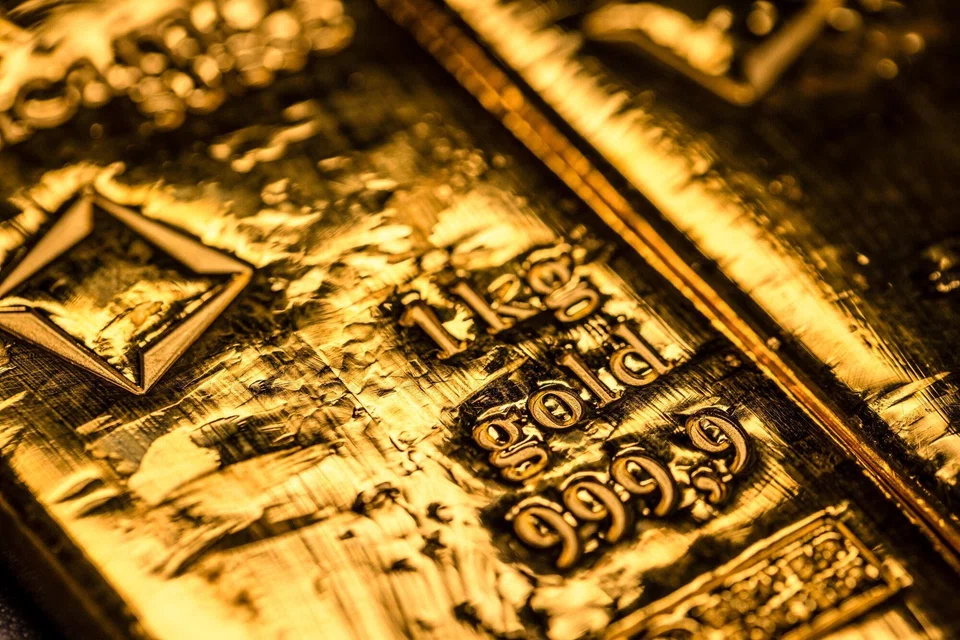
[SINGAPORE] Gold pushed higher after Israel and Lebanon agreed to a conditional ceasefire, a possible step towards resolving the wider Middle East conflict that’s upended global energy markets and raised inflation risks.
Bullion rose as much as 0.7 per cent to near US$4,465 an ounce, clawing back some of the previous session’s 1.2 per cent decline as dip-buyers returned to the market. In a joint statement with the US, Israel and Lebanon said their deal was contingent on “a complete cessation” of fire from Iran-backed Hizbollah.
The agreement follows renewed fighting in the Middle East on Wednesday (Jun 3) that marked the most serious flare-up since a ceasefire went into effect in April. Kuwait and Bahrain were caught in the crossfire as the strikes threatened to derail peace negotiations between the US and Iran.
While Washington and Teheran have agreed on a rough framework to extend their ceasefire and reopen the Strait of Hormuz, a final agreement has proven elusive. US President Donald Trump said that the key waterway would open “immediately” upon Iran signing a memorandum of understanding, but Teheran has baulked at American peace terms.
The protracted disruption to energy flows via Hormuz has driven oil prices higher and raised concerns around global inflation, making central banks more likely to keep interest rates steady or even raise them – a headwind for precious metals, which don’t pay interest.
Bullion has moved largely in an inverse relationship with oil since the conflict began in late February. It fell sharply in the early days of the conflict and remains about 16 per cent below its immediate pre-war level, though it has traded in a narrow range for the last few weeks. After three days of gains, oil slipped on news of the Israel-Lebanon deal.
For gold, hopes for an Israel-Lebanon ceasefire “have eased near-term pressure from yields and the dollar, while bullion’s pullback towards a long-term trend line is drawing dip-buyers back in,” said Hebe Chen, an analyst at Vantage Markets in Melbourne.
Without a more comprehensive resolution to the conflict, however, inflationary pressures are set to persist. Federal Reserve Bank of Dallas president Lorie Logan said officials may need to raise interest rates later this year to bring inflation back to the US central bank’s 2 per cent target.
“As inflation concerns continue to see expectations of a Fed hike priced in by at least early 2027, gold is finding it hard to muster any serious recovery,” TD Securities analysts Ryan McKay and Bart Melek said in a note.
Spot gold was 0.2 per cent higher at US$4,446.50 an ounce as at 8.44 am in Singapore. Silver gained 0.5 per cent to US$73.09 an ounce. Platinum and palladium also advanced. The Bloomberg Dollar Spot Index, a gauge of the US currency, slipped 0.1 per cent after ending the previous session 0.3 per cent higher. BLOOMBERG
Decoding Asia newsletter: your guide to navigating Asia in a new global order. Sign up here to get Decoding Asia newsletter. Delivered to your inbox. Free.
Share with us your feedback on BT's products and services
TRENDING NOW

DBS, OCBC, UOB rout lops billions off STI as inflation, rate concerns spook investors

Grab CEO’s wife Chloe Tong on life with Anthony Tan and finding her purpose

OCBC sheds S$8 billion in value as shares close nearly 6% down; analysts cautious on banks

Deal between tycoon friends sparks scrutiny of Philippine power sector

