

Gold slips as dollar strengthens; investors await US data
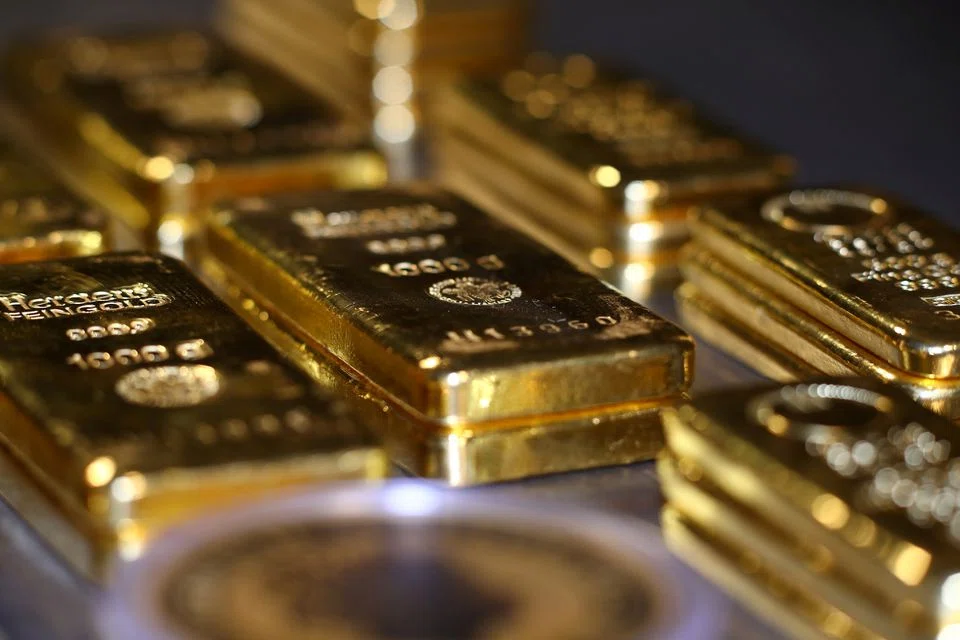
Gold prices slipped on Monday (Dec 2), snapping a four-session rally as the US dollar firmed, while market participants awaited key US economic data for clues on the Federal Reserve’s monetary policy outlook.
Spot gold fell 0.7 per cent to US$2,633.86 per ounce, as at 0047 GMT. US gold futures edged 0.9 per cent lower to US$2,656.40.
The US dollar index rose 0.4 per cent, making bullion costlier for other currency holders.
Key US data due this week includes US job openings, the ADP employment report and payrolls report.
According to the CME Group’s FedWatch Tool, markets currently see a 65.2 per cent chance of a 25-basis-points reduction by the Fed in December.
The bullion declined over 3 per cent in November and registered its worst monthly performance since September 2023, as traders expect the prospect of higher tariffs under the Trump administration to keep interest rates higher for longer.
Data released last week showed progress in lowering US inflation appears to have stalled in the past months, suggesting the Fed may proceed cautiously with further cuts.
Gold is considered a hedge against inflation but higher rates dull the appeal of holding the non-yielding asset.
Elsewhere, physical gold premiums were steady in India last week, as a rise in demand from the previous week’s price correction was later countered by higher rates, while demand in other major Asian hubs and top consumer China remained subdued.
Spot silver shed 0.7 per cent to US$30.40 per ounce, platinum fell 0.4 per cent to US$942.25 and palladium fell 0.8 per cent to 971.21. REUTERS
Decoding Asia newsletter: your guide to navigating Asia in a new global order. Sign up here to get Decoding Asia newsletter. Delivered to your inbox. Free.
Share with us your feedback on BT's products and services
TRENDING NOW

Once staunchly pro-China, Malaysian Chinese businesses are now distancing themselves from Beijing

Britain’s mansion tax shows the difficulty of targeting wealth

Three hats, one goal: How Ng Kian Swan runs sustainability at NUHS

COE review: The gap between luxury and mass-market cars isn’t the only one worth bridging

