

‘I have to buy her gold’: Behind India’s fixation with the precious metal
As gold prices have risen and fallen in the past few weeks, Indians have adjusted, but gold buying has not stopped
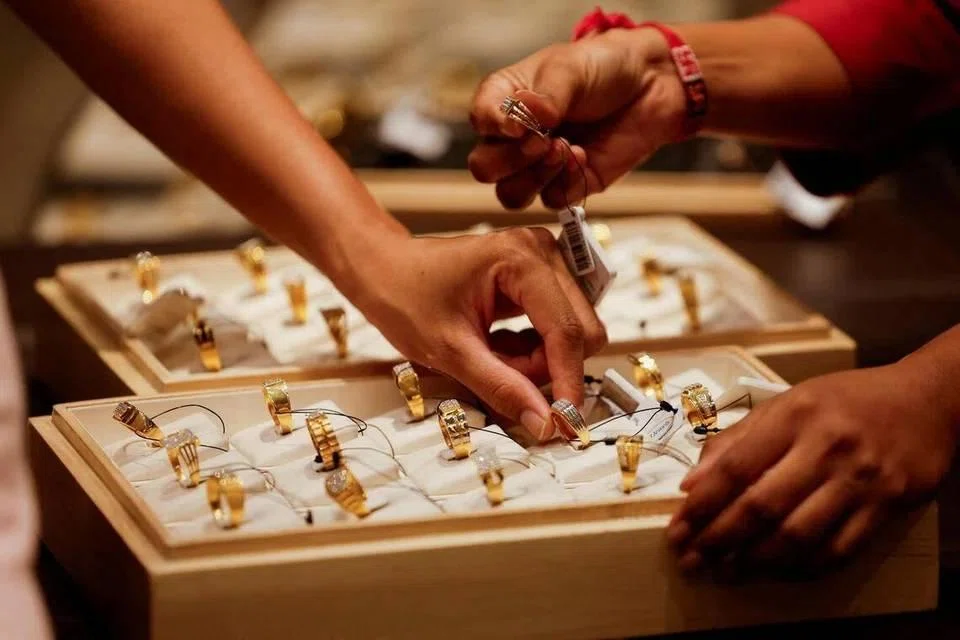
[NEW DELHI] When Sushila Sangwan started planning her son’s wedding in early 2025, she had planned to gift 800g of gold jewellery to the bride.
But by the time the wedding came around in December, she had cut that amount in half as the wedding budget was torpedoed by rising gold prices, with 80 per cent of the expenditure going towards the precious metal.
In January 2025, when Sangwan bought the first necklace for the bride, 10g of gold cost 76,000 rupees (S$1,060). By November, when she went back to buy another necklace, prices had nearly doubled to 123,000 rupees.
Retail gold prices in India follow international trends, but import duties and other taxes add another 9 or 10 per cent to the total cost. A weaker rupee coupled with jewellery-making charges, further boosts prices.
Sangwan ended up giving 400g of gold jewellery, mixing family heirloom pieces with new purchases.
She also sold old jewellery in exchange for more modern designs for her daughter-in-law.
“In our community, we have to give the bride gold jewellery. It is part of the tradition,” said Sangwan, who is from a farming community in the northern state of Haryana.
This practice is widespread, whether on the bride or groom’s side, and reflects the complex relationship Indians have with gold as a form of savings, security and societal obligation.
As gold prices have risen and fallen in the past few weeks, Indians have adjusted, but gold buying has not stopped.
A cultural cushion under strain
India’s fixation with gold is part of every Indian family’s financial strategy, regardless of class.
In rural India, money is often borrowed against gold during times of stress and bought back or added when the harvest is bountiful.
In urban India, from the rich to the middle- and lower-income, tradition and societal norms dictate holding some amount of gold.
This explains why Indian households collectively own about 34,600 tonnes of gold, which Morgan Stanley economists estimated in October 2025 was worth around US$3.8 trillion (S$4.8 trillion) at the time. India’s gross domestic product is around US$4 trillion.
India is ranked as the world’s second-largest consumer of gold, second only to China, accounting for more than a quarter of global demand. But this traditional safety net is under pressure amid the volatility in gold prices.
Gold prices went up by over 60 per cent over 2025 and breached US$5,000 per ounce in early 2026 amid global uncertainty and central bank buying.
Prices have remained volatile, dropping to below US$5,000 per ounce and then rising again. In December, JP Morgan Global Research forecast that the price of gold would average US$5,055 per ounce by the final quarter of 2026, rising towards US$5,400 per ounce by the end of 2027 due to anticipated central bank purchases, among other factors.
In India, gold rates have fluctuated sharply, with retail prices of 24K gold both breaching and dipping below 15,700 rupees per gram in February.
For many, this volatility in gold prices has resulted in economic means colliding with generations-old societal obligations.
Poorer and middle-class Indian families can really feel the pinch, with gifts of gold being the expected norm.
Khadjia Sheikh, a 52-year-old domestic worker in the city of Gurgaon, has already started collecting gold for her grandchild’s wedding.
The child is only eight years old.
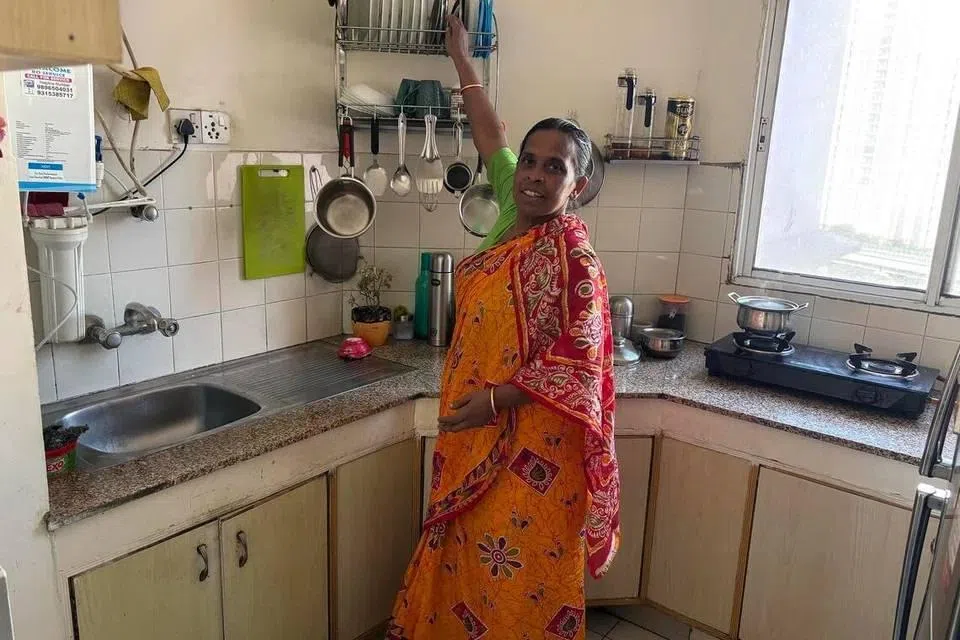
The practice of collecting gold for a female child’s wedding is a tradition, transcending class and religion in India’s multicultural society.
“I have to buy her gold. That is the tradition,” Sheikh said. “I am thinking of starting with a gold chain, and then earrings.”
She plans to give the child a gold chain, worth 1.2 million rupees, when she returns home to her village in West Bengal during festival time in October 2026. This means picking up extra work whenever possible, boosting her earnings of 30,000 rupees a month as a cleaner for half a dozen houses.
The gold paradox
Demand for gold in India has remained surprisingly steady despite the high prices.
Still, rising prices have become a cause for both celebration – for households watching their stockpile jump in value – and distress for families worried about their household budgets.
Gold buying is both planned – marking milestones from birthdays to weddings to festivals – and spontaneous, with gold shops often filled with customers regardless of the occasion.
And workarounds have become popular in these uncertain times.
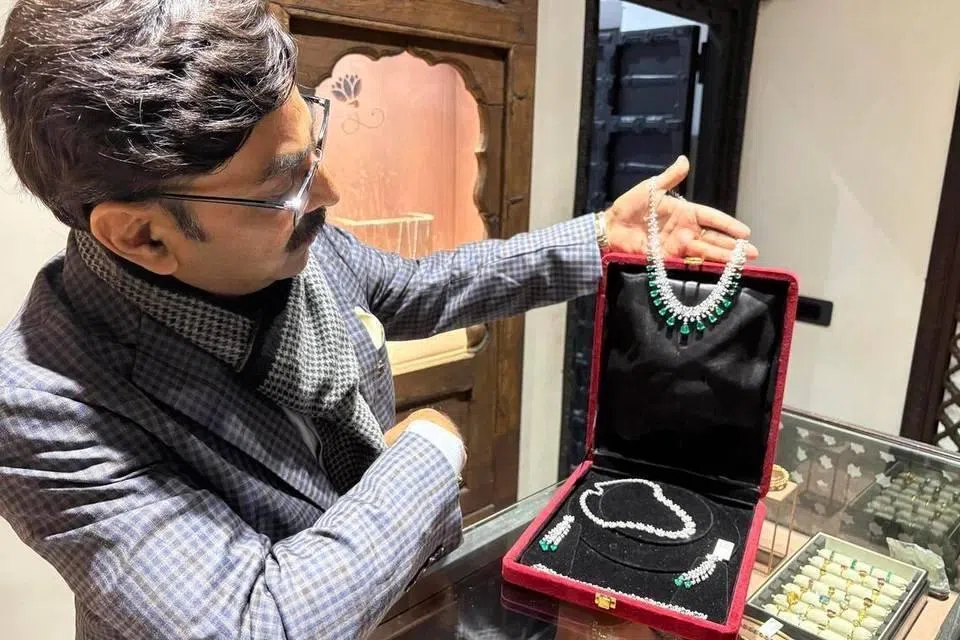
Jewellery shops say more buyers are paying for their purchases through instalment schemes. And some buyers look at adding to their collection with larger pieces of lightweight jewellery in cheaper variants such as 18K and 14K.
But, overall, gold purchases for weddings remain strong even if smaller ornamental categories like bangles and rings are being trimmed or sacrificed to cut costs.
“The love for gold is more of a social compulsion in India because the social security network here is not as strong as in the West,” said Delhi-based jeweller Atul Jain of Atul Jewellers, referring to government- or community-led social security schemes that do not cover most Indians.
“So for social security, people look upon their own reserves – and these reserves are in the form of gold only, as it has been for centuries.”
Consequences of the gold rush
The relentless demand for gold has broader consequences for India.
Gold imports surge during festival and wedding seasons, which can widen India’s current account deficit.
In late 2025, India’s gold imports surged in spite of high prices by around 200 per cent in October to the value of US$14.7 billion, up from US$4.9 billion a year earlier due to festive demand. Gold buying is considered auspicious around Deepavali and Hindu festivals like Dhanteras, when Hindus buy gold to welcome prosperity into the home.
The higher price of gold inflated the country’s import bill, which pushed up the trade deficit to US$41.68 billion in October 2025, surpassing the earlier high of US$37.8 billion in November 2024.
In the past, the government used tools like higher customs duties and import bans to rein in gold inflows. But gold’s cultural weight ensures demand remains elastic and persistent.
Inside the bazaars
Despite volatile gold prices and economic pressure, India’s fascination with gold shows little sign of waning.
From the gold shops of Chennai to bustling old and new markets in Delhi and Mumbai, the allure of gold continues to draw buyers.
In the heavily congested lanes of Chandni Chowk in Old Delhi, crowds are so thick that there is barely space to walk. Pedestrians dodge cycle rickshaws and shop at hand-drawn carts for street food or fruit, adding to the hustle and bustle.
Inside Ratan Chand Jwala Nath Jewellers, a century-old, eight-generation-run jewellery shop, Tarun Gupta, the seventh generation of the family in the business, is on the phone constantly.
“No, the gold rate has not gone down,” he tells one caller. “Yes, you can transfer the payment through a bank transfer and I will deliver the bangles,” he tells another.
“Phone calls have increased because people want to know what the cost of gold is today. They are hoping to buy when it goes down,” he says, before he is interrupted by another call.
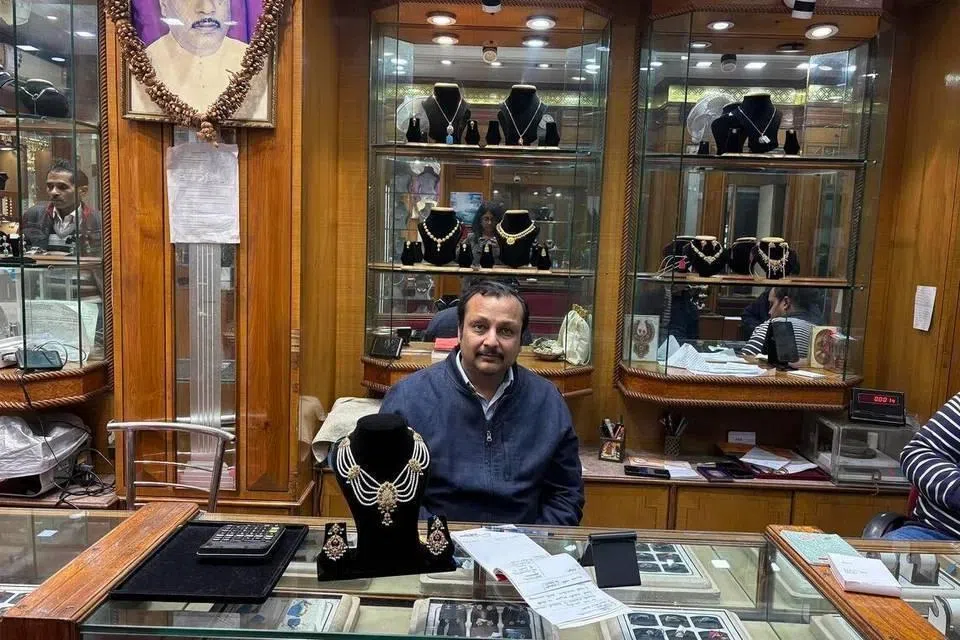
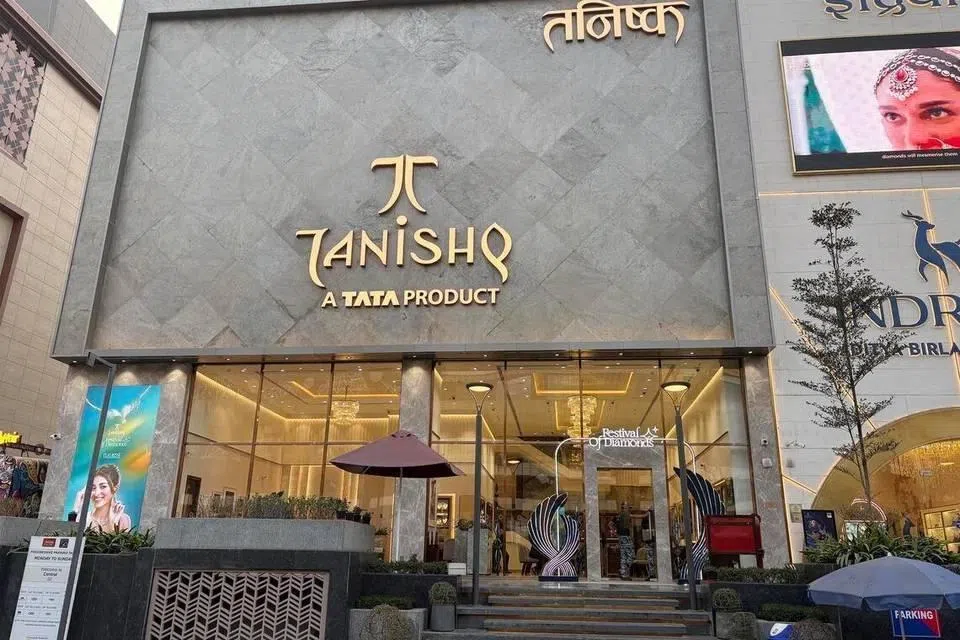
Some 23km away, in Noida’s Sector 50, a new shopping complex has opened with more than a dozen jewellery shops, including major chains.
Gold necklaces shine through the clear windows of one jewellery shop after another, all of which are full of women shopping, even on a weekday afternoon.
As I walk through the complex, one salesman beckons to me.
“We have the latest designs,” he says. “Come in, I will show you exclusive jewellery,” he says, knowing he has stiff competition from other shops.
I go in and can only marvel at the many designs, pondering if I should have started a gold collection for my eight-year-old daughter, as advised by my Tamil family, for whom gold remains a top investment.
But going by how Indians buy gold, it is never too late. THE STRAITS TIMES
Decoding Asia newsletter: your guide to navigating Asia in a new global order. Sign up here to get Decoding Asia newsletter. Delivered to your inbox. Free.
Share with us your feedback on BT's products and services
TRENDING NOW

Once staunchly pro-China, Malaysian Chinese businesses are now distancing themselves from Beijing

Looking beyond looming CEO succession, should UOB potentially pursue a transformative merger?

Could stablecoins be the future of money?

Grab CEO’s wife Chloe Tong on life with Anthony Tan and finding her purpose

