

Iran war is draining world’s oil buffer at an unprecedented pace
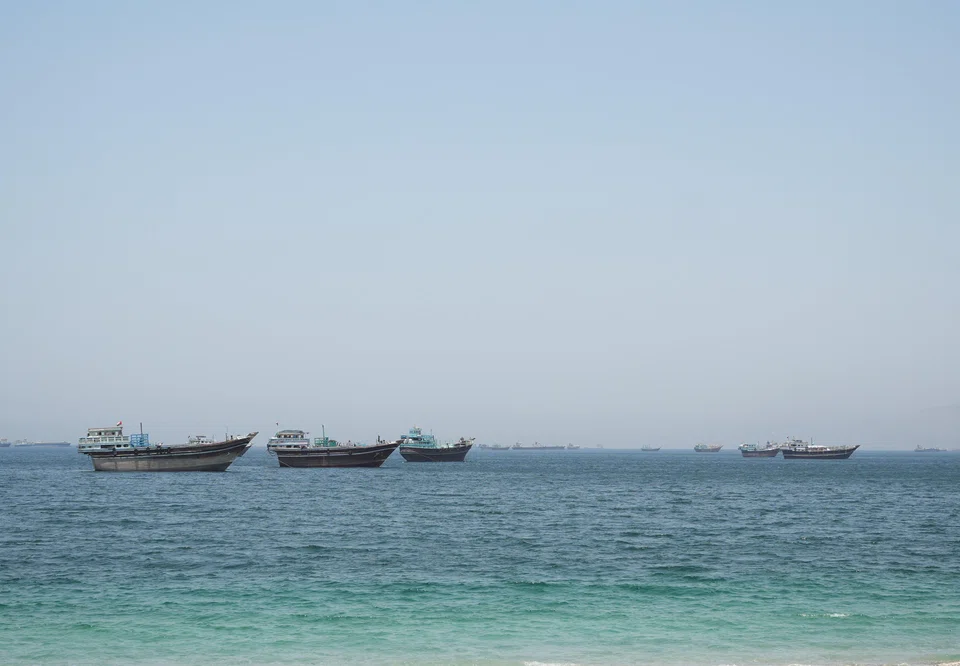
THE WORLD has burned through oil inventories at a record speed as the Iran war throttles flows from the Persian Gulf, eating into the very buffer that protects against supply shocks.
The rapidly shrinking stockpiles mean that the risk of even more extreme price spikes and shortages is getting ever-closer, leaving governments and industries with fewer options to cushion the impact of the loss of more than a billion barrels of supply, two months into the near-closure of the Strait of Hormuz. The sharp depletion will also mean the market stays vulnerable for longer to future disruptions even after the conflict ends.
Morgan Stanley estimates global oil stockpiles dropped by about 4.8 million barrels a day between Mar 1 and Apr 25 – far exceeding the previous peak for a quarterly drawdown in data compiled by the International Energy Agency (IEA). Crude accounts for almost 60 per cent of the decline, and refined fuels the rest.
Crucially, the system also requires a minimum level of oil, which means that the “operational minimum” is reached long before the inventories actually hit zero, said Natasha Kaneva, JPMorgan Chase’s head of global commodities research.
“Inventories are acting as the shock absorber of the global oil system,” she said. But “not every barrel can be drawn.”
There are some signs that the drawdown may have slowed slightly in recent days, according to Goldman Sachs Group, which pointed to weaker demand from China, the world’s top oil importer – leaving more available for other buyers. Still, global visible oil stocks are already close to their lowest since 2018, the bank said.
Estimating global inventories involves both art and science. A large part are strategic caches of crude and fuel controlled by governments, either directly or by requiring the industry to maintain a level of reserves that can be released when needed, or a combination of the two. But there is also a huge amount in commercial stockpiles – the inventories of oil producers, refiners, traders and distributors held as part of normal business operations.
The most immediate points of stress are in a handful of fuel-import-reliant countries in Asia, with traders pointing to Indonesia, Vietnam, Pakistan and the Philippines as the biggest worries, potentially hitting critical levels of supplies in as little as a month. Larger economies in the region, particularly China remain comfortable for now.
However, European jet-fuel stocks are also depleting fast just as summer vacations approach, and some analysts predict they could hit critical levels as soon as June.
SEE ALSO




Operational minimum
JPMorgan’s Kaneva warns that inventories in the Organisation for Economic Co-operation and Development could reach “operational stress levels” early in June, if the strait does not reopen, and then “operational minimum” floors by September. That is the point when the world hits the bare minimum amounts of oil needed for pipelines, storage tanks and export terminals to function properly.
The US, which has become the supplier of last resort to the world, has already drawn down domestic inventories of crude and fuels to below historical averages as exports surge. US crude stocks, including the nation’s Strategic Petroleum Reserve, have dropped for the last four straight weeks, according to government data. US distillate stockpiles were at their lowest point since 2005 at the end of last week, while gasoline stockpiles were hovering near their lowest seasonal levels since 2014.
While America’s oil drillers have started to turn the taps on, executives have warned that inventories are likely to keep falling in the short-term.
Even if the waterway reopens, Gulf output and shipping is unlikely to return to normal levels any time soon, meaning fuel users could have to dig even deeper into storage tanks.
The conflict has already sent physical crude and key fuel prices surging, threatening higher inflation and intensifying the risk of a global recession. It has left India suffering liquefied petroleum gas shortages, prompted airlines to cancel flights and hit US drivers with soaring gasoline costs.
Global oil consumption has already dropped sharply, in part because of supply disruptions, and in part because of higher prices. But as inventories get closer to critical levels, analysts, traders and executives warn that prices will need to spike to a level that chokes off significantly more demand in order to balance the market.
“A lot of the inventory and spare capacity has been depleted already,” Chevron chief financial officer Eimear Bonner told Bloomberg TV on May 1. “We are going to start to see some import-dependent countries potentially start to face critical shortages as we get into the June to July time-frame.”
“Top of my mind in terms of places facing imminent shortage is gasoline in Asia, with countries like Pakistan, Indonesia or the Philippines likely to be the first to face issues with tank bottoms,” said Frederic Lasserre, head of research at energy trader Gunvor Group.
If the Strait of Hormuz does not reopen by early June, some Asian countries will face a macroeconomic shock because of the shortage of gas-oil, he predicted, while Europe may have one more month before the situation becomes difficult to manage.
To be sure, some analysts and traders say that the stress points are lower than what JPMorgan estimates, meaning that the industry could have a bigger buffer, while further demand loss would also help reduce the pressure on the system. The JPMorgan estimates assume demand destruction of 5.6 million barrels a day for June through September.
Asia situation
While Asia has been the most exposed to the loss of Middle Eastern oil, stockpiles in key economies are largely holding up, with China’s and South Korea’s levels so comfortable that they are considering resuming refined-product exports that were earlier curbed. Stocks in the fuel-storage hub of Singapore were recently above seasonal averages. China’s crude inventories remain robust, with geospatial analytics firm Kayrros estimating they have actually risen during the war.
The energy transition may also mean that some nations need to store less fuel going forward. Gasoline and diesel may not be as crucial in nations like China, which has massively electrified its fleet of cars and trucks.
Oil inventories in the Asia-Pacific region outside of China have been hit hardest, falling by about 70 million barrels since the conflict began, Kayrros co-founder Antoine Halff said.
Kayrros said stockpiles in Japan and India are at an at least 10-year seasonal low, down 50 per cent and 10 per cent, respectively, since the war began. The region’s supplies of naphtha and LPG, both used for petrochemicals, have been particularly hit, according to Goldman Sachs.
Some Asian officials say stockpiles are sufficient, at least for now. Pakistan’s petroleum minister in late April said it has roughly 20 days of commercial reserves of refined products. India’s oil ministry said on May 3 that refineries have adequate crude inventories, though state-run refiners privately acknowledged that they have burnt through a sizable amount, without elaborating.
Diesel – the lifeblood of the global economy – is also facing a crunch. Countries hit hardest are those with limited domestic crude production and refining capacity, said Xavier Tang, a senior market analyst at Vortexa.
“North-east Asian countries such as China, Japan and South Korea hold ample crude and product stocks in their storage tanks,” said Tang. “Vietnam, Philippines are in a more dire situation.”
Europe and jet fuel
In Europe, the critical product is jet fuel.
Inventories in independent storage at the Amsterdam-Rotterdam-Antwerp hub have plunged a third since the war started to a six-year low, according to Insights Global, which gets data from terminal operators.
“Since February, we have seen a steady drop in jet fuel stocks,” said Lars van Wageningen, research and consultancy manager at Insights Global. “Other regions like Asia and Australia also need to source this product, so everybody’s scrambling for whatever jet fuel they can get – with a cost.”
While there’s enough supply in the short-term, summer demand could cause stocks to dry up in five months, he said. The UK, Germany and France are most vulnerable because of heavy traffic and insufficient local production, he said.
Strategic stockpiles
Governments have already pledged to deploy a record 400 million barrels of oil from emergency reserves in a move co-ordinated by the IEA.
However, the US has only utilised about 79.7 million barrels of the 172 million it promised to release, as it it walks a fine line between providing enough supply to sustain global markets and pushing the oil store further toward depletion. The reserve is already poised to fall to its lowest level since 1982 if the administration completes the full release.
Germany is re-offering crude and jet fuel that was not taken by the market when previously offered, and will take further measures if there is a shortage, the economy ministry said.
Governments face a dilemma that if they release more stockpiles to rein in prices, it would only further erode the buffer.
Looking further ahead, the sharp reduction in global stockpiles will mean added pressure on the market once the strait reopens, as governments and companies rush to replenish them.
“We expect this de-stocking environment to continue over the next number of months and ultimately drive a restocking phenomenon longer-term,” Plains All American Pipeline chief executive officer Willie Chiang said on an earnings call on Friday (May 8). “Post-war, we would not be surprised to see several countries restock their SPRs above pre-war levels, essentially creating an additional layer of demand into the future.” BLOOMBERG
Decoding Asia newsletter: your guide to navigating Asia in a new global order. Sign up here to get Decoding Asia newsletter. Delivered to your inbox. Free.
Share with us your feedback on BT's products and services
TRENDING NOW

DBS, OCBC, UOB rout lops billions off STI as inflation, rate concerns spook investors

Grab CEO’s wife Chloe Tong on life with Anthony Tan and finding her purpose

OCBC sheds S$8 billion in value as shares close nearly 6% down; analysts cautious on banks

Deal between tycoon friends sparks scrutiny of Philippine power sector

