

Oil eases as US, Iran continue talks after renewed fighting
West Texas Intermediate falls 0.9% to settle near US$71 a barrel, but still notches a weekly gain of roughly 4%
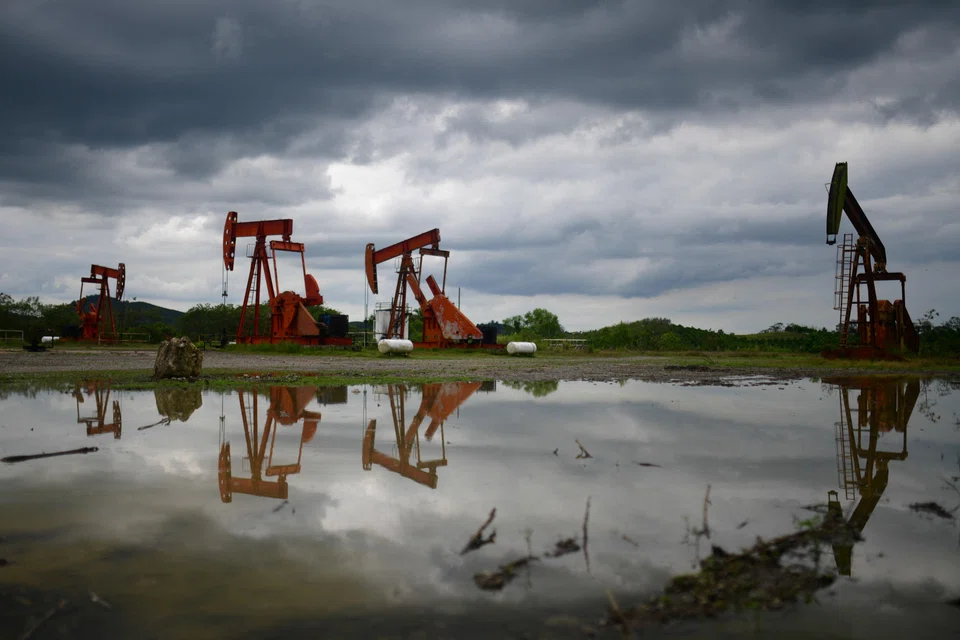
OIL prices slipped as the US and Iran appear set to continue talks following a flare-up in attacks that strained their ceasefire and deterred tanker traffic through the Strait of Hormuz.
West Texas Intermediate fell 0.9 per cent to settle near US$71 a barrel, but still notched a weekly gain of roughly 4 per cent. Brent futures also fell to close near US$76 a barrel.
The two sides are continuing technical discussions, according to a US official, after US forces’ two-day campaign against targets in the Islamic Republic had cast doubt on the prospect. A Qatari delegation arrived in Iran, according to its semi-official Tasnim news agency.
The commodity briefly pared losses, before reversing, in a knee-jerk reaction after US President Donald Trump said in a social media post that “in no uncertain terms... the Cease Fire is OVER!”
He also confirmed that talks between the warring sides are set to continue.
The International Energy Agency warned in a report on Friday (Jul 10) that renewed hostilities between the two adversaries risk derailing efforts to rebuild depleted global oil inventories later this year.
There were signs of resilience in the region’s energy flows. The United Arab Emirates boosted crude oil production to an all-time high last month, the most compelling evidence yet of how Abu Dhabi has responded more boldly than any of its Persian Gulf neighbors to the war.
“Overall, the price action is consistent with the narrative that the market doesn’t think the hostilities are going to last,” said Scott Shelton, an energy specialist at TP ICAP Group.
“On the flip side, oil flows out of the Strait of Hormuz are down significantly from last week while there are signs that China may be increasing runs.”

“But the picture after the war ends looks increasingly bleak when examining balances,” he added.
Observed transits through Hormuz have been reduced substantially by the hostilities. Traders will be monitoring output and sales from Persian Gulf producers including Saudi Arabia, which is due to issue monthly allocations to customers shortly.
Visible traffic in Hormuz remained thin after appearing to grind to a near halt on Thursday, according to ship-tracking data. At least two oil supertankers, both controlled by the same company, appeared to cross the waterway Friday on a US-protected route.
Crude’s volatile week is reflected in shifts in WTI’s prompt spread, which tracks the difference between its two nearest contracts. The spread has flipped from contango, which signals oversupply, to backwardation, which denotes the opposite. BLOOMBERG
Decoding Asia newsletter: your guide to navigating Asia in a new global order. Sign up here to get Decoding Asia newsletter. Delivered to your inbox. Free.
Share with us your feedback on BT's products and services
TRENDING NOW

Once staunchly pro-China, Malaysian Chinese businesses are now distancing themselves from Beijing

Looking beyond looming CEO succession, should UOB potentially pursue a transformative merger?

Could stablecoins be the future of money?

Grab CEO’s wife Chloe Tong on life with Anthony Tan and finding her purpose

