

Oil rises more than 1% after Trump flags China’s interest in US supplies
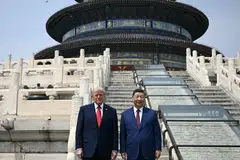
Both Trump and Xi agreed the Strait of Hormuz must be open for the free flow of energy
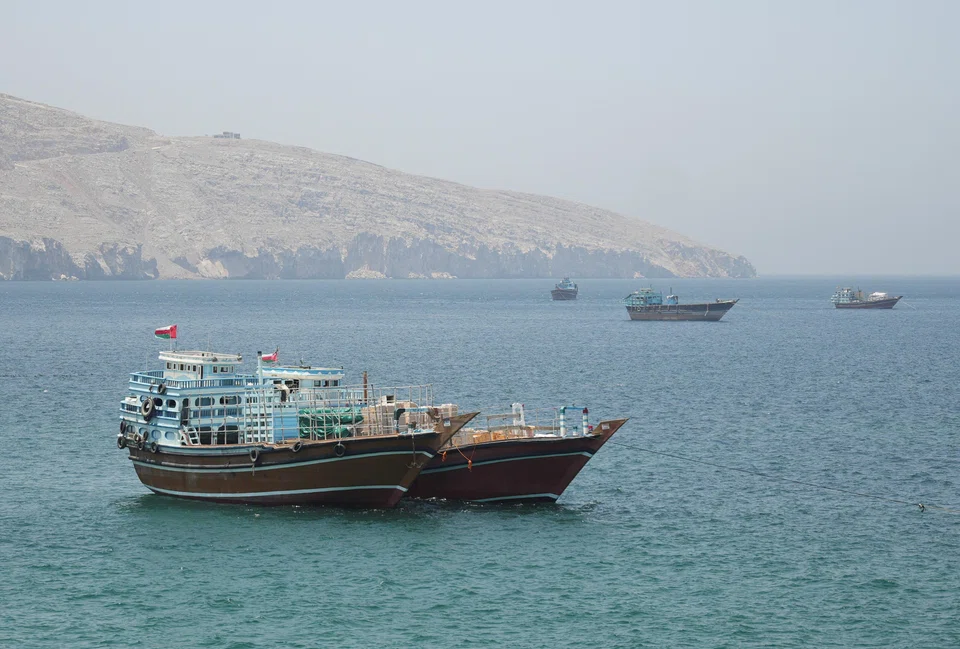
[NEW DELHI] Oil prices gained more than 1 per cent on Friday (May 15) after President Donald Trump said China wants to buy oil from the US and as concerns persisted over ship attacks and seizures despite Iran saying about 30 vessels had passed through the Strait of Hormuz.
Brent crude oil futures rose US$1.17, or 1.11 per cent, to US$106.89 a barrel by 0252 GMT, while US West Texas Intermediate futures were up US$1.10, or 1.09 per cent, to US$102.27.
Chinese President Xi Jinping expressed interest in purchasing more US oil to reduce China’s dependence on the Strait of Hormuz, according to the White House. China, never a big buyer of US crude, has not imported any since May 2025 due to a 20 per cent import tariff imposed during the trade war.
Trump also said in an interview with Fox News he would not be much more patient with Iran as he urged Teheran to reach a deal with Washington.
Trump and Xi hold talks on Friday to wrap up a two-day state visit that has featured pomp and business deals.
A ship was reported seized by Iranian personnel off the United Arab Emirates and headed for Iranian waters on Thursday, while the White House said US President Donald Trump and Chinese President Xi Jinping had agreed on the need to keep the nearby Strait of Hormuz shipping lane open.
Also, an Indian cargo vessel carrying livestock from Africa to the United Arab Emirates was sunk on Wednesday in waters off the coast of Oman.
Iran’s Revolutionary Guards said 30 vessels had crossed the Strait of Hormuz since Wednesday evening, still far short of 140 that were typical daily before the war, but a substantial increase if confirmed.
Yang An, analyst at Haitong Futures, said the main driver of oil prices was still tight supply.


“Oil prices swung several times yesterday but still closed near the day’s high,” he said.
“Ships passing through the strait eased some market concerns, but not enough to change the strong trend driven by tight supply.”
US Trade Representative Jamieson Greer said on Friday morning that China was being very pragmatic about involvement with Iran, and it was important to China to have the Strait of Hormuz open, in an interview with Bloomberg.
Global oil supply will fall short of total demand in 2026 as inventories are drained at an unprecedented pace, the International Energy Agency said on Wednesday.
US crude inventories fell by 4.3 million barrels to 452.9 million barrels for the week ended May 8 on rising exports, the US Energy Information Administration said, although distillate stockpiles rose, in opposition to expectations of a draw. REUTERS
Decoding Asia newsletter: your guide to navigating Asia in a new global order. Sign up here to get Decoding Asia newsletter. Delivered to your inbox. Free.
Share with us your feedback on BT's products and services
TRENDING NOW

Britain’s mansion tax shows the difficulty of targeting wealth

Once staunchly pro-China, Malaysian Chinese businesses are now distancing themselves from Beijing

The only common thing in S-E Asia is that we all eat rice: Cisco’s Asean president

Singapore data centre operator DayOne opts for US IPO at likely US$20 billion valuation

