Oil inches down as investors focus on Hormuz flows after peace talks
The price declines come after a weekend that had appeared to put the week-old accord in jeopardy
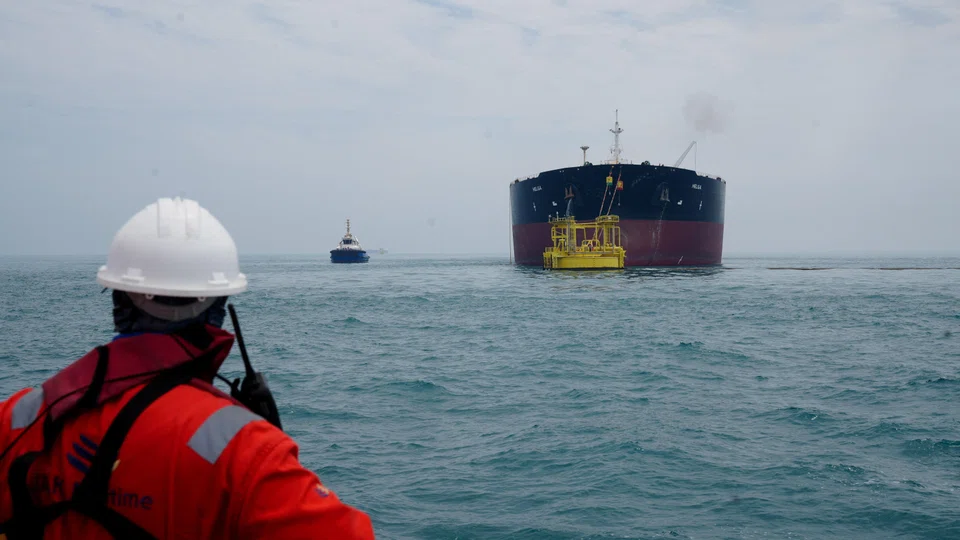
[SINGAPORE] Oil prices inched down on Tuesday (Jun 23), extending losses from the previous session, as investors looked for clearer signs of progress in restoring crude flows through the Strait of Hormuz following US-Iran peace talks.
Brent crude futures fell 20 US cents, or 0.3 per cent, to US$77.70 a barrel and US West Texas Intermediate declined to US$73.74 a barrel, down 12 US cents, or 0.2 per cent, as at 11.23 Singapore time.
Prices fell more than 3 per cent on Monday after the United States granted Iran a 60-day sanctions waiver following initial peace talks, and as officials reported a lull in hostilities in Lebanon under the broader agreement.
“The gradual increase in oil flows through the Strait of Hormuz continues to weigh on the market,” said ING analysts in a note.
Two crude tankers with just under two million barrels of oil sailed through the Strait of Hormuz on Monday, ship-tracking data showed, in a sign that traffic was picking up following weaker flows on Sunday due to concerns over passage through the waterway.
“Transits over recent days look to have risen sharply, (which) the market will treat as a proxy for both physical oil, perhaps paper oil, and diplomatic progress,” said Sparta Commodities’ head of research Neil Crosby. “It feels like we will be stuck in this bearish risk-off/optimistic mood until such time as something changes.”
The price declines come after a weekend that had appeared to put the week-old accord in jeopardy, including threats from US President Donald Trump to restart the war if Iran disrupted shipping through the Strait of Hormuz after Teheran declared the strategic waterway closed.
“There remains a prevailing dose of market scepticism, rooted in deep-seated mistrust between Washington and Teheran, suggesting that any return to pre-war oil prices is likely to be delayed rather than immediate,” said Tim Waterer, chief market analyst at KCM Trade.
Separately, analysts in a Reuters poll expect US crude inventories to have fallen last week, along with distillate and petrol inventories.

On Monday, government data showed US crude stocks in the Strategic Petroleum Reserve fell to 331.2 million barrels last week, the lowest since June 1983, as supplies tightened in the wake of the US-Iran conflict. REUTERS
Decoding Asia newsletter: your guide to navigating Asia in a new global order. Sign up here to get Decoding Asia newsletter. Delivered to your inbox. Free.
Share with us your feedback on BT's products and services