US suspends Iran oil sanctions, says nuclear inspectors to return amid optimism after first talks
“I will do what I have to do” if Iran does not stick to its agreement with Washington, says Trump
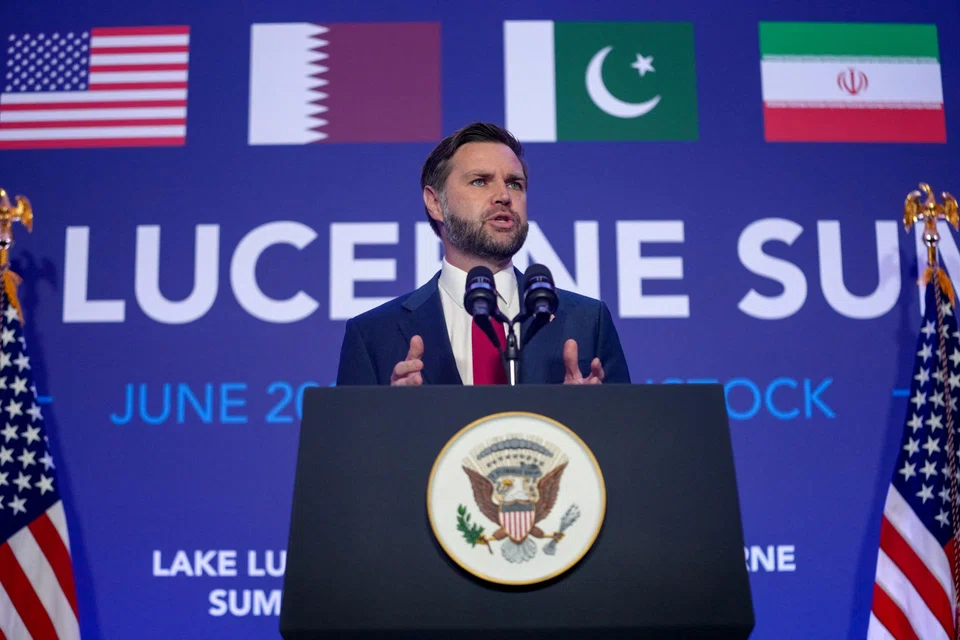
[BUERGENSTOCK/BEIRUT] The US waived sanctions on Iran for 60 days from Monday (Jun 22) after the first talks under a nascent peace deal, while officials reported a sustained lull in fighting in Lebanon under the agreement aimed at ending hostilities across the region.
The developments followed a weekend that had appeared to put the week-old accord in jeopardy, including threats from US President Donald Trump to restart the war if Iran disrupted shipping through the Strait of Hormuz after Teheran declared the strategic waterway closed. Tanker traffic through the strait started to pick up on Monday and oil prices resumed their slide.
US Vice-President JD Vance said talks with Iranian officials in Switzerland had laid a good foundation for a final peace deal, although Iran denied that it had begun discussions of its nuclear programme.
US-Israeli attacks on Iran and Israeli strikes in Lebanon have killed thousands and displaced millions. The Iran war has also shaken markets around the world and raised global oil prices, which settled 3 per cent lower on Monday after Vance reported progress had been made.
The two sides, trying to build on the interim deal they signed on Jun 17, agreed a roadmap towards a permanent agreement within 60 days at the talks in the Qatari-owned Swiss mountain resort of Buergenstock, mediators Pakistan and Qatar said.
They also agreed on a mechanism to end fighting in Lebanon between US ally Israel and Iran-aligned Hizbollah, and opened a communications line to help ensure safe passage for commercial ships through the Strait of Hormuz in order to avoid conflict in the strategic waterway.
In the first of several steps envisaged under the agreement to provide economic relief to Iran, the US Treasury announced a waiver until Aug 21 on sanctions, allowing Teheran to sell oil and related products and receive payment for them.
Iran had not yet discussed nuclear issues: Baghaei
Vance, who has maintained an upbeat tone since the memorandum of understanding was signed, said Teheran had agreed to allow in nuclear inspectors, and to establish mechanisms to handle its assets frozen abroad and manage ceasefires.
“We laid a very good foundation for a successful final deal,” he told reporters after taking part in the talks.

However, Iran’s Foreign Ministry spokesperson Esmaeil Baghaei told the official IRNA news agency that Iran had not yet discussed nuclear issues or made new commitments.
Trump said in a post on Truth Social on Monday that Iran will agree to have weapons inspections to ensure “nuclear honesty.”
“If Iran doesn’t live up to their agreement, or if they’re not behaving, I will do what I have to do,” Trump later told reporters.
Iran has limited inspections by the International Atomic Energy Agency since the US and Israel launched a first round of air strikes in 2025, and suspended them entirely when war broke out in February. It says its nuclear program is peaceful.
Iranian Foreign Minister Abbas Araqchi said on social media that Teheran had secured waivers for oil and petrochemical exports, the release of some of its frozen assets abroad and the launch of a reconstruction and development plan for Iran.
Vance said White House envoy Jared Kushner, Trump’s son-in-law, had come up with a process whereby the US and Qatar would have control over Iranian funds when they are unfrozen, and the money could be spent on US corn, soy and wheat. “So, the money that we lift is going to go to our farmers,” Trump told reporters.
However, Iran’s Central Bank Governor Abdolnaser Hemmati said there was no such obligation and said at least some of the remaining frozen funds could be used to buy other non-sanctioned goods, Iran’s Tasnim news agency reported.
Halt to hostilities
Technical talks were due to continue for the rest of this week.
The interim peace agreement calls for ending all hostilities, including in Lebanon, which Israel invaded in March after Hizbollah fired across the border.
Israel was not party to the peace agreement and says it will not withdraw its troops from Lebanon, but on Friday it agreed a new ceasefire. Though intense fighting continued for another day, Lebanese officials said it had abated since Saturday night.
Israel and Lebanon were due to start a new round of talks in Washington on Tuesday, with Beirut determined to press ahead with direct negotiations even as they appear to be overshadowed by Iran’s decision to make Lebanon part of its negotiations with the US.
Hassan Wazni, director of a hospital in the heavily bombarded city of Nabatieh, said it was the first two full days of calm since the war began. “I’m monitoring the situation day by day, and most of the time I’m sleeping in the hospital. This is the longest a ceasefire has held,” he told Reuters by phone.
More than a million Lebanese have been displaced by the war, and though some have begun returning to their homes, many are still too wary.
In Qennarit, a southern town, mourners carried the bodies of four women killed in Saturday’s wave of Israeli strikes. The coffins were draped in yellow Hizbollah flags with the group’s green logo of an arm holding an assault rifle. REUTERS
Decoding Asia newsletter: your guide to navigating Asia in a new global order. Sign up here to get Decoding Asia newsletter. Delivered to your inbox. Free.
Share with us your feedback on BT's products and services