

Oil falls almost US$2 as Middle East talks help ease supply worries
Brent remains near six-month peaks

[HOUSTON] Oil futures settled down by almost US$2 a barrel on Tuesday (Oct 27), though prices remain near six-month highs due to the disruption of shipping around the Middle East, and an agreement to end the US-Israeli war with Iran remains elusive.
Brent crude futures settled down US$1.93, or 1.67 per cent, at US$113.88 a barrel. US West Texas Intermediate crude settled down US$1.86, or 1.83 per cent, at US$99.90.
Iranian Security Council chief Mohsen Rezaei met Supreme Leader Ayatollah Mojtaba Khamenei on Tuesday, a day after holding talks with representatives of Saudi Arabia, Turkey and Pakistan.
State media said Khamenei had emphasised the importance of pursuing Iran’s interests and maintaining its conditions for ending the war.
The four countries agreed to continue talks with a view to strengthening cooperation in peace and security, Iranian state media said.
The outlook for peace remains uncertain as Yemen’s Iran-aligned Houthis renewed attacks on key oil producer Saudi Arabia. The Houthis said on Tuesday that they had struck Saudi Arabia’s Ras Tanura oil refinery, the biggest in the kingdom, with a ballistic missile.
“Continued Houthi attacks on Saudi Arabia and the expanding military presence in the Gulf are keeping supply risks in place, even as diplomatic headlines encourage some of the recent premium to unwind,” said Gelber & Associates analysts in a note.
October has been the worst month for attacks on commercial shipping in the Strait of Hormuz and nearby waterways, according to data compiled by the Washington Institute for Near East Policy, a think tank that has tracked maritime security incidents worldwide since 2017.
Traffic through the Strait of Hormuz has risen, but the number of vessel attacks has increased, with risks likely to become more acute if US naval support wavers, UBS said.
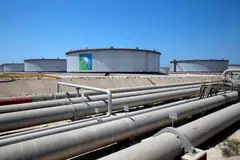

Brent prices surged to more than US$117 a barrel last week, their highest since April, after a wave of Iranian attacks on tankers around the strait.
UBS said it expects Brent prices to stay elevated near US$110 a barrel through the end of 2026, an increase from its previous forecast for US$100 a barrel at the end of the year.
“The impression now is that there is a significant risk premium in crude oil prices for the risk that the US/Israel will attack Iran in the coming weeks,” said SEB analyst Bjarne Schieldrop.
Investors were also looking for cues from Israel’s election on Tuesday, which could spell the end of Prime Minister Benjamin Netanyahu’s time in office, though polling suggested results would be close and that his Likud party could still prevail.
“The outcome of today’s parliamentary elections in Israel could also be significant for further developments in the war with Iran, as Israeli Prime Minister Netanyahu, if re-elected, might attempt to achieve regime change in Iran,” Commerzbank analysts wrote.
Crude oil exports from Russia’s Baltic and Black Sea ports were forecast to fall in November as domestic refiners plan to increase their output after the end of maintenance and to produce more diesel to meet the demands of a deal struck in October between Washington and Moscow, two traders said.
Russian oil refineries increased crude processing by 25 per cent in the second half of October compared to the beginning of the month after persistent Ukrainian drone attacks on the plants ceased, three people in the industry told Reuters. REUTERS
Decoding Asia newsletter: your guide to navigating Asia in a new global order. Sign up here to get Decoding Asia newsletter. Delivered to your inbox. Free.
Share with us your feedback on BT's products and services
TRENDING NOW

If Europe goes to war, the fallout will be felt in East Asia

Government to bring forward raising of retirement age, give employers more financial support to create flexi-load jobs

Indonesia stocks suffer worst plunge in nearly 30 years as MSCI proposes standalone status

Mapletree Industrial Trust posts 6.6% drop in Q2 DPU to S$0.0297

