Oil falls with focus on Saudi supplies, flows through Hormuz
West Texas Intermediate futures drop 1.8% to settle near US$89 a barrel; Brent closes around US$100
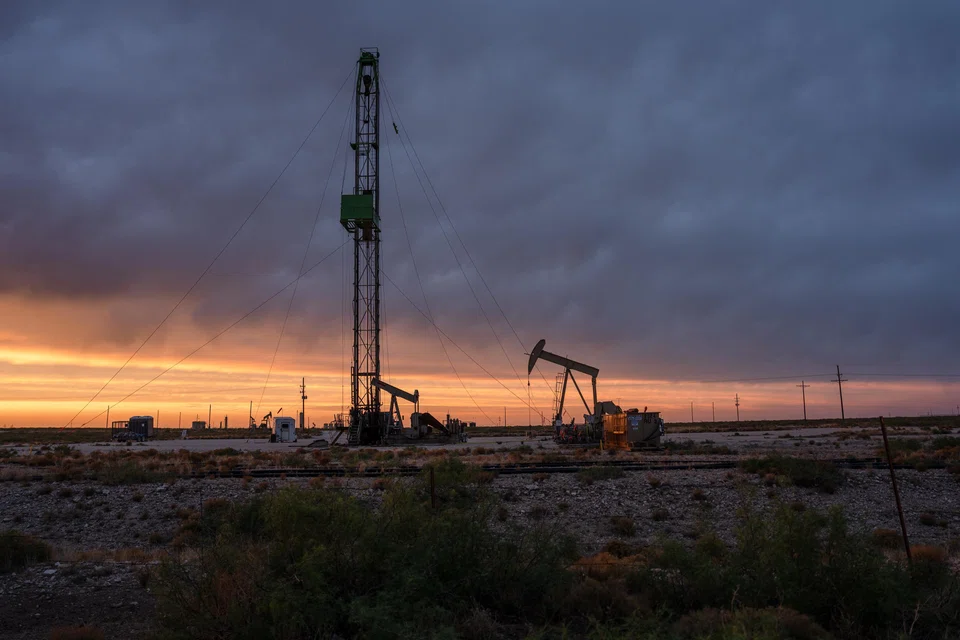
OIL fell as Saudi Arabia cut crude prices for Asian buyers in a sign that physical supplies are becoming more readily available as Middle Eastern exports recover.
West Texas Intermediate futures fell 1.8 per cent to settle near US$89 a barrel, while Brent closed around US$100.
Open interest in the front-month contracts for both benchmarks has trended lower in recent sessions as traders attempt to side-step geopolitical-driven volatility stemming from the Iran war, contributing to exaggerated price moves.
Over the weekend, Saudi Aramco lowered the price of Arab Light to buyers in Asia to US$5 a barrel below a regional benchmark for November as Persian Gulf producers race for market share with flows through the Strait of Hormuz increasing.
That is a six-year low and compares with a discount of US$2 a barrel for this month.
Traders and refiners had expected a US$5 rise from October, a Bloomberg survey shows.
Traders also parsed a stream of headlines on the status of Hormuz, one of the biggest points of contention in the US-Iran conflict.
News outlet Axios reported that top cabinet members met at Camp David last week to discuss next steps in the war, and the conflict in Yemen, citing three US officials.
Iranian state media reported that the country’s interior minister departed for Doha on Monday (Oct 5) for talks.

Crude has rallied strongly in 2026 after the US and Israel attacked Iran in late February, igniting months of conflict in the Middle East and fanning inflation.
Still, flows of oil have been recovering towards pre-war levels in recent weeks, although shipments of products remain constrained.
In a bid to tame prices, the Group of Seven and its partners last week announced a further release of emergency stockpiles.
Bullish risks endure.
Yemen’s internationally-recognised government launched a full-scale military campaign to recapture Houthi-held territory after weeks of escalating conflict between the Iran-backed group and Saudi Arabia, including targeting the kingdom’s energy infrastructure.
Iran, for its part, said the next “enemy mistake” against the country will bring “new fronts and greater surprises”.
Iranian President Masoud Pezeshkian said negotiating with the US “makes no sense”.
Investors are wary that an increasingly cornered Iran – the oil revenue-dependent nation loaded no crude oil onto tankers in September – could respond by intensifying the conflict.
“With a comprehensive Iran-US agreement still appearing unlikely, we continue to expect sizeable volatility across both crude and refined products,” said Bart Melek, global head of commodity strategy at TD Securities.
At the same time, the oil stockpiles that cushion the world from supply shocks have become “scarily thin”, putting markets at risk of worsening unless Hormuz reopens, Saudi Aramco chief executive officer Amin Nasser said at the Energy Intelligence Forum in London on Monday.
“While the squeeze on crude is serious, refined fuel prices have risen even more sharply.”
Saudi price cuts
Saudi Aramco’s official selling prices (OSP) – which set costs for crude sold under long-term contracts to refiners – have been exceptionally volatile since the outbreak of the Iran war in February.
In the initial stages of the conflict, when passages through the Strait of Hormuz collapsed, the OSP for sales to Asia was set at a record premium of US$19.50 a barrel.
While flows through the waterway have since picked up, risks to shipping remain acute, with a flurry of attacks in recent days.
Among the latest, the United Kingdom Maritime Trade Operations agency said a tanker transiting the Strait of Hormuz was instructed by Iran on Monday to turn back or it would be targeted.
A separate incident was also reported off Yemen’s Al Mukha in the Red Sea.
In Yemen, key to the fighting will be control over the country’s strategic western coastline towards the Bab el-Mandeb chokepoint.
A recent push by the Houthis saw them take control of the area, raising risks for Saudi shipping along a route that has been a key workaround to shipments via Hormuz.
“Emergency releases and the Saudi price cut, which I mostly read as an attempt to build market share, are weighing on prices,” said Ole Sloth Hansen, head of commodity strategy at Saxo Bank.
“It does not change the fact that shipments through the Strait of Hormuz has picked up but remains volatile and exposed to disruptions.”
Elsewhere, major Opec+ nations agreed at the weekend to keep production quotas unchanged in November, in line with an existing output roadmap.
The Iran war has blunted the impact of the group’s decisions because supply in some members remains below levels pumped before the conflict.
Stronger-than-expected flows and emergency releases are weighing on prices, but supply risks remain elevated, according to Soni Kumari, a commodities strategist at ANZ Group, who cited Aramco’s OSP move among factors.
Prices are seen between US$95 and US$100, with escalation potentially pushing them back towards a recent high of US$110, she said. BLOOMBERG
Decoding Asia newsletter: your guide to navigating Asia in a new global order. Sign up here to get Decoding Asia newsletter. Delivered to your inbox. Free.
Share with us your feedback on BT's products and services