Oil jumps 4% as US and Iran step up tit-for-tat strikes
Six vessels transited the strait on Jul 12, the lowest number in five weeks
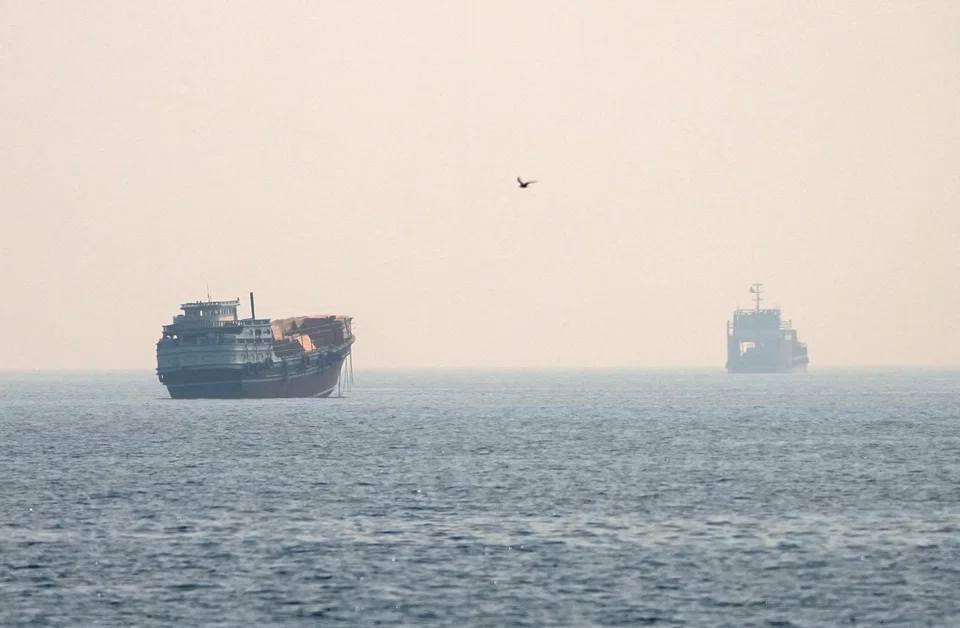
[SINGAPORE/PERTH] Oil prices surged over 4 per cent on Monday (Jul 13) as energy shipments via the Strait of Hormuz remained under threat, with the US and Iran announcing renewed military strikes.
Brent crude futures climbed US$3.10, or 4.08 per cent, to US$79.11 by 0325 GMT, while US West Texas Intermediate crude rose US$2.95, or 4.11 per cent, to US$74.36 a barrel.
US forces completed another wave of strikes against Iran on Sunday, hitting dozens of targets at multiple locations with precision munitions, the Central Command said. Iran’s Revolutionary Guards said on Monday they attacked US military bases in Kuwait and Bahrain.
US President Donald Trump said on Sunday that the Strait of Hormuz is open to commercial traffic, although Iran declared earlier that it closed the strait after a vessel traveled on an unapproved route and was struck.
Some 20 per cent of the world’s oil and liquefied natural gas transited the strait before the war began at the end of February.
Six vessels transited the strait on Sunday, ship-tracking data from Kpler showed, the lowest number in five weeks.
The escalating attacks cast further doubt on the future of an interim US-Iranian agreement signed in June that aimed to reopen the strait and end the war after a further 60 days of negotiations.
Following the agreement, global oil supply rose by 4.1 million barrels per day in June, but remained 9.4 million bpd below pre-war levels, the International Energy Agency said in its monthly report on Jul 10.
“Hopes of a relatively quick resolution to the recent skirmishes may be in doubt after tension escalated over the weekend,” ANZ analysts said in a note.
IG market analyst Tony Sycamore said the relatively tame rise in oil prices suggested the market was taking the view that the current flare-up represented an escalation within a fragile truce and fell well short of a complete collapse of the ceasefire.
“How accurate that view is remains to be seen,” he said in a note. REUTERS
Decoding Asia newsletter: your guide to navigating Asia in a new global order. Sign up here to get Decoding Asia newsletter. Delivered to your inbox. Free.
Share with us your feedback on BT's products and services