

Oil loading in Venezuela slows, more ships make U-turns after new US interceptions
The number of loaded tankers that have not departed has increased
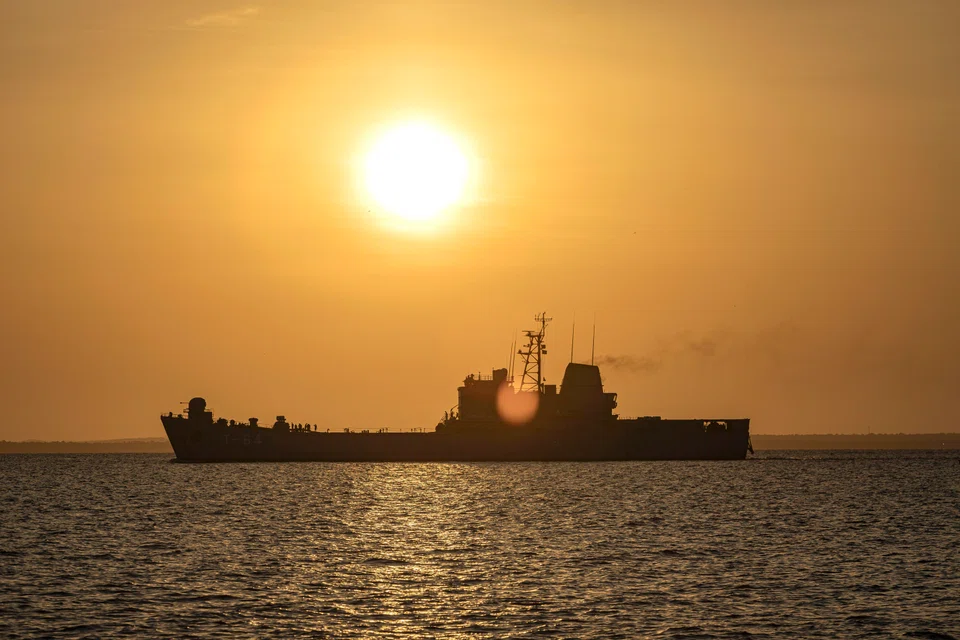
TANKER loading in Venezuela dwindled on Monday, with most ships moving oil cargoes only between domestic ports following US action against two more ships and as state-run energy company PDVSA struggles to recover from a cyberattack, according to tracking data and sources.
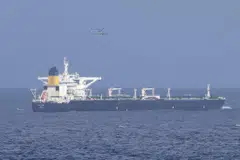
The US Coast Guard this month seized a supertanker under sanctions carrying Venezuelan oil and tried to intercept two more Venezuela-related ships over the weekend, US authorities said. One of them is an empty ship under US sanctions, and the other is an unsanctioned, fully loaded tanker bound for China.
Washington has not provided updated information on the ships. However, US President Donald Trump’s announced blockade of all oil tankers under sanctions entering and leaving Venezuela has kept vessel owners on alert.
Panama’s Foreign Minister Javier Martinez-Acha said in a TV interview on Monday that supertanker Centuries, which was flying Panama’s flag when intercepted on Saturday, did not respect the country’s maritime rules and had altered its name and disconnected its transponder while carrying an oil cargo out of Venezuela.
A country that provides its flag to a vessel in its official registry can cancel the ship’s registration if an investigation determines it did not follow maritime rules.
Trump’s pressure campaign on Venezuelan President Nicolas Maduro has included a ramped-up military presence in the region and more than two dozen military strikes on vessels the US alleges are transporting drugs in the Pacific Ocean and Caribbean Sea near the South American nation. At least 100 people have been killed.
US Secretary of State Marco Rubio said on Friday Washington’s goal was to secure regional stability and security, adding that “The current status quo with the Venezuelan regime is intolerable for the United States.”
Oil prices rise
The vessel interceptions have dealt the toughest blow to PDVSA since the US Treasury Department in 2020 imposed sanctions on the company’s former oil trading firms, two units of Russia’s Rosneft, which forced output and export cuts.
Brent crude futures rose 2.4 per cent to US$61.94 a barrel on Monday afternoon, while US WTI crude also climbed 2.4 per cent to US$57.89 following the US actions and amid Russia’s war against Ukraine, with both developments raising fears of supply disruptions.
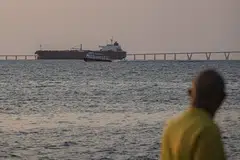
As of Monday, PDVSA had delivered a 1.9 million-barrel cargo of heavy crude to the Aruba-flagged sanctioned vessel Azure Voyager at the Jose port, but no other supertanker bound for Asia was scheduled to load soon, internal company documents showed.
The number of loaded tankers that have not departed has increased in recent days, leaving millions of barrels of Venezuelan oil stuck in ships, while customers demand deeper discounts and contract changes to take risky voyages beyond the country’s waters.
Some tankers approaching Venezuela’s coast, either to load oil for export or to deliver imported naphtha, have also made U-turns or suspended navigation recently until instructions from owners to load are clarified, LSEG monitoring data showed on Monday.
PDVSA is slowly restoring some online systems and resorting to written records after a cyberattack last week. The company has been unable to fully re-establish its centralised administrative system, and many workers have not received their salaries on time, sources said.
PDVSA and Venezuela’s Oil Ministry have not replied to requests for comment. The country’s Foreign Affairs Minister, Yvan Gil, said on Monday the US seizures are against international law and constitute “acts of piracy.”
China’s Foreign Ministry said on Monday the recent US interceptions were a serious violation of international law.
PDVSA’s main joint-venture partner Chevron exported a 500,000-barrel cargo of Venezuelan oil on Sunday, bound for the US Gulf Coast on one of its tankers under its US authorisation, LSEG ship data showed.
Oil Minister Delcy Rodriguez said on Sunday Venezuela had not interrupted deliveries to Chevron.
Chevron has exported seven cargoes of Venezuelan oil to the US this month, each carrying between 300,000 and 500,000 barrels, according to monitoring data.
Pursued by the US
The empty supertanker Bella 1, which the US Coast Guard tried to intercept on Sunday when the ship approached Venezuela, was drifting on Monday north-east of Bermuda in the Caribbean, a satellite image obtained by TankerTrackers.com showed.
A US official told Reuters on Sunday the tanker had not been boarded and that interceptions could take different forms - including by sailing or flying close to vessels of concern.
The loaded vessel Skipper, the first seized by the US this month, on Sunday reached an area near the Galveston, Texas, port for transferring oil cargoes, maritime sources said. Guyana said last week the tanker had falsely used its flag.
Collectively, Skipper, Centuries and Bella 1 have exported 41 million barrels of crude oil and fuel oil out of Iran and Venezuela in recent years, TankerTrackers.com said. REUTERS
Decoding Asia newsletter: your guide to navigating Asia in a new global order. Sign up here to get Decoding Asia newsletter. Delivered to your inbox. Free.
Share with us your feedback on BT's products and services
TRENDING NOW

DBS, OCBC, UOB rout lops billions off STI as inflation, rate concerns spook investors

Grab CEO’s wife Chloe Tong on life with Anthony Tan and finding her purpose

OCBC sheds S$8 billion in value as shares close nearly 6% down; analysts cautious on banks

Deal between tycoon friends sparks scrutiny of Philippine power sector

