

Oil prices fall 2.6% on Iran-Oman talks to reopen Strait of Hormuz
Only five commodity vessels transited the Hormuz straits on Aug 25
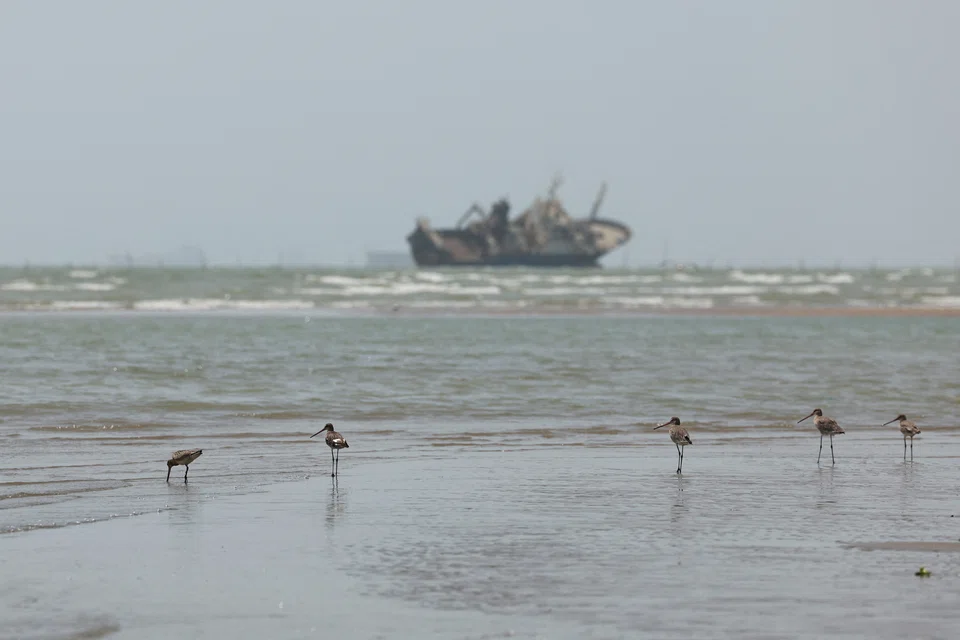
[TOKYO/SINGAPORE] Oil prices fell more than US$2 a barrel on Wednesday (Aug 26) as talks between Iran and Oman revived hopes that the Strait of Hormuz could reopen and remove shipping constraints affecting supply in the key Middle East region.
Brent crude futures fell US$2.30, or 2.6 per cent, to US$86.28 a barrel by 0447 GMT, earlier dropping to their lowest since Aug 13. US West Texas Intermediate crude futures were down US$2.08, or 2.53 per cent, at US$80.29, earlier sinking to their lowest since Aug 10.
Both benchmarks fell more than 3 per cent on Tuesday.
“The market continues to react to developments surrounding navigation through the Strait of Hormuz, and hopes for progress in talks between Iran and Oman have triggered selling,” said Mitsuru Muraishi, an analyst at Fujitomi Securities.
“That said, uncertainty over the outlook has prompted bargain buying, limiting further losses, and prices are likely to remain range-bound for the time being,” he added.
Iran said it had restarted talks with Oman to manage the strait as it faces heightened economic pressure from US President Donald Trump.
Iran and Oman have been in on-and-off talks for weeks about controlling traffic through the waterway, which handled one-fifth of global oil and liquefied natural gas shipments before the US-Israeli war against Iran began in February.
The two countries said on Tuesday that they discussed “a joint temporary navigational corridor” through the strait and agreed to clear it of mines.
Amid the talks, ship traffic through Hormuz remains lower. Only five commodity vessels – two liquefied petroleum gas tankers and a bitumen tanker exiting and two empty product tankers – transited the waterway on Tuesday, preliminary data from shiptracker Kpler showed, down from the 10-day average of 15 and well below pre-war levels.



Talks on an overall end to the conflict also continue. Pakistan and Iran made “significant progress” in talks that focused on the US-Israeli war on Iran and a path to peace, Pakistan’s interior minister said on Tuesday, at the end of a visit to Teheran.
On Monday, Washington expanded sanctions aimed at cutting off Iran’s economic lifeline, threatening to punish countries that continue to do business with Teheran, though it said it would not impose penalties immediately.
In the US, the American Petroleum Institute reported crude oil inventories rose by about 4.2 million barrels in the week ended Aug 21, market sources said.
Analysts polled by Reuters estimated crude oil stockpiles would rise by about 600,000 barrels on average. Official data from the US Energy Information Administration, the statistical arm of the US Department of Energy, are due at 10.30 am ET (1430 GMT) on Wednesday. REUTERS
Decoding Asia newsletter: your guide to navigating Asia in a new global order. Sign up here to get Decoding Asia newsletter. Delivered to your inbox. Free.
Share with us your feedback on BT's products and services
TRENDING NOW

Government to bring forward raising of retirement age, give employers more financial support to create flexi-load jobs
If Europe goes to war, the fallout will be felt in East Asia

Indonesia stocks suffer worst plunge in nearly 30 years as MSCI proposes standalone status

Vietnam’s northern provinces, not Hanoi or Ho Chi Minh City, are powering near 10% GDP growth

