Oil prices settle down after Vance cites progress in Iran talks
US crude stocks are expected to have fallen by about 3.4 million barrels in the week to May 15
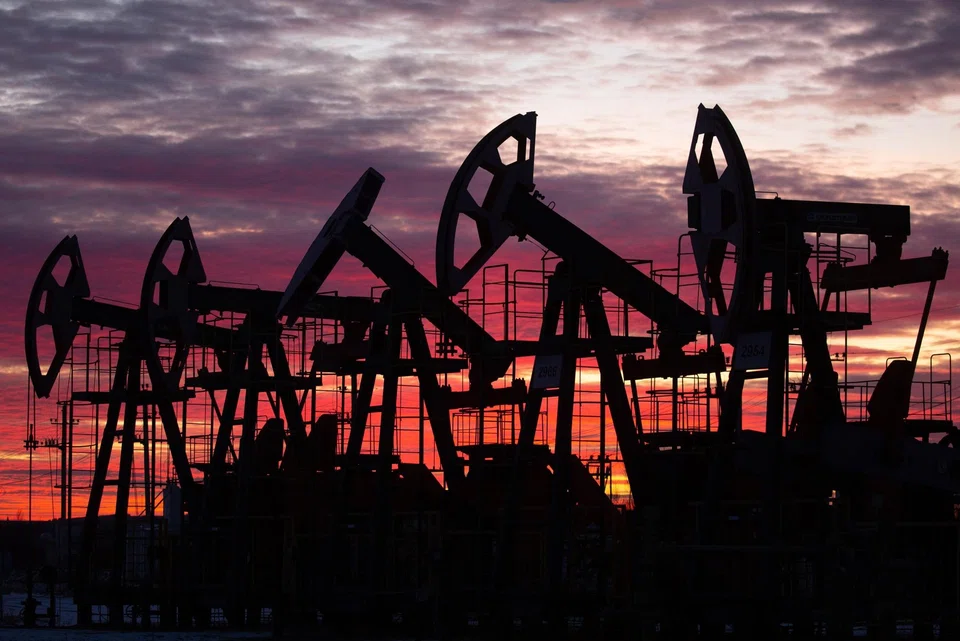
[HOUSTON] Oil prices settled lower on Tuesday (May 19) after Vice-President JD Vance said the US and Iran had made progress in talks, with neither side wanting to see a resumption of military action.
“We think that we have made a lot of progress. We think the Iranians want to make a deal,” Vance told reporters at a White House briefing.
On Monday, Trump posted on social media that he was holding off on a military attack that had been scheduled for Tuesday. Efforts to reach a deal with Iran continued, though he added the US was ready to resume attacks if a deal was not reached.
Brent futures for July settled down 82 US cents, or 0.73 per cent, at US$111.28 a barrel. The US West Texas Intermediate (WTI) crude contract for June delivery, which expired on Tuesday, settled down 89 US cents, or 0.82 per cent, to US$107.77. The more-active July contract settled down 23 US cents at US$104.15.
Even with Tuesday’s dip, prices remained elevated. On Monday, Brent hit its highest since May 5 and WTI its highest since Apr 30.
“We continue to have significant amounts of oil offline and with the regional infrastructure being in the crosshairs, we are just holding our breath here until either we get a deal or another round of military action, so a pretty significant binary outcome awaits,” said John Kilduff, partner at Again Capital.
The Middle East conflict has effectively closed the Strait of Hormuz, a critical waterway that typically carries daily about a fifth of global supplies of oil and liquefied natural gas, creating the world’s biggest oil supply disruption, according to the International Energy Agency.
Teheran’s latest peace proposal to the US involves ending hostilities on all fronts, including Lebanon, the exit of US forces from areas close to Iran and reparations for destruction caused by the war, state media reported on Tuesday.
Meanwhile, the US imposed sanctions on an Iranian foreign currency exchange house and what it said were front companies overseeing transactions on behalf of Iranian banks. It also blocked 19 vessels, it said were involved in shipping Iranian petroleum and petrochemicals to foreign customers.
Elsewhere, Chinese state refiners have slashed oil throughput by more than one million barrels per day since the outbreak of the Iran war, analysts and market sources said, as disruption to crude supplies and poor margins forced them to scale back operations.
Chinese state refiners are processing 8.4 million barrels per day (bpd) of crude this month, down from 8.6 million bpd in April and 9.5 million bpd in March, according to consultancy Energy Aspects. That compares with about 10 million bpd before the US and Israel attacked Iran at the end of February.
US Treasury Secretary Scott Bessent extended a sanctions waiver by 30 days to allow “energy-vulnerable” countries to continue purchasing Russian seaborne oil. Separately, Russia’s Ryazan oil refinery, which accounts for almost 5 per cent of the country’s total refining volumes, stopped processing after a Ukrainian drone attack last Friday, two industry sources said on Tuesday.
In the US, a record 9.9 million barrels were drawn last week from the Strategic Petroleum Reserve, Energy Department data showed. This reduced stockpiles to about 374 million barrels, the lowest since July 2024.
US crude stocks are expected to have fallen by about 3.4 million barrels in the week to May 15. The weekly data from the Energy Information Administration is due on Wednesday. REUTERS
Decoding Asia newsletter: your guide to navigating Asia in a new global order. Sign up here to get Decoding Asia newsletter. Delivered to your inbox. Free.
Share with us your feedback on BT's products and services