Oil rebounds on US-Iran peace deal uncertainty and inventory drawdowns
Teheran said it was reviewing Washington’s latest proposal on ending the war

[LONDON] Oil prices edged higher on Thursday (May 21), as investors monitored peace talks between the US and Iran, while supply tightness and US inventory drawdowns provided some support.
Brent crude futures rose US$0.40, or 0.4 per cent, to US$105.42 a barrel by 0809 GMT, and US West Texas Intermediate futures were up US$0.50, or 0.5 per cent, at US$98.76. Both benchmarks dropped around 5.6 per cent on Wednesday to their lowest in more than a week after President Donald Trump said talks with Iran were in the final stages.
“Prices came under pressure when markets priced lower immediate escalation risk in the Middle East, but the rebound shows traders are not ready to remove the supply-risk premium while the Strait of Hormuz remains central to global energy flows,” said Naeem Aslam, chief investment officer at Zaye Capital Markets.
Teheran said it was reviewing Washington’s latest responses and Trump suggested he could wait a few days for “the right answers” from Teheran but was also willing to resume attacks on the country.
“We’ve been in this situation multiple times before, which ultimately led to disappointment,” ING analysts said in a note on Thursday, forecasting an average Brent price of US$104 a barrel in the current quarter.
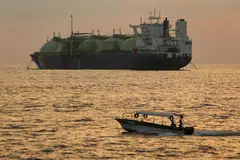
Iran warned against further attacks and unveiled steps entrenching its control of the crucial Strait of Hormuz, which remains mostly closed. Before the war it had carried oil and liquefied natural gas shipments equal to about 20 per cent of global consumption. On Wednesday, Iran announced a new “Persian Gulf Strait Authority”, saying there would be a “controlled maritime zone” in the Strait of Hormuz.
Iran effectively closed the strait in response to the US and Israeli attacks that started the war on Feb 28. Most of the fighting has stopped since an April ceasefire, but while Iran is limiting traffic through Hormuz, the US has blockaded its coastline.
Supply losses from the key Middle Eastern producing region because of the war have forced countries to tap their commercial and strategic inventories at a rapid rate, raising concerns about draining them.
The US Energy Information Administration said on Wednesday the country withdrew nearly 10 million barrels of oil from its Strategic Petroleum Reserve in the week ended May 17 for its biggest drawdown on record. US crude inventories also fell by more than expected in the same week, according to EIA data.
SEE ALSO


“The drawdown in oil inventories will make it difficult for oil prices to remain low,” said Gao Mingyu, chief researcher for energy and chemicals at China Futures.
“With the Strait of Hormuz blocked, global refined-product and onshore crude inventories are expected to fall below their lowest levels for this time of year in the past five years by late May and late June.” REUTERS
Decoding Asia newsletter: your guide to navigating Asia in a new global order. Sign up here to get Decoding Asia newsletter. Delivered to your inbox. Free.
Share with us your feedback on BT's products and services