

Singapore investors buy the dip, bucking global gold sell-off: OCBC, bullion dealers
Strong investor participation in Singapore and wider Asia suggests metal’s long-term role as a hedge continues
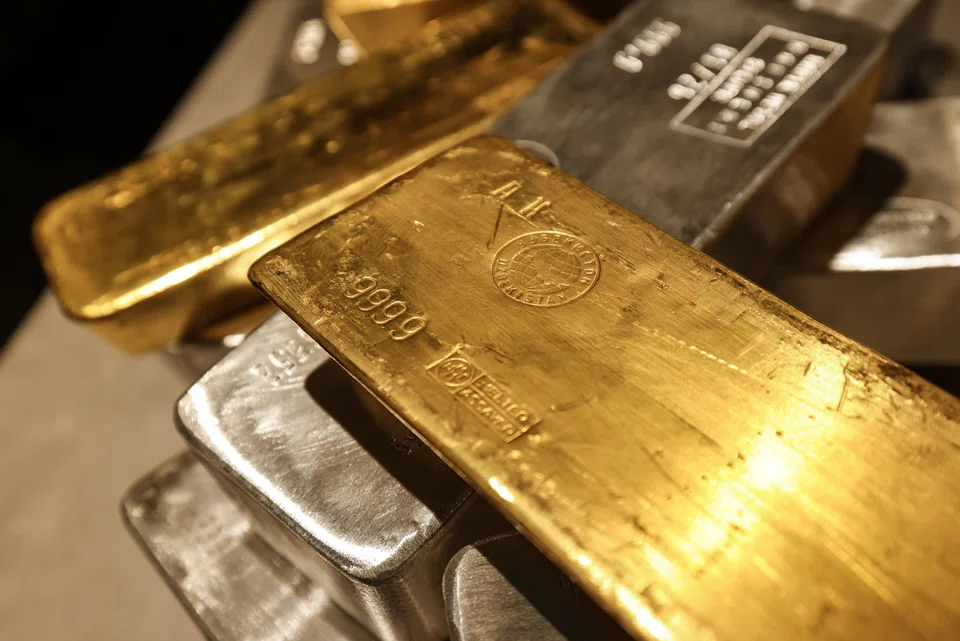
[SINGAPORE] While gold’s safe-haven role broadly gave way to a scramble for cash amid the escalating Middle East conflict, opportunistic buyers in Singapore are bucking the trend.
Rather than fleeing the market, investors in the city-state are using the recent price correction as a strategic entry point.
OCBC told The Business Times that it recorded a 60 per cent increase in gold transactions during the four weeks after the outbreak of the US-Israel-Iran war on Feb 28, compared with the four weeks prior.
The bank, which allows retail investors to trade paper gold and silver through its app, noted that gold transactions during this period increased by seven times year on year. Following the surge in demand, recent entrants now account for 7 per cent of the bank’s total precious metals investor base, said OCBC.
On Feb 27, the day before the US and Israel launched strikes on Iran, gold was trading at US$5,177.73 per ounce. Since then, the yellow metal’s breakneck rally pulled back as much as 17.5 per cent on Mar 23. Gold was trading at around US$4,530 as at 5.20 pm on Monday (Mar 30).
Robin Tsui, Asia-Pacific gold strategist at State Street Investment Management, noted that while gold’s safe-haven role “has not disappeared”, investors – particularly in developed markets – may sell liquid assets such as gold amid periods of rising volatility to raise cash or meet margin calls.
“This behaviour has been more evident in the US among institutional investors,” Tsui observed. “In Asia and among retail and long-term investors, gold continues to be viewed more as a strategic long-term investment, with less evidence of broad-based selling.”
Germaine Tan, OCBC’s head of treasury products and equities, said: “What is notable this time is that despite the price correction, investor participation has increased, suggesting that confidence in gold’s longer-term role as a portfolio hedge remains intact.”
She added: “Price pullbacks can present attractive entry points to build exposure gradually.”
Local retailers
Local bullion retailers confirmed that Singaporeans are moving against the tide of sell-offs seen in North America and Europe.
A BullionStar spokesperson told BT that the company has recorded more than 10,600 buy orders since the start of March, representing a 67.6 per cent increase from the previous month’s 6,375 orders.
As at Monday, the local dealer’s March order volume for the precious metal was 11.8 per cent higher than its end-2025 monthly average between October and December, noted the spokesperson.
Similarly, Brian Lan, managing director at GoldSilver Central, noted that gold transactions have increased by 63 per cent since the start of the war, compared with the company’s average monthly transactions in 2025.
Vergel Villasoto, a director at Silver Bullion, said that while the company’s sales are lower than during the “manic periods” of December and January, they remain around 15 per cent higher than October 2025.
Meanwhile, Kwek Seow Bin, owner of Singapore-based startup Metal & Picks, has observed a pivot in customer preferences.
Kwek, who runs a Telegram channel for private buyers, said that customers are “increasingly turning to gold” compared with silver amid heightened geopolitical uncertainty.
“Since the onset of the Iran conflict… we have observed a notable increase in demand for physical gold products, with approximately 60 per cent of our customers now purchasing gold and 40 per cent opting for silver.”
Between January and late February, for every eight customers purchasing silver, only one was buying gold on average, added Kwek.
He also noted that gold products such as 100 g gold bars have become “increasingly difficult” to source amid a surge in demand and tighter market availability.
Yeah Lee Ching, managing director of retail and trading at ValueMax, noted: “Retail demand has risen following the price correction, particularly for pre-owned 916 gold jewellery, which offers strong value, as well as tax-exempt LBMA (London Bullion Market Association) 999.9 Pamp Suisse bars.”
Resilient gold ETF demand in Asia
The divergence in sentiment towards gold amid the Middle East conflict is also visible in the flows of gold exchange-traded funds (ETFs).
Data from the World Gold Council shows that, between Feb 27 and Mar 20, Asia recorded consistent inflows into gold ETFs measured in tonnes, while outflows were seen in the West.
Additionally, the data showed that gold ETF holdings by region measured in tonnes increased by 3.2 per cent in Asia, while holdings decreased by 3.3 per cent in North America and 0.1 per cent in Europe.
State Street’s Tsui said: “Recent gold ETF outflows have been driven mainly by US investors, while continued inflows into Asia-domiciled gold ETFs suggest Asian investors have not materially reduced exposure and have been buying into price weakness.”
What’s next for the yellow metal?
Despite short-term headwinds like a strong US dollar and hawkish central bank policies, analysts believe the fundamental case for gold remains intact.
Steve Land, portfolio manager at Franklin Equity, reckons that there is increased interest in diversifying away from the greenback amid the US’ trade-balance discussions with other countries.
“It creates less incentive for trade partners to hold US debt, and so, as an alternative to holding US dollars, gold is an interesting option,” he said.
Land added: “The idea of an asset that’s not tied to any one country or financial system has gained a lot of interest in the past couple of years and the actions the United States is taking through this crisis isn’t changing that view – if anything, it’s strengthening it.”
Alexandra Symeonidi, senior corporate credit and sustainability analyst on William Blair’s emerging markets debt team, believes that gold will face headwinds in the immediate future.
However, she sees upside over the long haul. “Gold’s appeal remains in place in the medium term, and the price environment as well as diversification needs might encourage central bank buying in the second half (of the year).”
TRENDING NOW

Prima to move out of historic Keppel Road flour mill building in 2028

Temasek-related Azalea, SeaTown, Seviora Capital to merge in 2027

Family offices see more tailored products, leverage ‘collective firepower’ for direct deal access

Singapore room rates soar, but hotels seeing mixed demand from F1 race and events

