

US oil companies gain after Trump signals access to Venezuela’s reserves
ExxonMobil and ConocoPhillips added more than 2 per cent each
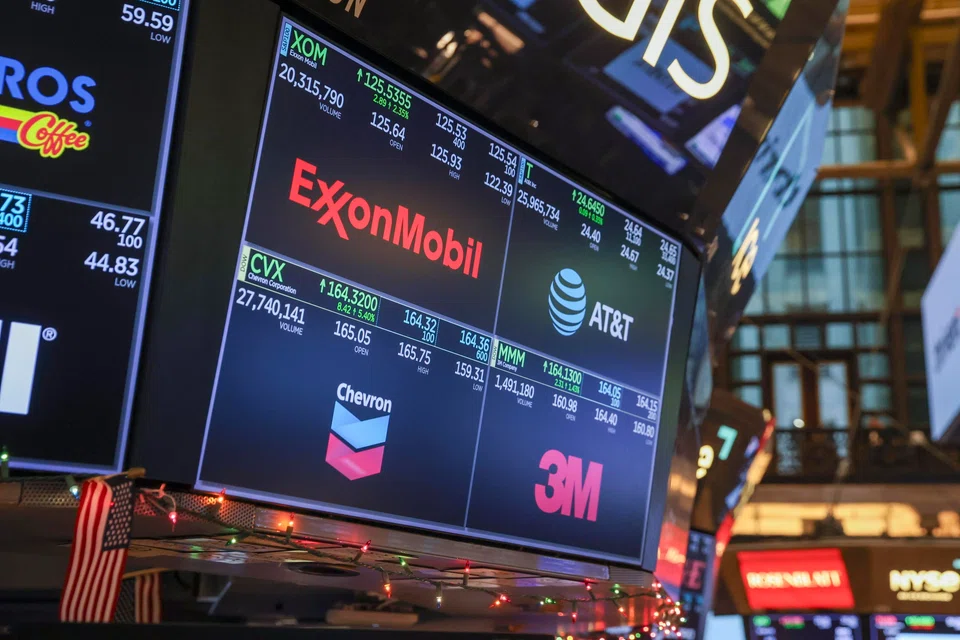
US OIL companies’ shares closed higher on Monday, fuelled by the prospect of access to Venezuela’s vast oil reserves after President Donald Trump said the US would take control of the South American nation following the arrest of its president.
Venezuela holds the world’s largest oil reserves, but production plummeted in recent decades due to mismanagement, limited foreign investment following the nationalisation of its oil industry and sanctions.
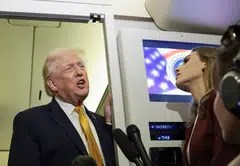
Trump told reporters aboard Air Force One on Sunday that he spoke to “all” of the US oil companies “before and after” American forces seized Venezuelan President Nicolas Maduro from Caracas about his plans for investing in the country.
“They want to go in so badly,” Trump said. “We’re going to have the big oil companies going and they’re going to fix the infrastructure. They’re going to invest money. We’re not going to invest anything.”
The Trump administration has told US oil executives in recent weeks that they would need to return to Venezuela quickly and invest significant capital in the country to revive the damaged oil industry if they wanted compensation for assets expropriated by Venezuela two decades ago, Reuters previously reported.
Shares of Chevron, the only US major currently operating in Venezuela’s oil fields, climbed more than 5 per cent in extended trading.
Meanwhile, US refiners Marathon Petroleum, Phillips 66, PBF Energy and Valero Energy were up between 3.4 per cent and 9.3 per cent.
Oil prices settled up US$1 a barrel, with analysts noting that in a global market with plentiful supply, any further disruption to Venezuela’s exports would have little immediate impact on prices.
Trump has said that the embargo on all Venezuelan oil exports would stay fully in effect for now.

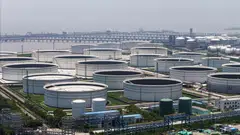
Venezuelan crude is a heavy sour with high sulfur content, making it suitable for producing diesel and heavier fuels, albeit at lower margins compared with other grades, particularly those from the Middle East.
“This type of crude aligns well with the configuration of US Gulf Coast refineries which were historically designed to process such grades,” said Ahmad Assiri, research strategist at Pepperstone.
Chevron’s existing presence in Venezuela under a US waiver has positioned it as a potential early beneficiary of any policy shift, while refiners stand to gain from increased availability of heavy crude closer to home.
Return of assets
The US action could also pave the way for the return of assets seized by Venezuela in 2007 under late leader Hugo Chavez, analysts at JPMorgan said.
They said ConocoPhillips and ExxonMobil have significant arbitration awards pending, which have a higher chance of recovery.
“In total, ConocoPhillips has outstanding claims approaching US$10 billion, while Exxon’s outstanding damages appear to be in the US$2 billion range against their original claims that exceeded US$15 billion,” the analysts said.
Shares reflected the optimism, with ExxonMobil and ConocoPhillips adding more than 2 per cent each.
Shares of oilfield services firms, whose technology would be crucial to boosting Venezuela’s crude production, also climbed. Baker Hughes, Halliburton and SLB rose between 4 per cent and 9 per cent.
Still, analysts cautioned that any meaningful recovery would likely take time, given political uncertainty, infrastructure decay and years of underinvestment.
Venezuela was producing as much as 3.5 million barrels per day (bpd) in the 1970s, accounting for more than 7 per cent of global output.
Production slid below 2 million bpd in the 2010s and averaged about 1.1 million bpd last year, or roughly 1 per cent of global supply. REUTERS
Decoding Asia newsletter: your guide to navigating Asia in a new global order. Sign up here to get Decoding Asia newsletter. Delivered to your inbox. Free.
Share with us your feedback on BT's products and services
TRENDING NOW

DBS, OCBC, UOB rout lops billions from STI as inflation, rate concerns spook investors

OCBC sheds S$8 billion in value as shares close nearly 6% down; analysts cautious on banks

IOI Properties and CapitaLand Investment closer to acquiring One Raffles Place in joint bid

Grab CEO’s wife Chloe Tong on life with Anthony Tan and finding her purpose

