Fed chief Powell has reason to celebrate as US inflation continues to moderate
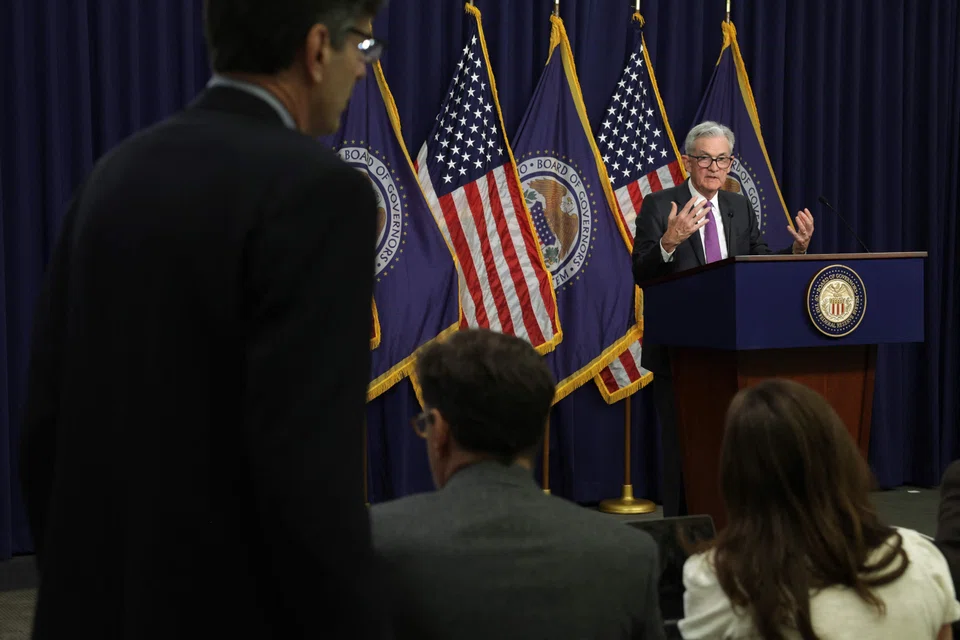
THE US Federal Reserve raised interest rates on Wednesday (Jul 27) as expected. The central bank left the door open for more rate hikes, as expected too, and chairman Jerome Powell’s tone was slightly victorious, as hoped.
The stock market treaded water after the Fed lifted its benchmark rate a quarter-of-a-percentage-point to a range of 5.25 per cent to 5.5 per cent, the highest in 22 years, with an accompanying statement that reiterated prior sentiments about monitoring economic data before deciding on its next step.
Stocks briefly took flight after Powell noted the progress that the Fed had already made in bringing inflation down, and the likelihood that the full impact of its 10 previous rate increases had not yet been felt. The rally foundered when Powell switched to a more cautionary tone when discussing the dangers of wage inflation.
He has reason to celebrate, with recent inflation data pointing to a clear downdraft in prices. After spiking above 9 per cent in June 2022, the consumer price index has moderated to around 3 per cent, largely because of the Fed’s rate policy.
Economists spent most of last year fretting about fears of a “Fed mistake”, worrying that the central bank had overdone its rate hike campaign and was bringing on a deep recession.
Now, Powell has won over many critics and there’s a growing belief that he will pull off a feat long thought impossible: winning a war on two fronts. The Fed has a dual mandate, to maintain a stable jobs market and stable prices. Of the two, inflation is notoriously difficult to fight.
Up until now, any successful central-bank campaign against rising prices has involved slamming the brakes on the economy. One strategist said Powell’s rapid action and canny use of rhetoric may have succeeded in bringing down inflation.
“Right now there is a lot of criticism about the Fed, but I believe if they didn’t do these extraordinary actions during the Covid-19 pandemic, we would have potentially slipped into a severe recession if not an outright depression,” said JD Joyce, president of Houston-based financial advisory Joyce Wealth Management.
Those who lambast Powell for stoking inflation with the ultra-loose monetary policy forget that “this is just the price we are paying for actions when things were more dire”, said Joyce.
Powell is right not to openly declare victory, for his place in the Fed’s hall of fame is not quite assured.
Earlier this week, United Parcel Service was the latest major corporation to bow to union demands for higher wages. Some economists warn that the wage-price spiral of the 1970s could yet recur.
Wage inflation is not the only risk to the increasingly sanguine inflation situation. Russian President Vladimir Putin helped unleash the first wave of inflation when he cut the Western world off from Russian natural gas as punishment for Nato’s support of Ukraine.
Recently, Putin – wounded perhaps by a humiliating coup attempt – has lashed out again, wielding inflation as a bludgeon. He is assailing grain ports like Odessa, and blocking grain trade routes, in an effort to hurt not only Ukraine’s economy, but that of the western world.
Powell has threaded the needle so far. If the autumn arrives and the US economy is showing signs of reacceleration, as Joyce and some senior corporate executives have indicated is likely, Powell will have pulled off his desired “soft landing”, defeating the initial bout of inflation without bringing on a recession.
The stock market is likely, as ever, to pre-empt this victory. The threat of inflation and rate increases were the last restraints on the artificial intelligence (AI) rally that has caught the market by storm. Microsoft’s parabolic 2023 gains slowed on Wednesday after its earnings could not live up to stratospheric expectations. Alphabet and Meta Platforms’ shares soared, however, as the Google and Facebook owners’ AI potential became clear.
If the AI craze transforms into the kind of massive speculative bubble that happened during the Dotcom era, however, it could present new complications to the Fed’s strategy.
In other words, one of the biggest risks to Powell’s complete victory over inflation may now be the stock market’s jubilation about that victory.