Fed’s first meeting of 2026 likely to be dominated by threats to central bank’s independence
The benchmark rate is likely to stay put at between 3.5 and 3.75%
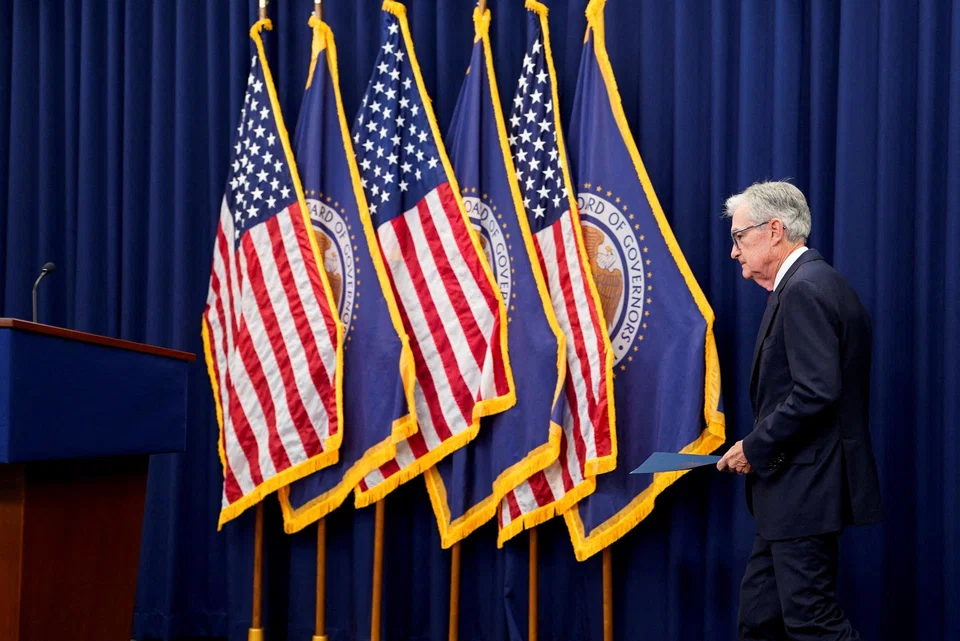
ALL eyes are on what US Federal Reserve chairman Jerome Powell will say and do this week.
While he is unlikely to change policy at the end of the central bank’s two-day meeting on Wednesday (Jan 28), he could provide some hints of how far he intends to take his fight for the Fed’s independence.
At the end of its first policy meeting of the new year, the central bank is almost certain to leave the benchmark Fed Funds rate unchanged in a range of between 3.5 and 3.75 per cent.
The Fed will likely reiterate the risks on both sides of its mandate – with both inflation and unemployment slightly elevated and no signs of acceleration in either metric.
Although Powell has come under relentless pressure from US President Donald Trump, analysts think that the Fed chief may tone down expectations for a rate cut in his remaining two meetings at the helm.
Strategists at Morgan Stanley wrote in a note to clients: “The key question at this week’s meeting will be how Powell communicates the pause (in interest rate cuts). “Is it a ‘dovish hold’, in which he continues to emphasise that the outlook supports further rate cuts, or will he signal a more durable pause?”
In his fight for the Fed’s independence, Powell has earned a reputation on Wall Street as an unlikely – and sometimes, lonely – champion of the old order’s resistance to Trump’s expansion of his presidential powers. With the Democratic Party leadership in disarray and many executives from Hollywood to Silicon Valley submitting to Trumpian pressure, Powell is among the few establishment figures to go on the offensive in the face of their authority being challenged by Trump.
On Jan 12, Powell revealed the subpoena received by the Fed; the Department of Justice is conducting a probe into his approval of a multi-billion dollar building project.
He has described the subpoena as a contrived cudgel that Trump was using to bully the central bank into changing policy, and cutting rates more aggressively.

With this extraordinary statement, Powell joined a small group of people – including Denmark Prime Minister Mette Frederiksen and ExxonMobil chief Darren Woods – who have come out swinging when under attack.
Last week, the Supreme Court heard oral arguments from the US solicitor-general John Sauer and Fed governor Lisa Cook’s defence lawyers over Trump’s efforts to fire Cook over her alleged misstatements on mortgage documents.
Significantly, Powell sat in the public gallery.
He has often cited the Cook case as another of Trump’s tactics to subjugate the Fed to the president’s will.
“We expect more politically oriented questions to feature heavily in the press conference, though Powell will most likely refrain from providing answers,” said economists at Bank of America Global Research.
Trump could try to upstage Powell by naming his successor very soon, possibly even in the next few days.
Among the leading candidates is Rick Rieder, an executive at money management giant BlackRock. Trump is thought to admire his market-oriented priorities and dovish views of inflation.
Treasury Secretary Scott Bessent has said he is not interested in the Fed job, but some insiders think he could still be a candidate. One concern is that Trump will extract a guarantee from the person he names to the job – that they would fall in with his demands for massive rate cuts in the near future.
“We do not see risk of a major dovish tilt, but even a modest lean would add to US dollar negative pressures,” said economists at Standard Chartered.
“By contrast, we think naming Rieder, Bessent or Fed governor Christopher Waller could reduce the fears over the Fed’s independence, lower risk premia and support the US dollar, and quite possibly lower yields,” they wrote in a note to clients.
Powell has one final ace up his sleeve in his fight for Fed independence, some strategists say.
Typically, when a chair’s term ends, they would step down from the board of the central bank, which is what Powell’s predecessors – Alan Greenspan, Ben Bernanke and Janet Yellen – all did.
But the Fed chair is also entitled to retain a seat on the Fed’s board. During his customray post-meeting press conference on Wednesday (Thursday morning, Singapore time), Powell could put to rest the rumours that he is considering remaining in this key role in the Fed after his term ends in May.
In the short term, an end to Powell’s fight would buoy stocks because it would make rate cuts more likely.
Over the longer term, however, it could mark the end of the Fed’s independence, a development likely to debase the US dollar, and ultimately US stocks and bonds.
The greenback has already slid to multi-year lows against its rivals as Trump’s mercurial behaviour has caused uncertainty about the future of the North Atlantic Treaty Organization, the Fed and – in some readings of recent events – US democracy itself.
Decoding Asia newsletter: your guide to navigating Asia in a new global order. Sign up here to get Decoding Asia newsletter. Delivered to your inbox. Free.
Share with us your feedback on BT's products and services