

Fintech platform iCapital plans more Singapore hires even as AI takes on 75% of coding work
The firm plans to hire more product and engineering talent in the Republic

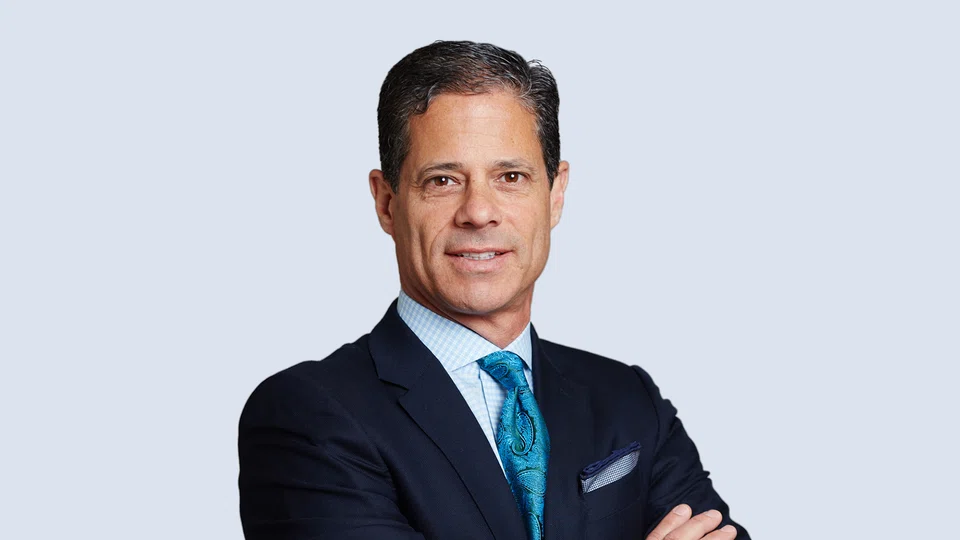
[SINGAPORE] Global fintech platform iCapital plans to hire more product and engineering talent in Singapore, even as it steps up its use of artificial intelligence to improve efficiency and expand operations.
AI now writes 75 per cent of the firm’s code, spanning code generation, testing and quality assurance, CEO Lawrence Calcano told The Business Times.
“I think it is a significant opportunity for us to be more efficient and deliver more capabilities and user friendliness to clients,” he said.
The AI push comes as the alternatives sector undergoes a structural shift, with iCapital’s 2026 Asia Advisor Survey finding that investors are moving beyond basic access to private markets to building more sophisticated portfolios supported by analytical tools.
Calcano said that in the past, the focus was on creating access to private markets. Now, iCapital is seeking to grow a larger group of advisers and therefore more clients into alternative investments.
“We are at a really interesting point in the cycle of adoption, and I think a lot of the newer advisers in the asset class today are dealing with (the next wave of) clients,” he said.
These clients are seeking more analytics and education so that they can make informed decisions, moving beyond the reporting capabilities that were a priority of large institutions that were early adopters of alternative investments, he added.
Technology is key
Technology plays a big role in delivering these capabilities at scale, Calcano pointed out.
Since its inception, iCapital has spent over US$1 billion on technology to address pain points in education, access, administration and reporting, and liquidity solutions.


The firm’s survey found that risk analytics has become the top technology priority in Asia, with compliance cited as the fastest-growing challenge in the region.
As a result, the questions asked of a fund manager of alternatives increasingly focus on exposure, liquidity and regulatory fit, rather than the availability of a specific solution.
Calcano noted that the firm has to be flexible to client needs, as some require a full range of services while others need a bespoke solution. “You need to be involved in both, and have big technology around that and nimble technology.”
Alternatives now a “core holding”
Alternatives, Calcano said, are becoming more like a “core holding”.
“Even though people had more pessimistic views of the global economy, they still had planned to sustain or increase their allocation (to) alternatives,” he said.
“People should be incorporating these as part of their core overall portfolio, even though they might be worried,” he added, highlighting that investors now understand the fact that these assets can help both drive potentially incremental returns and manage risk.
The survey found that more than a quarter of advisers now plan to increase allocations to alternatives over the next 12 months, even as confidence in the economic outlook has weakened.
But within alternative investments, investor preferences are also shifting.
Calcano noted growing interest in real assets among Asian investors, who recognise the role funds play in the growth of this business.
Meanwhile, private credit, the leading area of interest in 2025 and the defining feature of last year’s Asia findings, fell by 23 percentage points.
Calcano said that investors have been concerned about private credit due to the economic climate and the disruption of technology companies due to AI.
“Sentiment, emotion still drives behaviour, and I think (we) saw some of that. What I think people are looking at very carefully right now are the actual credit metrics and credit statistics to try to figure out if there are real significant risks above expectations.
“The question is: Are there underperforming credits in excess of what a portfolio manager or an asset manager would have expected out of the portfolio? I don’t think I have seen that yet,” he said, adding that this has helped ease some concerns.
Singapore a key hub
Singapore remains an important hub for iCapital’s international operations, said Brooks Entwistle, the firm’s newly appointed head of international.
“It has a little bit of everything… all of our functional expertise, our sales team, and everything we bring,” he said.
Beyond its current alternative offerings, the firm is also looking at additional products such as annuities and insurance, and will look to establish capabilities in Singapore or Zurich to support clients in these areas when the time comes.
“And so Singapore is by no means an outpost,” Entwistle noted. “It is actually a big, important centre, which I think shows the commitment.”
Decoding Asia newsletter: your guide to navigating Asia in a new global order. Sign up here to get Decoding Asia newsletter. Delivered to your inbox. Free.
Copyright SPH Media. All rights reserved.
TRENDING NOW

High Court rules against Julius Baer’s Singapore trust arm in US$50 million family trust dispute

MSCI proposes standalone status for Indonesia; Jakarta stocks plunge 8%

Once staunchly pro-China, Malaysian Chinese businesses are now distancing themselves from Beijing

No chicken feed: How Malayan Flour Mills built an empire from flour to fowl

