

Inside OCBC’s ‘Tech Shift’: Building a culture of innovation
OCBC is reshaping how it operates, combining AI, digital and data to deliver more intuitive customer experiences, strengthen resilience and foster a culture of innovation
MANY of the employees working on OCBC’s artificial intelligence projects today were not AI specialists just six months ago.
Their journey reflects a broader transformation under way at OCBC, where technology is increasingly becoming the operating core of the bank and a key driver of how it serves customers, manages risk and creates value.
Known as its “Tech Shift”, the transformation is anchored on three interconnected pillars: AI, Digital and Data. Rather than treating these as standalone initiatives, OCBC is integrating them into the way the bank operates, competes and grows.
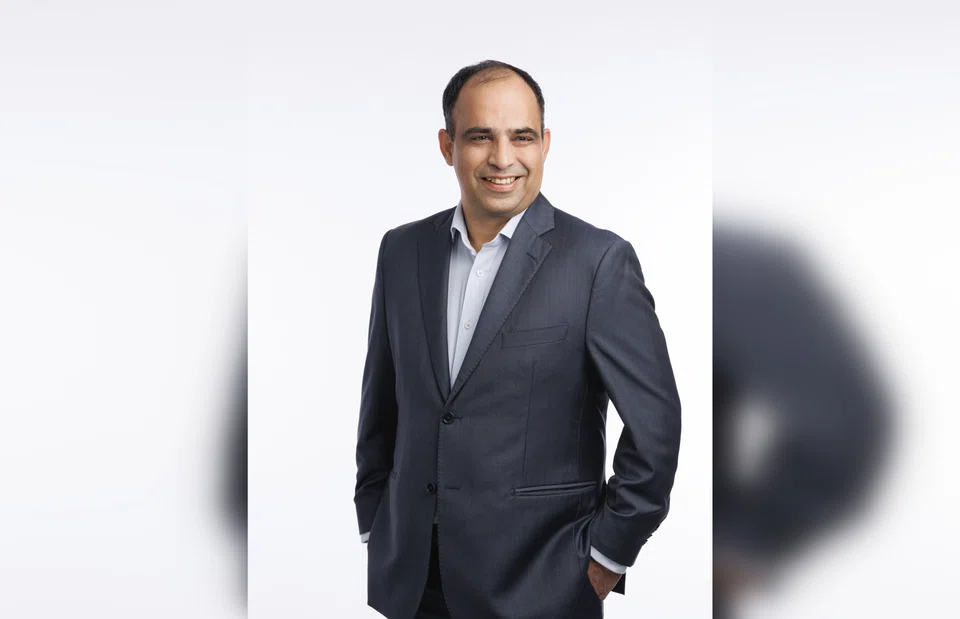
For Praveen Raina, OCBC’s head of group operations and technology, that transformation starts with people.
The employees now developing AI applications already had deep knowledge of the bank’s systems and processes. What they had to learn was how to apply AI to that expertise. Much of that learning happened on the job, through building and testing prototypes, refining what worked and learning from what did not.
For Raina, that institutional knowledge is precisely what makes them valuable.

“I don’t need AI experts per se – I need domain experts,” he said. Combining deep knowledge of the business, systems and processes with AI creates a multiplier effect, amplifying what experienced employees already know and do well.
That philosophy is playing out across the bank as OCBC expands the use of AI in software development, cybersecurity, customer engagement and operations, while rethinking how technology, teams and processes work together.
Under its AI, Digital and Data strategy, the bank is moving towards more integrated technology platforms. The ambition goes beyond efficiency. Bringing these capabilities together enables faster innovation, stronger resilience and better customer outcomes.

OCBC expects to spend more than S$1 billion annually on technology over the next three years, with priorities including AI adoption, core system modernisation, cybersecurity and improvements to its digital services.
Leveraging AI, digital and data
One area where OCBC has seen tangible results is software engineering, where AI is being used to identify problems much earlier in the development process.
Previously, engineers would write code before passing it through various rounds of testing, with some issues only coming to light during the final stages of review.
AI agents now work with developers as they write code, identifying defects, checking for errors, and flagging potential cybersecurity vulnerabilities and weaknesses that could affect system resilience.
Catching these issues earlier reduces the time needed for subsequent testing and rework further down the development cycle.
Raina said the approach has improved engineering productivity by around 30 to 40 per cent, while producing better-quality code. Across OCBC’s various AI applications, productivity improvements have ranged from 20 to 50 per cent, depending on the use case.
He remains cautious, however, about allowing AI to develop entire applications independently, preferring instead to use it to complement the work of experienced engineers.
The technology is also changing how OCBC monitors and manages its systems.
Among the initiatives Raina is particularly proud of is an AI-powered platform, developed in about six to eight weeks, which brings information from the bank’s global technology infrastructure into a single view.
The system combines information from data centres, firewalls and other technology components that were previously monitored separately. It is designed to identify potential disruptions earlier, detect problems when they occur and restore affected services more quickly.
For Raina, however, the significance of the platform goes beyond having more information in one place.
Connecting previously separate views of OCBC’s technology environment gives teams a clearer picture of how systems relate to and depend on one another, including how a problem in one area could affect the wider technology estate.
“This cultural shift may ultimately be more valuable than the technology itself,” Raina said.
Yet these productivity gains have not reduced OCBC’s appetite for technology talent.
While some companies have cited AI as a reason for cutting jobs, Raina said OCBC continues to hire engineers and other employees as it pursues its technology transformation.
The reason, he explained, is that AI gives the bank greater capacity to do more – though that does not mean existing roles will remain unchanged.
Software testing is one example. With AI and automation increasingly able to handle routine testing, employees who previously specialised in such work can be retrained for software development or other technology roles.
Underlying that approach is Raina’s belief that employees possess something that cannot be replicated quickly – years of accumulated knowledge of OCBC’s systems, processes and operating environment. Rather than lose that experience, the bank can build new technical capabilities around it.
Over the past three years, around three in five OCBC employees globally have participated in at least one training programme related to AI, digital capabilities or data. In Singapore, almost all employees have done so.
The bank is also encouraging employees to experiment with new ideas through initiatives designed to reinforce a test-and-learn culture.
Its inaugural One-Person Company Hackathon, which explores how individuals can use agentic AI to perform work traditionally requiring larger teams, attracted more than 1,000 ideas.
It is an approach Raina follows himself. He has helped to write code for the bank’s Avatar Banking initiative and regularly reviews AI agents developed by his engineers.
“I cannot preach if I don’t know it myself,” he said.
His willingness to get hands-on reflects the culture he is trying to build: one where people learn by doing, test ideas quickly and are prepared to change course when something does not work.
Raina said his teams regularly review AI prototypes, putting more resources behind those that show promise and stopping those that do not.
“We try not to fall in love with our experiments,” he said.
Nor is failure frowned upon.
“We don’t penalise people for failing,” he said. “In fact, failure is a very good teacher. I tell my team we don’t try enough.”
The point is not experimentation for its own sake, he stressed, but creating an organisation that can move quickly on ideas that work, learn from those that do not and redirect resources accordingly.
Deepening customer engagement
OCBC’s AI ambitions also extend to how customers interact with the bank.
Its Avatar Banking initiative, OCBC WoW, launched in July, is intended to make banking more conversational, allowing customers to ask questions and obtain information without navigating conventional digital banking menus.
For Raina, this represents a fundamental shift in the digital banking experience: from customers navigating the bank’s services to more conversational and personalised banking.
OCBC eventually expects Avatar Banking to evolve into a proactive financial companion, helping customers monitor their portfolios, understand investment products and identify financial matters that may require attention.
The long-term objective is to create banking experiences that are not only digital, but genuinely intelligent, anticipating customer needs and helping customers make better financial decisions while maintaining appropriate human oversight.
But greater intelligence does not mean handing control to the technology.
“We see AI more as a complement to our people, much like how a Ferrari needs a driver. Without a good driver, a Ferrari is not quite a Ferrari. It is the human that makes it perform,” said Raina.
The intention is to support rather than replace advisers, allowing them to devote more time to conversations requiring human judgment, expertise, and an understanding of customers’ circumstances.
That principle is reinforced by safeguards governing how far such systems can go.
OCBC WoW draws information from approved sources, including customer portfolio data and OCBC’s research.
It is also designed to prevent unsupported responses and avoid influencing customers to carry out financial transactions. Matters requiring regulated financial advice remain the responsibility of human advisers.
Raina believes such controls are necessary as banks explore increasingly sophisticated AI applications, particularly systems capable of carrying out multiple tasks with greater autonomy.
That balance between innovation and control runs through OCBC’s broader approach to AI. As the bank accelerates adoption, it is simultaneously putting in place the engineering standards, governance guardrails and reusable platforms needed to deploy AI safely and responsibly at scale.
To support this, the bank has established a dedicated AI Core capability that develops common technology foundations, risk controls and best practices for AI adoption across the group.
Preparing for the next frontier
The bank is also looking beyond AI, particularly at quantum computing and its implications for cybersecurity.
As at September, more than 100 OCBC employees had attained intermediate proficiency in quantum technology, while the bank has been working with universities on potential applications and cybersecurity implications.
Its research covers areas such as fraud detection, derivatives pricing and risk modelling, although many of these applications remain experimental.
While there is no clear timeline for when quantum computing might reach a breakthrough, OCBC is not waiting for that moment to prepare. The bank is studying quantum-safe security technologies and factoring quantum considerations into its longer-term technology architecture.
That readiness to build capabilities ahead of need reflects the broader thinking behind the Tech Shift, as technology will continue to evolve.
For Raina, the goal is not simply to adopt what comes next, but to have the people and expertise ready for it, he said.

Decoding Asia newsletter: your guide to navigating Asia in a new global order. Sign up here to get Decoding Asia newsletter. Delivered to your inbox. Free.
Share with us your feedback on BT's products and services
TRENDING NOW

South-east Asia has lost Nvidia’s best salesman

‘If there’s a price to be paid, so be it’: George Yeo says Singapore must safeguard its reputation

Demand, tech capabilities position Apac and AI as Skyscanner’s next growth frontiers: CEO Bryan Batista
CapitaLand, Far East, Sing Holdings team up for S$1.8 billion bid at S$910 psf ppr for Jurong Lake District site

