
As global markets extend trading hours, South Korea tests the case in Asia

Analysts say it is too early to tell whether the new evening session is generating genuinely new liquidity

Summarise
Ranamita Chakraborty
Published Tue, Sep 29, 2026 · 09:00 AM
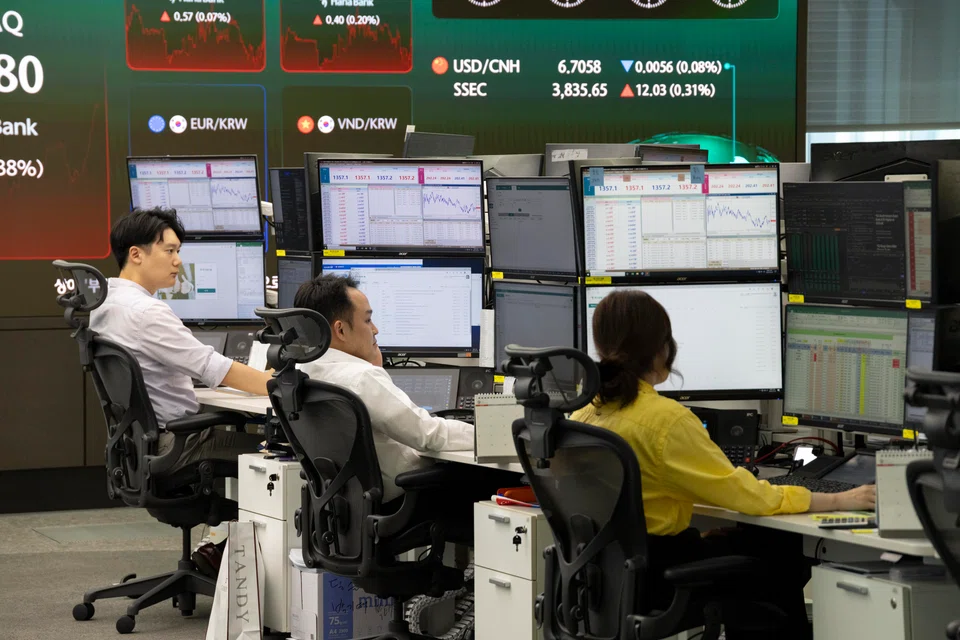
    • The composition of the new trading is another reason analysts are cautious about declaring the session a source of new liquidity.
    • The composition of the new trading is another reason analysts are cautious about declaring the session a source of new liquidity. PHOTO: EPA/YONHAP SOUTH KOREA

    [SEOUL] South Korea’s latest move to extend stock trading hours, in line with global trends, has drawn sizeable activity in its first weeks. But early data leaves open whether the longer trading day is bringing new liquidity into the market or simply shifting trades out of regular hours.

    Analysts told The Business Times that it is too early to tell whether the new evening session is generating genuinely new liquidity, with early activity heavily retail-driven and several more weeks of data needed to assess its impact.

    The Korea Exchange (KRX) launched a continuous after-market session starting Sep 14, running from 4 pm to 8 pm Korea Standard Time. The move gives local investors four additional hours of trading a day, extending the KRX trading day from six-and-a-half hours to 10-and-a-half hours.

    On its first day, 72.24 million shares worth 1.82 trillion won (US$1.35 billion) changed hands in the new session, equivalent to about 7 to 8 per cent of the volume traded during the 9 am to 3.30 pm regular session.

    Stocks listed on the Kospi accounted for 22.18 million shares worth 1.33 trillion won, with names from the Korea Securities Dealers Automated Quotations (Kosdaq) making up the rest.

    Two weeks later, 216.2 million shares worth 21.8 trillion won changed hands on the Kospi on Monday (Sep 28) when the index closed at 6,889.74, down 191.18 points, or 2.7 per cent.

    Max Park, equity sales trader at brokerage CGS International Securities Hong Kong’s Korea branch, said the initial data appears to suggest that extended trading hours are simply shifting trading activity from the regular session, although it “remains too early to draw definitive conclusions”.

    He pointed to Bloomberg data showing that average regular-session turnover across Kospi and Kosdaq fell from around 27.7 trillion won between Sep 1 and 11 to around 26.6 trillion won between Sep 14 to 23, a decline of 4 per cent.

    The decline, Park added, was the sharpest in the first three trading days, at around 13 per cent. Regular-session turnover has since recovered, averaging around 28 trillion won during Sep 21 to 23, slightly above the pre-launch level.

    The exchange’s September average was also around 21.5 trillion won before the evening session’s launch, compared with 15.3 trillion won on Sep 17, noted Ricky Chiam, market specialist, global markets, at fund manager PhillipCapital.

    However, the decline could also reflect broader market factors and investor sentiment, rather than a direct shift of trading activity into the evening session, he added.

    “The structural thesis remains unproven at this stage; a clearer verdict on additionality versus cannibalisation will require several more weeks of data,” said Chiam.

    Liquidity spread out

    The composition of the new trading is another reason analysts are cautious about declaring the session a source of new liquidity.

    KRX’s new session replaces a system that matched orders every 10 minutes between 4 pm and 6 pm.

    However, data shows that retail investors accounted for 93 per cent of KRX aftermarket turnover on the first day, while foreign investors accounted for 3.9 per cent and domestic institutions for 2.1 per cent.

    “This is a very different investor profile compared with the regular session,” said Park, adding that retail investors accounted for 55 per cent of regular-session turnover on Sep 14.

    The trading pattern also aligns closely with the original objective of allowing investors to trade after work, he noted. Some 30.7 per cent of aftermarket turnover took place between 7 pm and 8 pm, while 73 per cent of orders were placed through mobile trading platforms.

    South Korea now trades for close to twice as many hours as Hong Kong or Tokyo, widening the gap with other Asian markets.

    KRX’s move comes as Hong Kong considers scrapping its lunch break and adding an evening session that runs to midnight, while the Singapore Exchange (SGX) has previously experimented with a similar move. SGX currently has seven hours of trading, from 9 am to 5 pm with a one-hour lunch break, compared with about 5.5 hours in Hong Kong and Tokyo.

    The move is part of a broader shift towards longer, and eventually round-the-clock, trading. Nasdaq plans to roll out 24-hour, five-days-a-week trading in the US by the second half of 2026.

    “That is a clear indication of where exchanges think this is heading,” said Zavier Wong, market analyst at investment platform eToro’s Singapore office, “This could be the right direction but Korea shouldn’t expect capital to arrive overnight simply because the market runs later.”

    KRX chairman Jeong Eun-bo has said the exchange is preparing to introduce a 24-hour framework in phases, with a pre-market session from 7 am to 8 am targeted as the next step.

    But its expansion also means that liquidity is being spread across more trading hours and more than one venue.

    Nextrade (NXT), Korea’s alternative trading system that launched in March 2025, had already operated an after-hours session from 3.40 pm to 8 pm. Until the KRX launch, it was the sole operator of an after-hours market in the country.

    Wong said that from a big-picture perspective, the KRX launch appears to be resulting largely in a redistribution of activity.

    NXT recorded roughly 3.7 trillion won a day in early September across about 600 stocks, he added. By Sep 14, however, its turnover had fallen to about 1.8 trillion won, while the new KRX session added another 1.8 trillion won.

    A portion of that 1.8 trillion, Wong said, was actually business that already existed in batch form and simply got a continuous order book.

    By Sep 15, KRX and NXT together were down to about 2.2 trillion and have continued to fall since.

    Wong said the figures suggested that the new session was “simply spread(ing) what is left across more hours” while Park similarly noted “seeing some redistribution between venues”.

    Attracting foreign capital

    For foreign investors, the attraction of longer hours is straightforward, with greater convenience and the ability to react to market-moving developments during their own trading day.

    Wong said European traders, in particular, will be the “key beneficiaries of this change” because Korea’s regular session previously ended at 3.30 pm, or 7.30 am in London. European desks therefore had to staff the market overnight or hand trading to a broker.

    He sees the new session putting Korea more “squarely” within London’s morning trading hours.

    But the experience of the first few days also suggests that trading hours alone may not be enough to attract foreign capital.

    Foreign investors accounted for less than 4 per cent of trading during the first evening session, while institutions accounted for less than 2 per cent. Wong also noted that foreign investors had been net sellers for seven consecutive sessions.

    “The won has weakened since the Fed hiked and widened the Korea-US rate gap, so that is really what is driving allocation decisions, not the closing bell,” he added.

    The next few months should therefore provide a clearer picture of whether Korea’s longer trading day is expanding its market or simply redistributing existing activity.

    Park identified four indicators, namely turnover, investor mix, market quality and breadth, to determine whether the extended trading hours are generating genuinely new liquidity.

    “The long-term success of the initiative will depend not only on trading activity in the largest names, but also on whether execution quality remains robust across the wider market,” he said.



